Choosing PPF Installation Gel or Slip Solution by Panel
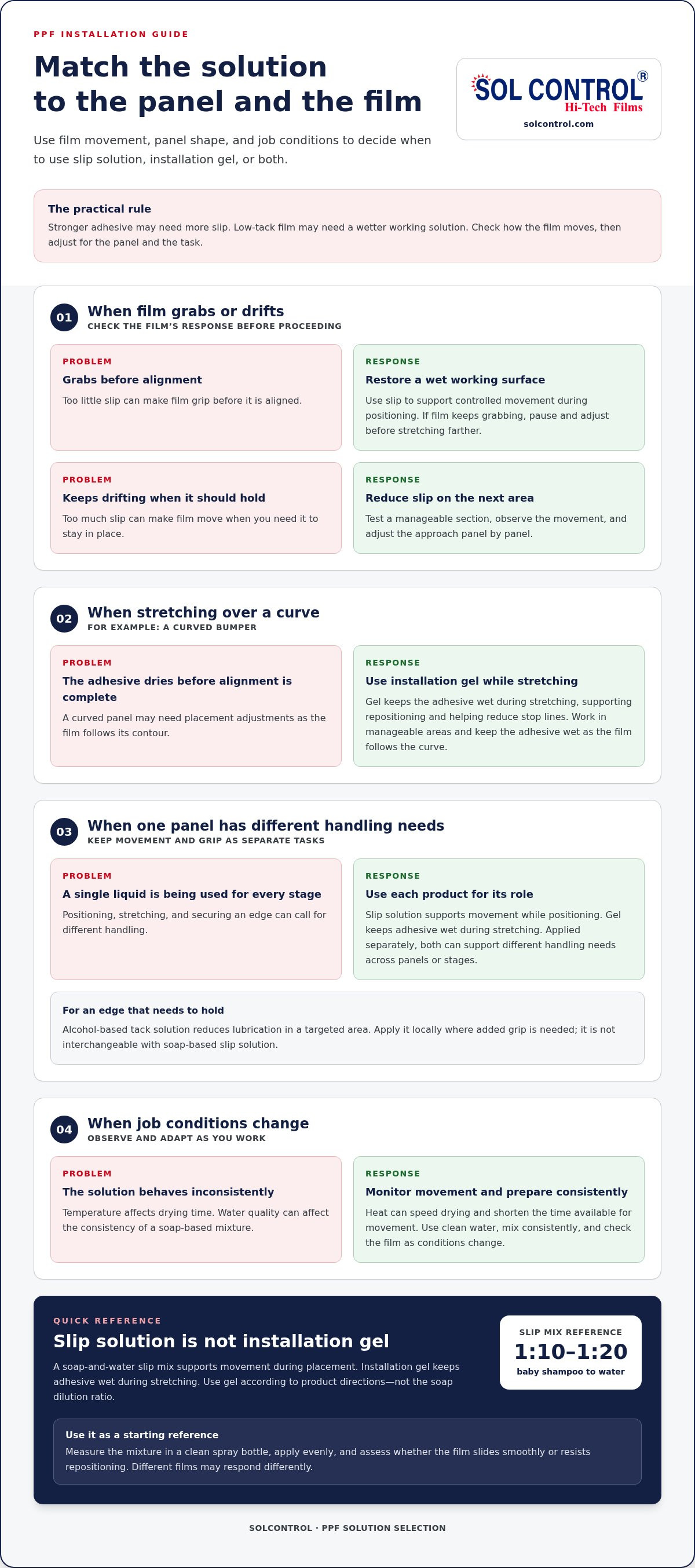
The PPF installation gel vs. slip solution choice isn’t always either-or. Film with stronger adhesive generally needs more slip, while low-tack film needs a wetter solution; combining the two can help you adjust the working feel to the panel and job conditions.
Both products help installers position paint protection film, but they behave differently. The right choice depends on how the film moves, how quickly it grips, and how much control the panel requires.
This guide explains what installation gel is, how it differs from slip solution, and when each can be useful. You’ll also learn how to choose or combine them across different panels, plus which job conditions can affect your approach. The goal is a practical decision process, not a one-product-fits-every-install rule.
Key Takeaways
Match solution choice to the film’s adhesive behavior: stronger adhesive may call for more slip, while low-tack film benefits from a wetter working solution.
Use panel shape and repositioning needs to guide whether gel, slip solution, or a combination gives you better control.
Understand how soap-based slip solution and alcohol-based tack solution affect film movement before choosing your application approach.
Keep the adhesive wet while stretching film with gel to support repositioning and help reduce stop lines.
Use the decision guide to adapt your method to the panel and job conditions instead of relying on one solution for every installation.
Choose based on the film’s adhesive response, panel shape, and the movement needed during placement. A hood, bumper curve, and tight edge can each require a different approach.
Installation Gel Application Conditions
Installation gel helps keep the adhesive wet during stretching, supporting repositioning and helping reduce stop lines. Apply it according to the product directions, then check how the film moves before stretching it across the panel. On a curved bumper, work in manageable areas and keep the adhesive wet as the film follows the contour.
Temperature affects how quickly the application surface dries, so monitor the film’s movement as conditions change. Water quality can affect the consistency of a soap-based mixture, so use clean water and prepare each batch consistently. Don’t assume the same spray pattern or amount will work equally well in a warm bay and a cooler workspace.
Compare the options by how they behave on the specific panel:
Option
Adhesive response
Useful application condition
Watch for
Slip solution
More slip may suit stronger adhesive; low-tack film may call for a wetter solution.
Positioning film that needs controlled movement.
Film that drifts or grabs too soon.
Installation gel
Keeps adhesive wet during stretching.
Stretching film over a curve while adjusting placement.
Areas drying before alignment is complete.
Both, applied separately
Allows movement during positioning and wet adhesive during stretching.
A job with different handling needs across panels or stages.
Using the wrong liquid for the task.
Choose according to adhesive tack and panel shape, then adjust based on whether the film slides or holds.
Risks of the Wrong Solution
Too little slip can make the film grab before it’s aligned, while too much can leave it drifting when you need it to hold. On a bumper edge, either mismatch can complicate placement and increase tension. If the film moves unpredictably, pause and adjust your method before stretching farther across the panel.
Temperature and water quality affect how consistently a solution behaves. Heat can speed drying and shorten the time available for movement; cooler conditions can also change how quickly the surface dries. Mineral content or other impurities may make water-based mixtures less consistent. Use clean water, observe the film as you work, and adjust when its movement changes.
For a practical check, apply solution to a manageable area, position the film, and assess its response before continuing. If it grabs early, restore a wet working surface; if it keeps drifting, reduce slip on the next area. This panel-by-panel check helps you adapt to changing curves, edges, and working conditions.
What Is a Slip Solution?
PPF slip solution is a water-based mixture that lets film move across the vehicle surface during positioning. A common soap-and-water mix uses baby shampoo diluted with water at a ratio of roughly 1:10 to 1:20. That ratio describes slip solution, not installation gel; use gel according to its product directions rather than applying the soap dilution.
Soap-and-Water Slip Solution
Soap reduces surface friction, giving the installer room to position film before it grips. For example, a solution mixed at 1:10 has a different soap concentration from one mixed at 1:20, so the film’s movement can feel different. Add the mixture evenly, then observe whether the film slides smoothly or resists repositioning.
Mix carefully rather than adding soap by eye. Measure the water and shampoo, combine them in a clean spray bottle, and shake gently. A consistent mixture makes the film’s response more predictable across separate sections of a hood or door. If the film moves too freely, adjust the mixture for the next application; don’t assume the same ratio suits every film.
Soap-based slip and alcohol tack solution serve different purposes. Slip supports movement during placement, while an alcohol-based tack solution helps the film grip by reducing lubrication in a targeted area. Treat them as separate application liquids, not interchangeable recipes. Applying tack solution selectively can help secure an aligned edge without changing the slip mixture across the whole panel.
Alcohol Tack Solution
Use tack solution where you need less movement, such as an edge that must hold after alignment. Apply it locally, then work the film into place instead of flooding the panel. Soap solution, by contrast, supports broader movement while the film is being positioned. Keeping the two functions distinct avoids changing how the entire sheet handles just to secure one small area.
For a practical sequence, spray slip solution across the application area, position the film, and apply a small amount of tack solution only where added grip is needed. Watch the film as you work: if a section starts holding before it’s aligned, reposition it carefully rather than forcing it. This measured approach is more useful than treating either liquid as a universal fix.
Soap concentration, spray coverage, and where tack solution is applied all affect handling. Use the 1:10 to 1:20 range as a starting reference for soap-and-water slip, then assess film movement on the surface. Keep gel separate from that mixing ratio, since slip solution and gel are different application products.
Applying PPF with installation gel
Installation gel keeps PPF adhesive wet while the film is positioned and stretched. A wet adhesive lets you reposition the film and can help reduce stop lines. On a curved bumper, work one manageable area at a time so the film can follow the contour without drying before alignment is complete.
Prepare the panel and film before applying gel. Clean the vehicle surface, arrange the film for placement, and keep the spray bottle and squeegee within reach. Follow the gel product’s directions for use. Don’t assume gel and soap-based slip solution share mixing instructions; they’re different products with separate directions.
Apply gel to the area you’re working on, then position the film without pulling it under unnecessary tension. Check how it moves across the panel before stretching. If the film needs to shift, reposition it while the surface is wet. As you stretch across a curve, keep the adhesive wet and watch for areas that begin drying or resisting movement.
Position: Lay the film onto the gel-wet panel and align its edges with the intended coverage area.
Assess movement: Move the film gently to see whether it adjusts without dragging or grabbing.
Stretch gradually: Work across a curve in controlled passes, keeping the adhesive wet during stretching.
Inspect: Check for stop lines or sections where the film no longer moves as expected.
A hood offers a broad surface for checking alignment before working toward the edges. A bumper corner changes direction quickly, so watch how the film responds as the contour shifts. Avoid stretching a section that has started to dry. Reapply gel according to its directions, then continue when the film moves as needed.
Use a squeegee in deliberate passes to move solution from beneath the film while keeping the remaining work area manageable. If a visible line appears, pause and assess whether the adhesive has dried or the film has been pulled unevenly. Correct the position while the film remains workable instead of stretching across a section that no longer moves freely.
Gel supports the application process, but technique still matters. Follow the product directions, keep the adhesive wet during stretching, and adjust your pace to the panel. For example, work across a manageable portion of a hood before moving toward the edges. On a bumper, check each contour as you go. These checks help catch drying and alignment issues early.
Combining slip solution and gel
Use slip solution to manage film movement, then apply installation gel where its working behavior helps with stretching. Both affect positioning and tack: slip supports movement, while gel keeps adhesive wet during stretching.
Gel as a Slip-Solution Substitute
Installation gel can replace slip solution when its directions suit the film and application. The difference is in how each product is used: soap-based slip is a diluted mixture, while gel is applied according to its own directions. On a broad hood, choose one approach for the main positioning stage, then assess how the film moves before continuing.
Don’t treat the products as one recipe or assume they should be blended in a bottle. If a panel needs the movement of slip solution and gel’s support during stretching, apply each separately at the stage where it helps. Pay attention to the film’s response: reposition while it moves freely, then stretch while keeping the adhesive wet.
Positioning, Tack, and Adhesion Effects
Slip solution helps the film slide while you align it; gel keeps the adhesive wet during stretching. That wet working surface supports repositioning and can help reduce stop lines. Stronger adhesive may need more slip, while low-tack film may call for a wetter slip solution.
On a curved bumper, use slip to align the film, then apply gel during stretching if your workflow calls for it. Watch for the point where the film starts holding instead of sliding. That change guides your next move: continue aligning while it shifts, or work it into position as it begins to grip.
A combined method is a sequence, not a universal mixture. Keep separate spray bottles clearly identified and follow the directions for each product. This prevents applying the wrong liquid across a panel. Don’t add soap solution to gel unless the gel’s instructions specifically allow it; changing a product’s formulation can alter how it behaves.
Use a small working area to assess movement before extending the method across a larger panel. If the film drifts after alignment, adjust how much slip you apply next. If it grabs before you finish stretching, keep the adhesive wet with gel as directed. On a hood, this lets you assess movement across a broad area; on a bumper curve, it helps you adapt the sequence to changing contours.
Choose the combination by task: slip for controlled positioning, gel to keep the adhesive wet during stretching, and separate application when both functions are needed. The film’s tack and movement show whether the sequence is working. Change one part of the process at a time so you can identify which adjustment improves control.
Can PPF installation gel be used instead of slip solution?
Yes, installation gel can replace soap-based slip solution when its directions and the film’s behavior suit the job. The products aren’t identical: soap-based slip supports movement, while gel can provide a longer working window. Choose based on how the film responds during positioning, rather than assuming either liquid works the same way on every panel.
Working time affects how much adjustment is possible before the film begins to hold. Soap slip provides an estimated 2-5 minutes, while installation gel provides an estimated 8-15 minutes. That difference can matter on a large panel or a contour requiring careful placement. A longer window gives more time to align and stretch, but it doesn’t remove the need to work methodically.
For a broad hood, gel may be suitable if its directions support the film and application. Position the film, check how it moves, and keep the adhesive wet during stretching. On a bumper with multiple curves, assess the film’s response before working across the full panel. If it moves freely and remains workable with gel, gel can serve as the primary application liquid.
Soap-based slip remains useful when its familiar, water-based movement better suits the film’s adhesive. Stronger adhesive may need more slip, while low-tack film may call for a wetter slip solution. Gel isn’t an automatic fix for either condition. Follow its directions and assess whether the film slides, holds, or needs adjustment before applying it across a larger area.
Choose gel: Use it when the product directions fit the job and its working time supports positioning.
Choose slip: Use it when the film’s adhesive needs adjustable slip for controlled movement.
Compare on the panel: Place a manageable section, assess movement, and adjust your approach before extending it.
Don’t treat gel and slip as interchangeable recipes or combine them in one bottle. Apply each separately, following its directions, and observe how the film behaves. If gel keeps the adhesive wet while you stretch, continue with it; if the film needs more controlled movement, use slip where appropriate. For a mixed job, separate the applications by panel or stage rather than changing the whole process at once.
Working time is only one decision point. Film tack, panel shape, and the ability to reposition also matter. A film that begins gripping before alignment is complete needs a different approach from one that remains easy to move. Explore paint protection film options as you plan materials for the installation.
SolControl: Automotive Window Films
SolControl supplies installers with film and tools for vehicle protection projects. For a PPF job, its Paint Protection Films are relevant to the material decision, while Tinting Tools support installation work. The right combination depends on your workflow, film choice, and the panels you handle.
For teams working across vehicle and building projects, SolControl also supplies Automotive Window Films and Architectural Window Films. These categories serve different applications, so choose according to the surface and protection goal rather than treating them as substitutes for PPF.
Explore SolControl’s Paint Protection Films and related installation tools.
Make Your Next PPF Job More Deliberate
Build a repeatable process around the film, panel, and application products you use. Note how each combination behaves, then use those observations to refine your approach from one job to the next. That makes choosing between PPF installation gel and slip solution a practical decision grounded in your own workflow.
SolControl supplies Paint Protection Films and Tinting Tools for installers, alongside Automotive Window Films and Architectural Window Films for other applications. Choose products based on the job at hand, and keep the intended use of each film clear.
PPF installation gel is an application product used to help position paint protection film on a vehicle. It creates a wet working surface while the film is aligned or stretched, helping the installer manage movement across a panel. On a hood, for example, gel can keep the adhesive workable during placement. Follow the gel’s directions, since its use differs from mixing a soap-based solution.
What is PPF installation gel, and what ingredients does it contain?
PPF installation gel is a purpose-made liquid used during film application to support positioning and stretching. Ingredients vary by formulation, so there isn’t one ingredient list for every gel. Read and follow the product directions rather than adding shampoo, alcohol, or other liquids. Don’t assume gel should be diluted just because soap-based slip solution is mixed with water.
What is slip solution for PPF installation, and what ingredients does it contain?
PPF slip solution is a liquid that helps film move during placement. A common version combines water with diluted baby shampoo, with installers commonly using a ratio of roughly 1:10 to 1:20. The soap helps reduce friction at the working surface. Mix consistently in a clean spray bottle, and keep this recipe separate from any gel or tack solution used during installation.
What is the difference between PPF gel and slip solution?
A PPF installation gel vs slip solution comparison comes down to product type and working behavior. Soap-based slip solution is a diluted mixture that helps film slide; gel is used according to its own directions and can keep adhesive wet during stretching. Their estimated working times also differ: soap slip solution offers 2-5 minutes, compared with 8-15 minutes for gel. Choose based on film movement and panel demands.
Which works better for PPF installation on large panels, curves, and edges?
Neither option suits every panel. For a large hood, prioritize even movement and enough time to align the sheet. On a curved bumper, focus on controlled stretching and maintaining a workable surface. Edges need accurate alignment and a transition from movement to grip. When choosing between PPF installation gel and slip solution, consider the film’s adhesive response and adjust your method as the panel shape changes.
Can soap, baby shampoo, or dish soap be used as PPF slip solution?
Baby shampoo diluted with water is commonly used as a soap-based PPF slip solution, at a ratio of roughly 1:10 to 1:20. Measure the mixture in a clean spray bottle so its consistency stays controlled across the panel. Dish soap isn’t the recipe described here, so don’t assume it behaves the same way. Keep the mixture separate from installation gel and follow product directions.