A dealer tint program is more than an add-on at vehicle delivery. Well-run window tint dealer programs bring together consistent film quality, skilled installation, and customer care that fits the dealership’s broader sales experience.
A strong program should support the customer experience as well as the business. That means choosing suitable materials, setting clear work standards, and ensuring staff can explain the product. The tint offering also needs to fit the dealership’s workflow and the expectations customers have when buying a vehicle.
This article explains how dealer programs can support tint quality and customer satisfaction, what technical needs to plan for, and how supplier support can help a shop grow. It also covers factory certification and the practical factors to consider when assessing whether a program fits your business.
Key Takeaways
Set clear quality standards and consistent processes to help protect the customer experience.
Assess how program support can fit dealership workflows and contribute to sustainable shop growth.
Identify the technical resources and tools that help installers deliver consistent work.
Understand what factory certification involves and how it can relate to training and program standards.
Consistent tinting depends on trained installers, suitable materials, and repeatable work standards. Quality-focused installers may train for several months or a year or longer. Customers judge the finished result, not the dealership’s sales process, so clean installation, a clear product explanation, and a defined follow-up process all help set expectations before delivery.
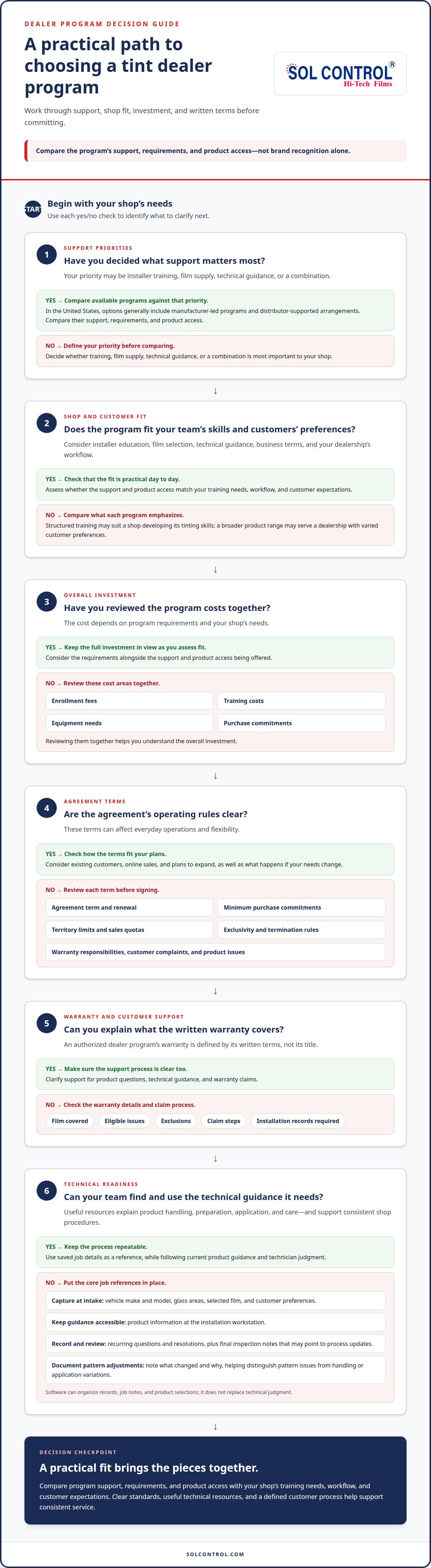
Dealer programs from major window tint brands vary in film selection, installer education, technical guidance, and business terms. Compare how each program supports product knowledge and consistent installation rather than relying on brand recognition alone. Structured training may suit a shop developing its tinting skills, while a broader product range may serve a dealership with varied customer preferences.
The cost of joining a tint dealer program depends on its requirements and your shop’s needs. Review enrollment fees, training costs, equipment needs, and purchase commitments together to understand the overall investment.
In the United States, options generally include manufacturer-led dealer programs and distributor-supported arrangements. Support varies, so first decide whether your priority is training, film supply, technical guidance, or a combination. Compare each program’s support, requirements, and product access side by side.
Before signing, review the agreement’s term, renewal process, minimum purchase commitments, territory limits, exclusivity, warranty responsibilities, and termination rules. Find out how it addresses customer complaints and product issues. These terms affect everyday operations and flexibility, so assess them alongside the program’s quality standards.
To find distributors and dealer programs serving your area, identify the brands or distributors available to your business, then compare their requirements and support with your shop’s training needs, workflow, and customer expectations. Focus on practical fit and consistent service.
Dealer support and business growth
Dealer support can shape how a tint operation handles claims, customer questions, and sales expectations. Review warranty coverage alongside the agreement terms to understand how they affect daily work.
Warranties and Customer Support
An authorized dealer program’s warranty is defined by its written terms, not its title. Check which film is covered, eligible issues, exclusions, claim steps, and any installation records required. Also clarify the scope of customer support, including product questions, technical guidance, and help with warranty claims. A clear process helps professionals explain coverage accurately and respond consistently to customer concerns.
Territory and Sales Rules
Dealer agreements may include territory, sales quotas, or exclusivity clauses, so read each one before committing. Territory terms can define where a shop may sell, quotas can set purchase or sales expectations, and exclusivity can limit other brands. Check how each clause affects existing customers, online sales, and plans to expand. Renewal and termination terms matter too if your needs change.
Support can contribute to growth by making routine work easier. Map the steps from customer selection through installation and follow-up. Note where staff need product guidance, how warranty questions are handled, and who communicates with the customer. Recording product details and installation notes, for example, can make later claim handling more organized.
Build the program into your shop’s sales workflow. Give staff a consistent way to explain film options, set expectations, and record the customer’s selection. Review recurring questions and claim patterns with the team, then update training or sales materials where confusion arises. This connects dealer support to service quality and repeatable operations.
For shops refining their product mix, automotive window film options can help frame conversations around customer needs and available choices.
Dealer support and technical insight
Technical support matters when an automotive job raises a question about a product, pattern, or installation. Assess whether the available resources help your team turn answers into consistent shop procedures.
Map the process from vehicle intake to final inspection. Record the vehicle make and model, glass areas, selected film, and customer preferences. These details provide a useful reference for repeat jobs and installation concerns, and help distinguish product questions from process issues.
Next, review the technical resources available to installers. Useful materials explain product handling, preparation, application, and care. Look for practical detail: a clear diagram or written procedure can help the team follow the same steps across vehicles. Training materials are most useful when they address real shop tasks, not just product features.
Use a vehicle intake form to capture model and glass-area details.
Keep product guidance accessible at the installation workstation.
Document recurring questions and the resolution used by staff.
Review final inspection notes for patterns that may require process updates.
Software can organize vehicle records, job notes, and product selections, but it does not replace technical judgment. Staff can use saved job details to find a previous vehicle entry, then follow current product guidance. Keep access straightforward so technicians can find the right record without disrupting installation.
Pattern access and cutting tools also shape how a shop plans automotive work. Make sure the team understands how its workflow handles vehicle identification, pattern selection, material preparation, and fit checks. If a pattern needs adjustment, record what changed and why. That gives the team a useful reference for similar jobs and helps separate pattern issues from handling or application variations.
Turn technical questions into a repeatable improvement process. Assign someone to record each issue, gather job details, and share the resolution during a team review. Updating written procedures when an issue recurs helps keep future work consistent. This makes technical insight part of daily operations, not just a resource used after a problem.
Factory certification requirements
Factory certification requirements vary by manufacturer, so treat each program’s written criteria as its own standard. Distinguish certification from general dealer enrollment: enrollment may focus on business terms, while certification may assess installer knowledge, application technique, or documented work. The manufacturer’s current guidance sets the requirements.
First identify who needs to qualify. A program may assess an individual installer or set expectations for a shop or team. Review the training format, assessments, renewal conditions, and required records. If certification applies to one technician, plan how the shop will maintain coverage when that person is unavailable.
Technical evaluation should reflect actual installation work. Find out whether the assessment covers surface preparation, film handling, cutting, application, and inspection. Written procedures can help technicians follow the same sequence on each vehicle. Recording the selected film and final inspection, for example, makes it easier to review work against the program’s criteria.
Record each technician’s training and qualification status.
Keep the manufacturer’s installation and care guidance accessible.
Document job details, including product selection and inspection notes.
Track renewal dates and any required follow-up training.
Before committing, weigh certification’s benefits against the work involved. Decide whether the credential supports a specific sales or service goal, and whether staff time, training, and recordkeeping fit your workflow. Clarify what happens if an assessment is missed or a credential expires. These details help owners plan staffing and describe certification accurately.
Certification should also shape customer communication. Staff need precise language about what the credential represents and which work it covers. Avoid implying that one certified installer automatically qualifies every technician or every job. Align customer-facing descriptions with the manufacturer’s definition, then review them whenever the program changes its criteria. For product planning alongside a certification pathway, explore automotive window film options.
SolControl: Tinting Tools
SolControl supplies tint shops with automotive and architectural window films, as well as tinting tools. These products can support your shop as you refine its range, prepare for more vehicle work, or equip technicians with tools for consistent processes.
Choose products to match your workflow: automotive window films serve vehicle tinting, while architectural window films are designed for building projects. Tinting tools equip the work area, and paint protection films add another product category for shops serving vehicle owners. These supplies complement program planning but do not replace installer training or factory certification requirements.
As a practical next step, identify the film categories and tools that suit your shop’s current work, then consider where your product range could expand. Contact SolControl to discuss supplies for your tint business.
Build Your Next Step Around Shop Priorities
Choose window tint dealer programs with your shop’s next stage in mind. Decide whether your immediate priority is refining your product mix, equipping technicians, or creating a consistent customer experience. Let that priority guide your discussions about program fit and the resources your operation needs.
SolControl supplies automotive window films, architectural window films, and tinting tools for shops’ product and equipment needs. These products can complement your purchasing plans alongside a dealer program, while the program’s own certification and agreement requirements still apply. Contact SolControl to discuss supplies that fit your shop’s work.
Contact SolControl about dealer programs and discuss the products that fit your shop’s plans. With a clear priority and a practical next step, you can keep building toward a stronger tint operation.
Frequently Asked Questions
What are the requirements to become an authorized window tint dealer or installer?
Requirements depend on the brand and whether approval applies to a business, an installer, or both. Prepare a clear description of your services, customer base, and intended film categories. Identify who performs installations and how your team handles customer records. This helps you judge whether a program’s expectations fit your operation before agreeing to its terms.
What training and certification do window tint dealer programs provide?
Training and certification are different: training builds product and installation knowledge, while certification recognizes completion of a program’s stated qualification process. Review the learning materials and how new technicians can use them. For example, include product training in staff onboarding, then record which team members complete any separate certification requirements.
How can a shop apply to become a window tint dealer?
Start by defining the products your shop plans to sell and the customers it serves. Gather basic business details, your installation model, and the product categories you want to carry. Then submit an inquiry or application through the relevant brand’s or distributor’s dealer channel. Review the response alongside purchasing terms, training expectations, and the agreement before committing.