Architectural Window Film: The Professional Guide to Selection, Performance, and Wholesale Supply
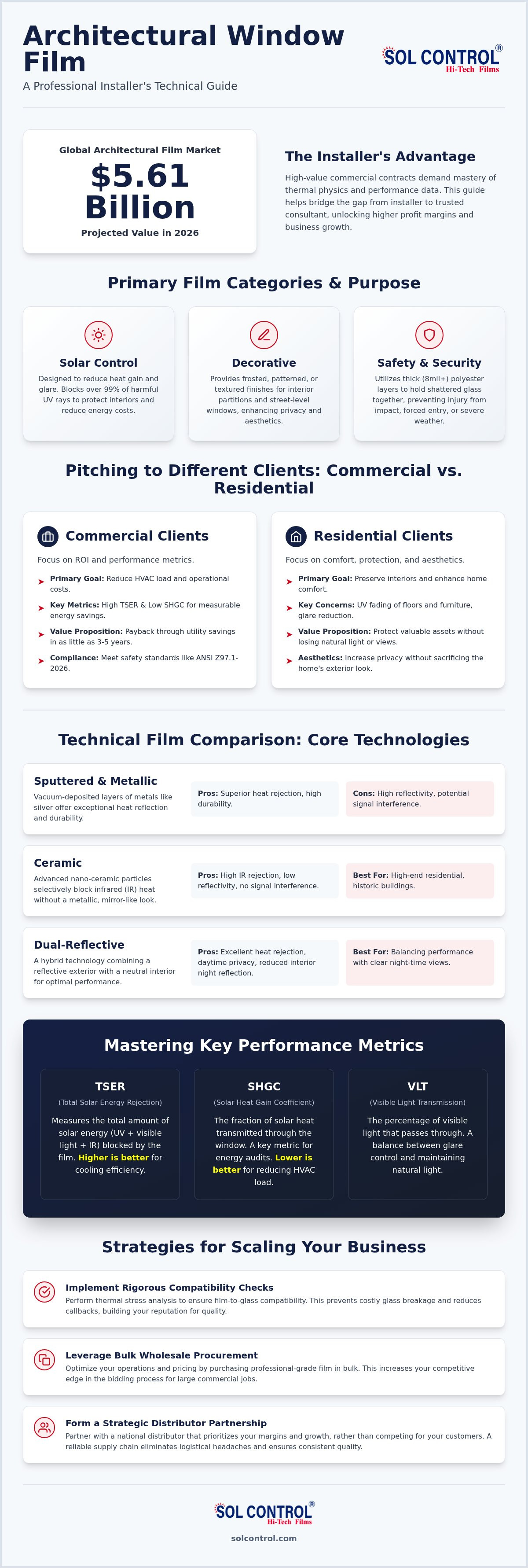
With the global architectural window film market reaching an estimated $5.61 billion in 2026, the opportunity for professional installers has never been larger, but the technical barrier to entry is steeper than ever. You already understand that landing a high-value commercial contract requires more than just a clean squeegee technique. It demands a deep mastery of thermal physics, evolving building codes, and the ability to translate complex performance data into clear client benefits.
We're here to help you bridge the gap between aesthetic demands and performance science. This guide provides the technical insights and procurement strategies you need to master specifications like TSER and SHGC while navigating the latest ANSI Z97.1-2026 safety standards. By the end, you'll have a clear roadmap for selecting high-performance films and securing reliable wholesale rolls to grow your business. We'll examine the core science of solar control, explore efficiency-boosting tools, and show you how the right supply partner can eliminate the logistical headaches and inconsistent quality that slow your team down.
Key Takeaways
Compare the engineering behind sputtered, ceramic, and dual-reflective technologies to match the right product to your client's specific performance needs.
Master the technical metrics of architectural window film, including TSER and SHGC, to close more commercial deals with confidence and technical authority.
Implement rigorous glass-to-film compatibility checks and thermal stress analysis to prevent glass breakage and reduce the risk of costly callbacks.
Optimize your business operations by leveraging bulk wholesale procurement and professional-grade tools to increase your competitive edge in the bidding process.
Scale your installation business through a strategic partnership with a national distributor that prioritizes your margins instead of competing for your customers.
Understanding the Strategic Value of Architectural Window Film
Architectural window film is a precision-engineered material designed specifically for flat glass surfaces in residential and commercial buildings. While automotive films must account for extreme curves and different heat-shrinking properties, Window film engineered for architecture focuses on thermal stability and glass-to-film compatibility. For professional installers, this segment represents a significant growth opportunity. Commercial projects often yield higher profit margins than individual automotive jobs. This is because they involve larger square footage and repeatable installation processes on uniform windows, allowing your crew to work more efficiently.
The market is generally divided into three primary categories, each serving a distinct strategic purpose. Solar control films are the most common, designed to reduce heat gain and glare while blocking 99% of UV rays. Decorative films provide frosted or patterned finishes for interior partitions and street-level privacy. Finally, security films utilize thick, high-tensile polyester layers to prevent glass from shattering into dangerous shards during an impact. Understanding these distinctions allows you to position your business as a consultant rather than just a contractor.
Commercial vs. Residential Application Goals
Commercial clients prioritize the bottom line. When you're pitching to building managers, your focus should be on Total Solar Energy Rejection (TSER) and its direct impact on HVAC load reduction. Reducing the solar heat gain coefficient (SHGC) leads to measurable energy savings. In many cases, architectural window film can pay for itself through utility savings in as little as three to five years, providing a clear return on investment. Residential clients, however, value the preservation of their interior. They want to protect expensive hardwood floors and upholstery from UV fading without losing their view or natural light. Successful installers pitch privacy films as a way to secure the home's interior without sacrificing the building's exterior aesthetic. This professional approach is exemplified by expert providers like sunshield.co.il, who specialize in balancing aesthetic requirements with advanced protection.
The Role of Safety and Security Films
Security films, typically 8mil or thicker, provide a critical layer of defense against forced entry and severe weather. These films work by bonding the glass into a single, resilient unit. During an impact, the film contains the glass fragments. This prevents them from flying inward and causing injury. This is a vital selling point for public spaces and schools where meeting safety requirements is mandatory. With the updated ANSI Z97.1-2026 standards now in effect, using certified safety films helps buildings stay compliant while providing peace of mind to occupants. It's a high-value service that builds long-term trust with your commercial clients.
Technical Comparison: Sputtered, Ceramic, and Dual-Reflective Technologies
Selecting the right architectural window film requires a deep understanding of the underlying science of film construction. We've moved far beyond the early days of dyed films, which were prone to fading and thermal stress issues. Today, material choice dictates the precise "look" of the glass from both the interior and exterior. This allows you to match the film's performance to the specific climate and glass orientation of your project. High-performance coatings are now the industry standard, offering a balance of aesthetics and efficiency that was previously impossible to achieve.
Sputtered and Metallic Films
Sputtering is a high-tech vacuum process that deposits atomized layers of exotic metals like silver or nickel onto high-grade polyester. This creates a dense, uniform barrier that is exceptionally effective at reflecting solar energy before it can penetrate the glass. These films are built for durability in harsh sun and offer exceptional heat rejection. However, installers must account for the high reflectivity. Some clients may find the metallic sheen too industrial for certain residential neighborhoods. Sputtered films are also highly durable, but their metallic content can occasionally interfere with sensitive electronic signals in specific commercial environments.
Ceramic Architectural Films
Ceramic technology represents a significant leap in material science. By using nano-ceramic particles, these films block a vast majority of infrared (IR) light without the need for metallic layers. This makes ceramic the ideal choice for high-end residential projects and historic buildings where a mirror-like appearance is undesirable. Advanced coatings, such as those described in the report on Low-Emissivity, Energy-Control Retrofit Window Film, provide substantial energy savings while maintaining the original look of the glass. One of the greatest benefits of ceramic is low reflectivity. This allows occupants to maintain clear "night views" through the glass, which is a major selling point for luxury properties and restaurants.
Dual-Reflective Mechanisms
Dual-reflective films are engineered to solve the "mirror effect" that occurs on the interior side of windows at night. These films use a sophisticated multi-layer construction where the exterior-facing side has high reflectivity to bounce away solar heat. Conversely, the interior-facing side is treated to have very low reflectivity. This combination is perfect for high-rise offices and scenic residential properties where preserving the view at all hours is essential. Choosing the right technology for each specific glass orientation ensures long-term performance and customer satisfaction. If you are looking to stock these advanced technologies, exploring a professional wholesale inventory is the first step toward securing the right materials for your next project.
Deciphering Performance Metrics: TSER, VLT, and SHGC
To dominate the commercial market, you must transition from selling "tint" to selling performance data for architectural window film. Professional clients, particularly building managers and architects, rely on specific metrics to justify the cost of an energy upgrade. Understanding the relationship between TSER, VLT, and Solar Heat Gain Coefficient (SHGC) allows you to provide a professional ROI estimate. SHGC measures the fraction of solar radiation admitted through a window; lower numbers mean less heat enters the building, which directly reduces HVAC loads and utility costs.
Total Solar Energy Rejection (TSER) vs. IR Rejection
Total Solar Energy Rejection is the gold standard because it accounts for the entire solar spectrum: ultraviolet, visible light, and infrared. You'll often see "IR Rejection" used as a primary marketing hook because those numbers are frequently higher, sometimes reaching 97% or more. However, infrared light only represents about 53% of the sun's total energy. If a film has high IR rejection but allows too much visible light heat through, the client won't feel the full benefit. TSER is the most comprehensive metric for solar control efficiency.
Balancing VLT and Glare Reduction
Visible Light Transmission (VLT) dictates how much natural light enters a room and, by extension, how much glare is reduced. In commercial offices where computer screen placement is often fixed, high glare can lead to eye strain and reduced productivity. Lower VLT percentages correlate with higher glare reduction, but you must avoid making the space feel too dark. The "Natural Light" compromise involves selecting a film that cuts the heat and glare while keeping the space bright enough to minimize the need for artificial lighting during the day.
UV Protection and Interior Preservation
Beyond heat and light, architectural window film provides a critical shield against ultraviolet radiation. Most professional-grade films block 99% of both UVA and UVB rays, which are the primary culprits behind the fading of hardwood floors, expensive artwork, and upholstery. This preservation of assets is a key selling point for high-end residential clients. Additionally, the International Window Film Association emphasizes the health benefits of reducing UV exposure for occupants in sun-drenched workspaces. By presenting these metrics clearly, you position yourself as a technical expert who understands the long-term value of the installation.
Best Practices for Large-Scale Architectural Film Installation
Transitioning from automotive tinting to large-scale commercial projects requires a fundamental shift in your technical approach. Architectural glass is often more porous than automotive glass and requires a more aggressive multi-stage cleaning process to ensure a flawless bond. When working in non-controlled environments like active construction sites or busy offices, managing dust and environmental contaminants becomes your primary challenge. You must establish a clean zone around the window and utilize specialized slip solutions that allow for longer positioning times on oversized panes. Effective workflow optimization on high-reach windows involves staging your materials and architectural window film rolls to minimize movement on ladders or scaffolding, which increases both safety and speed.
The Essential Architectural Tool Kit
You can't rely on standard automotive squeegees for flat glass. Large-pane installations require high-pressure architectural squeegees, such as Fusion tools, to evacuate the higher volume of mounting solution used on big windows. Your kit should also include heavy-duty scrapers with fresh stainless steel blades for every job to remove paint overspray and construction debris. Before you even peel the liner, use a professional tint meter to verify the existing glass specifications. Knowing if the glass already has a Low-E coating or is a specific type of Insulated Glass Unit (IGU) is the only way to ensure the film you've selected is compatible and safe for that specific window.
Avoiding Thermal Stress and Glass Breakage
One of the most critical aspects of professional installation is performing a thermal stress analysis. Different glass types, including annealed, tempered, and IGUs, respond differently to heat absorption. Applying a dark or highly reflective film to annealed glass in direct sunlight can cause the pane to expand at different rates, leading to cracks. Always inspect the glass for partial shading from trees or building overhangs, as uneven temperature distribution across the pane significantly increases the risk of thermal stress fractures. By understanding these risks, you protect your business from the liability of replaced glass and maintain your reputation as a technical expert.
Seaming and Trimming Large Windows
When a window is wider than your largest roll of architectural window film, you'll need to execute a professional seam. Vertical seams are generally less noticeable than horizontal ones and should be placed where they naturally align with the building's architecture. Achieving a "factory look" requires precise edge gaps, typically 1/16th to 1/8th of an inch, to allow for glass expansion. Always use high-quality stainless steel blades to prevent scratching the glass surface during the final trim. To equip your crew with the high-performance gear needed for these complex jobs, you can order professional tinting tools from a dedicated wholesale distributor that understands the unique demands of flat glass contractors.
Scaling Your Business with Premium Wholesale Architectural Film
Scaling a tinting business requires moving beyond the car-to-car mindset and embracing the scale of commercial contracts. To win these larger bids, you need the inventory to support massive square footage without waiting on individual rolls. Procuring architectural window film in bulk allows you to offer more competitive pricing while maintaining healthy margins for your crew. Reliable national shipping ensures your team stays on schedule, which significantly reduces the overhead associated with stalled projects or inventory gaps. By treating your supplier as a strategic partner, you can focus on closing deals instead of managing logistics.
The SolControl Wholesale Advantage
We operate on a strict non-compete distribution model. We supply the professionals; we don't install. This means we never compete with our B2B clients for the same local contracts. You gain access to a comprehensive inventory of architectural, automotive, and protection films in one place. This consistency in film quality is vital for multi-phase projects where matching the look and performance across several buildings is a strict requirement. Our wholesale-only approach is designed specifically to protect your margins and support your growth as a specialized contractor.
Building Your Commercial Portfolio
Incorporating architectural window film into your service list allows you to pivot into year-round, indoor commercial work. This stability is essential for shops that want to avoid seasonal dips in automotive demand. High-performance films frequently lead to powerful word-of-mouth referrals within the property management industry. When you solve a glare problem for a high-rise office or meet the safety requirements for a government contract, your reputation as a technical specialist grows. We provide the professional-grade tools and marketing materials you need to present a polished, authoritative image during every client consultation.
Next Steps: Setting Up Your Wholesale Account
Registering for wholesale pricing is a straightforward process designed to get you back to the job site quickly. Once your account is approved, you can access technical data sheets and performance charts that are essential for professional project submittals. These documents provide the verified data points that architects and engineers require before approving your materials for a build. Having this information at your fingertips helps you close deals faster and with more confidence. To get started today, Register for a SolControl Wholesale Account to access premium architectural film and the professional tools needed to scale your operations.
Elevate Your Installation Business with Technical Precision
Mastering the science of architectural window film is the most effective way to transition from a local installer to a high-volume commercial contractor. By understanding the critical balance between TSER performance and aesthetic requirements, you position your shop as a technical authority. This expertise, combined with rigorous installation standards and thermal stress analysis, ensures that every project delivers long-term durability and measurable energy savings for your clients. Professionalism in selection and execution is what separates market leaders from the competition.
Scaling your operations requires more than just skill; it demands a supply partner that supports your growth without competing for your customers. SolControl provides a national US distribution network for fast, reliable delivery of bulk rolls and professional tools. Our wholesale-only model protects your margins and ensures you have access to high-performance films designed for superior heat rejection. When you're ready to bid on larger contracts and increase your efficiency, we're here to provide the inventory and technical support you need to succeed.
Take the next step in growing your commercial portfolio today. Browse the SolControl Architectural Film Collection to find the precision-engineered solutions your business deserves. We're excited to help you reach your goals.
Frequently Asked Questions
What is the difference between automotive and architectural window film?
Architectural film is designed for flat glass and has different heat-shrinking properties than automotive film. It's often thicker and uses different adhesive chemistries to handle the thermal expansion of building glass. While car film curves, architectural film must remain optically clear over large, flat surfaces. Using automotive film on a building can cause thermal stress or adhesive failure, leading to costly callbacks for your business.
Can architectural window film cause windows to crack or break?
Thermal stress breakage can occur if you apply an incompatible film to certain types of glass. This happens when the film absorbs too much heat, causing the center of the pane to expand faster than the edges. To prevent this, professionals perform a thermal stress analysis. This check ensures the film's absorption rate matches the glass type and its specific environmental shading conditions.
How long does architectural window film typically last?
High-performance architectural window film typically lasts between 10 and 15 years in a commercial setting. The exact lifespan depends on the film's construction, the quality of the installation, and the window's orientation toward the sun. Sputtered and ceramic films generally offer superior durability compared to older dyed technologies. Regular maintenance with non-abrasive cleaners helps preserve the film's clarity and performance over its entire service life.
Does window film go on the inside or outside of the glass?
Most architectural films are installed on the interior surface of the glass to protect them from the elements. This placement shields the film from wind, rain, and airborne debris, which significantly extends its longevity. Specialized exterior films are available for projects where interior access is restricted. These exterior-grade products feature a harder topcoat to withstand environmental exposure while still providing effective solar control and heat rejection.
Can I use architectural film on dual-pane (IGU) windows?
You can use architectural film on dual-pane windows, but you must select a film with low solar absorption. Applying a film that absorbs too much heat can cause the air space between the panes to expand, potentially leading to seal failure or glass breakage. Ceramic and high-reflectivity films are often the best choices for IGUs. Always verify the manufacturer's compatibility chart before starting a dual-pane project.
How do I clean windows that have been treated with architectural film?
Clean treated windows using a soft cloth or clean squeegee and a mild, ammonia-free soap solution. Avoid using abrasive pads, brushes, or harsh chemicals that can scratch the film's protective hardcoat. It's best to wait at least 30 days after installation before the first cleaning to allow the adhesive to cure fully. This simple maintenance routine keeps the glass looking pristine without ever compromising the film's performance.
What is the best architectural film for privacy during the day and night?
Reflective solar films provide excellent daytime privacy by creating a mirror effect on the exterior. This effect reverses at night when interior lights are on. For 24-hour privacy, decorative frosted or patterned films are the most effective solution. These films obscure the view from both sides while still allowing natural light to pass through. Alternatively, for a more technologically advanced approach, Magic Glass Singapore offers electronic film solutions that allow for on-demand privacy without permanently obscuring the view. These options are ideal for bathrooms, conference rooms, and street-level windows where flexible privacy is required.
Architectural window film reduces energy costs by blocking a significant portion of solar heat before it enters the building. This lower heat gain reduces the load on the HVAC system, allowing it to run less frequently during peak hours. By improving the window's solar heat gain coefficient, the film helps maintain a more consistent interior temperature. This leads to measurable utility savings and increased comfort for the building's occupants.