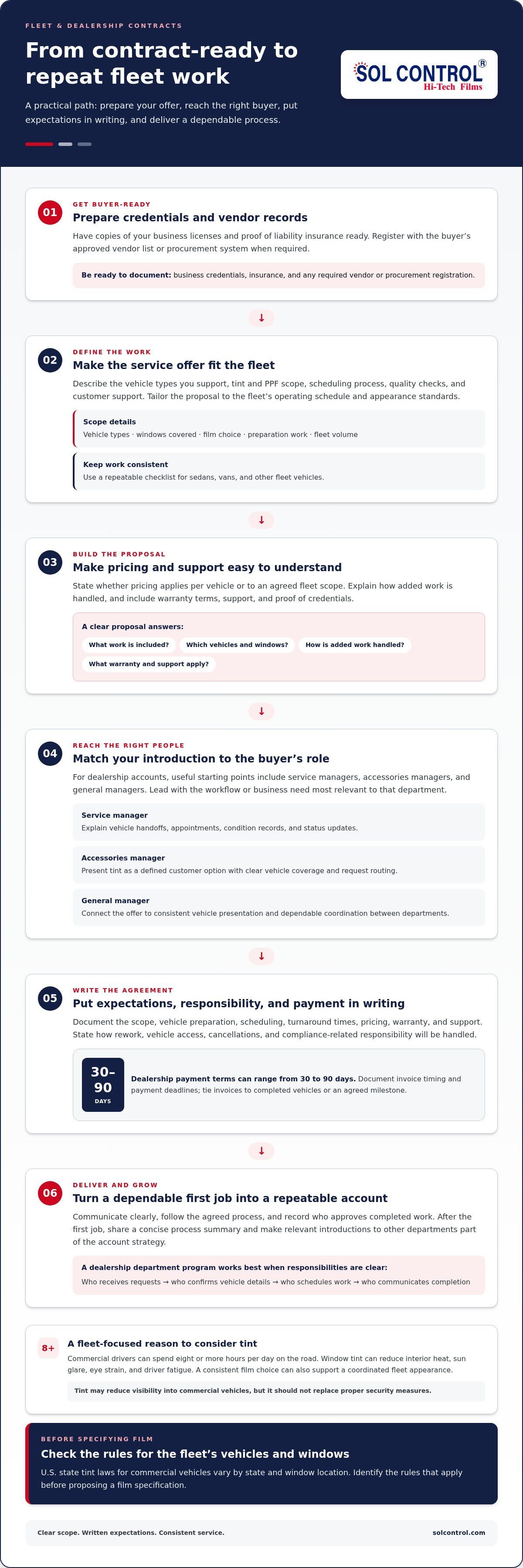
The practical answer to how to get fleet tinting contracts is to prepare your business for buyer requirements, build a clear proposal, and approach the people who oversee vehicle operations and dealership services. Carry appropriate business licenses and liability insurance, then outline your services, bulk pricing, warranty and support, with proof of your credentials. For dealerships, service managers, accessories managers, and general managers are useful starting points.
Winning the work is only the beginning. Dealerships and fleet operators need a partner who communicates clearly, puts turnaround times and pricing in writing, and follows a dependable process for repeat jobs. A thoughtful proposal shows how your business can fit the buyer’s workflow without leaving them to fill in the details.
This guide explains how to prepare for contract work, reach dealership and fleet decision-makers, shape an agreement, and maintain the relationship after the first job. You’ll also learn how referrals and department programs can open a path into dealership accounts, and what to consider when pursuing corporate or government fleets.
Key Takeaways
Build a contract-ready proposal that clearly presents your services, pricing approach, support, and business credentials.
Reach dealership decision-makers with a focused offer, then make referrals and department relationships part of your account strategy.
Prioritize fleet prospects whose vehicle needs match your tint and PPF capabilities, and use targeted outreach to start conversations.
Strengthen repeat business with reliable communication, consistent work processes, and mobile service when practical.
Put expectations in writing, including scope, turnaround times, pricing, warranty, and responsibility for compliance-related concerns.
Prepare a documented service offer, clear pricing, and contract-ready business records. Tailor each proposal to the fleet’s vehicles, operating schedule, and appearance standards.
Start with operational readiness. Dealerships and fleet operators often require business licenses and liability insurance, so have copies ready for your proposal. Describe the vehicle types you support, your tint and PPF scope, scheduling process, quality checks, and customer support. A repeatable checklist helps your team handle sedans, vans, and other fleet vehicles consistently.
Commercial drivers can spend eight or more hours per day on the road. Window tint can reduce interior heat, sun glare, eye strain, and driver fatigue. A consistent film choice can also support a coordinated fleet appearance. Tint may reduce visibility into commercial vehicles, but it should not replace proper security measures.
U.S. state tint laws for commercial vehicles vary by state and window location. Before proposing a film specification, identify the rules that apply to the fleet’s vehicles and the windows being treated.
To qualify as an approved fleet vendor or subcontractor, prepare business licenses and proof of liability insurance. Register with the buyer’s approved vendor list or procurement system when required. Government and corporate opportunities may involve municipal, state, or federal procurement systems.
Commercial Fleet Pricing and Proposals
Set pricing by defining vehicle types, windows covered, film choice, preparation work, and fleet volume. State whether pricing applies per vehicle or to an agreed fleet scope, and explain how you handle added work. A proposal should describe services, pricing, warranty terms, and support, with proof of insurance and business licenses. For example, price standard vehicles separately from models requiring a different scope.
Make the plan fit the business. A small company with service vans may need one consistent tint specification, while a larger operator may need separate vehicle categories. Explain how the proposed scope supports a coordinated appearance and employee comfort.
Agreement Terms, Warranties, and Payments
Put the scope, vehicle preparation, scheduling, turnaround times, pricing, warranty, and support in writing. State how the parties handle rework, vehicle access, cancellations, and responsibility if work violates motor vehicle laws. An attorney responding to a window-tinting contract question recommended a lawyer-drafted agreement addressing liability. Dealership payment terms can range from 30 to 90 days, so document invoice timing and payment deadlines.
Use precise warranty language. Identify the covered work, how to report a concern, and the remedy that applies. Tie each invoice to completed vehicles or an agreed milestone, and name the person who approves the work. Clear records help a small shop manage its process and give fleet buyers a consistent account of completed work.
Dealership referral, contract service, and department programs
Dealership accounts can start with one department and grow through referrals. Match your first conversation to the buyer’s role and priorities. Service managers, accessories managers, and general managers are typical decision-makers. Each can influence how a tint program reaches vehicles and customers.
Start with the service manager when your proposal supports vehicle preparation or service-lane workflow. Explain how appointments, vehicle handoffs, and status updates can fit existing operations. For example, outline how you’ll receive a vehicle, record its condition, and notify staff when work is complete. A clear workflow helps the manager assess how the program fits daily operations.
An accessories manager may focus on customer options and add-on programs. Present tint as a defined choice that staff can explain consistently. Include the vehicle types covered, how customers select an option, and how the dealership routes each request. Keep the offer easy to describe at the sales desk.
The general manager may weigh the wider business case. Connect your proposal to dealership priorities, such as consistent vehicle presentation or a dependable handoff between departments. Show how the program could serve new or used inventory, customer requests, or both. Ask which department owns approvals and follow-up.
A successful first job can lead to referrals. After completing the agreed work, share a concise summary of the process with your dealership contact. Ask whether another department handles similar vehicle needs. For instance, a service-lane relationship may introduce you to the accessories team. Make each introduction relevant, not generic.
Build a department program around clear responsibilities. Identify who receives requests, confirms vehicle details, schedules work, and communicates completion. A written dealership agreement should cover turnaround times, pricing, and warranty terms. Tie those terms to the dealership’s workflow, rather than sending a broad proposal that leaves departments to interpret responsibilities.
Public-sector buyers may bundle vehicle services into one solicitation. Read the full scope to identify the required tasks, qualifications, and documentation. If the solicitation combines tinting with other services, respond only to requirements your business can meet. Treat each bid’s evaluation criteria and submission instructions as specific to that opportunity.
Use a focused outreach sequence: identify the department, send a tailored introduction, and request a brief discussion about its process. After the meeting, provide materials relevant to that team. Track contacts by department, next step, and proposal status. This simple record helps you follow up without sending duplicate messages.
As you refine product choices and the workflow behind your dealership offer, explore fleet tinting resources.
Finding fleet, government, and corporate accounts
Potential buyers include delivery van operators, rental companies, car services, police and city fleets, transit agencies, and corporate security, energy, and utility companies. These organizations use vehicles differently, so tailor your approach to their operations. For example, discuss driver comfort with a delivery operator or consistent vehicle presentation with a rental company. A practical approach to getting fleet tinting contracts starts with buyers whose vehicle needs fit your work.
Build a prospect list by industry and buyer role. For private fleets, approach fleet managers and purchasing departments. LinkedIn can help identify procurement officers, while business networking events offer opportunities to meet operations leaders. Keep each introduction specific: name the fleet type, describe a relevant tinting need, and suggest discussing its vehicle program.
Government work follows a procurement process. Search municipal, state, and federal procurement systems for vehicle service solicitations, then register on the approved vendor lists required for bidding. Read each solicitation’s scope, submission instructions, insurance terms, and deadlines before preparing a response. Registration makes your business visible in the relevant system, but each bid must still meet that contract’s requirements.
Public fleet bid forms can show how buyers define demand. One example listed an estimated annual quantity of 50 vehicles for full window tinting. The same bid form estimated 50 vehicles annually for two-front-window tinting at 20%. These separate line items show why you should read the requested scope carefully and respond to the work actually specified.
Use a repeatable prospecting sequence:
Identify a target fleet and the department managing vehicles or purchasing.
Find its relevant procurement system or business contact.
Send a tailored introduction with a concise service scope.
Record the response and follow up with material suited to the buyer.
For corporate fleets, identify the operating need before proposing a program. A utility company may value consistency across work vehicles, while a car service may prioritize passenger experience. Ask about vehicle types, operating locations, and scheduling constraints. Use those details to shape a proposal around the fleet’s workflow. Buyer-specific research makes getting fleet tinting contracts a practical prospecting process, not a generic sales pitch.
Networking can reveal private opportunities before a formal bid appears. Meet fleet managers at relevant events, then follow up with a concise message. Keep procurement outreach distinct from informal introductions. A government buyer may require formal registration, while a delivery operator may begin with a direct conversation about its vehicles.
Track prospects by organization, contact, fleet category, procurement status, and next action. A simple record prevents missed follow-ups and separates active bids from early leads. Review it regularly, prioritizing opportunities that fit your capacity, vehicle types, and documented service scope.
Maintaining long-term client relationships
A fleet contract lasts when service fits the customer’s daily operations. Agree on one contact for scheduling, vehicle access, and updates. For a delivery operator, coordinate work around vehicle availability. For a corporate fleet, keep the same point of contact informed about completed vehicles and follow-up items.
Set a repeatable communication routine. Before each scheduled batch, confirm vehicle numbers, locations, and requested work. During service, report delays promptly and explain the next step. Afterward, provide a completion record the fleet manager can match to its vehicles. Clear records help both sides track work and resolve questions.
Mobile service can support a long-term contract when it fits the job. Work may take place at fleet yards, warehouses, office buildings, business locations, or job sites. Agree on access, parking, vehicle staging, and a suitable work area before the appointment. A practical site plan reduces disruption to the fleet’s operating schedule.
Consistency matters across repeat orders. Use the same intake notes, vehicle identification process, and final inspection steps for each batch. For example, record the vehicle identifier, requested scope, work status, and any issue needing follow-up. Tinting tools can support a consistent workflow, while the shop’s documented process keeps responsibilities clear.
Ask for feedback after completed work, then act on specific observations. If a fleet manager reports confusion about handoffs, revise the update process. If vehicles arrive in separate groups, adjust scheduling communication. Keep changes visible in the account record so staff handling future orders can follow the agreed process.
Common risks include missed appointments, unclear scope, inconsistent results, weak documentation, and slow responses to concerns. Avoid promising a schedule your operation cannot support. Confirm responsibilities and approval steps in writing, then document changes before work proceeds.
For a fleet relationship, make issue resolution straightforward:
Record the vehicle and concern in the account log.
Acknowledge the fleet contact and explain the next action.
Agree on access and timing for any follow-up work.
Close the record with the outcome and relevant notes.
Review account performance with the fleet contact at agreed intervals. Discuss completed work, recurring scheduling problems, and upcoming vehicle needs. A delivery company adding vehicles, for instance, may need a revised workflow. Treat that conversation as account planning, not an automatic sales pitch.
Keep the written agreement current when responsibilities or processes change. Confirm who can approve additional work, how updates are shared, and how invoices relate to completed vehicles. A reliable record gives the fleet manager a clear service history and helps your team maintain continuity when account contacts change.
How do fleet vehicle tinting contracts work?
A fleet tinting contract defines the work, approval process, and payment arrangement between a buyer and provider. It may cover one vehicle group or repeat orders under an agreed scope. Before signing, map the contract’s steps from vehicle identification through completion and invoice approval.
Start by defining the covered vehicles and tinting scope. Specify which windows receive film, how requests are submitted, and who approves changes. For example, a delivery company may order work in batches as vehicles become available. Identify how each vehicle is recorded so completed work matches the correct unit and invoice.
Next, set the operating process. The agreement should describe scheduling, vehicle access, handoff, inspection, and completion notices. Name the buyer’s contact for daily coordination and the person authorized to approve extra work. If a vehicle arrives with damaged old tint, record its condition and agree on the required preparation before installing new film.
Include pricing structure and invoicing rules without leaving room for interpretation. State whether charges apply per vehicle, by defined work scope, or through another agreed method. Explain what documentation accompanies each invoice, such as vehicle identifiers and completed service records. Dealership payment terms can range from 30 to 90 days, so write the due date and approval sequence into the agreement.
Warranty language should identify covered work, the process for reporting a concern, and the remedy. Contract requirements can differ by buyer. For example, municipal fleet service contracts often require a minimum one-year labor warranty. Treat that as a specific bid requirement, not a universal term for every fleet agreement.
Address compliance responsibility clearly. An attorney responding to a window-tinting contract question recommended having a lawyer draft a service agreement that addresses liability if work violates motor vehicle laws. The contract should state who selects approved specifications, who authorizes vehicle work, and how the parties handle compliance concerns.
Before signing, review these working terms together:
Covered vehicles, windows, film scope, and preparation.
Scheduling, access, handoff, inspection, and completion records.
Pricing basis, invoice details, approval steps, and payment timing.
Warranty coverage, support process, and responsibility for compliance concerns.
Keep each signed change with the original agreement. A revised vehicle list, scope, or schedule should identify its approval date and responsible contacts. Use SolControl professional tinting tools to support a consistent installation workflow across contract jobs.
Old commercial vehicle tint may show bubbling, peeling, purple discoloration, fading, or poor visibility. Commercial vehicles must maintain tint levels that comply with applicable regional window tint regulations, which vary by window location. Fleet operators are responsible for ensuring that all motor vehicle laws are met. An attorney suggested calling several lawyers for free phone consultations before choosing one.
SolControl: Automotive Window Films
SolControl supports tint and PPF businesses preparing to serve dealership and fleet accounts. Its wholesale distribution offering includes Automotive Window Films, Paint Protection Films, Tinting Tools, and Wind Shield Protection Film. These products can help installers plan inventory around buyers’ requests, from vehicle tinting to paint protection.
Turn to SolControl when aligning product supply with a contract plan or refining the materials used for repeat fleet work. A focused product mix can help you organize purchasing around your service scope and customer requirements. For broader commercial projects, Architectural Window Films are also available.
Contact SolControl to discuss the product categories that fit your business and fleet plans.
Turn Your Contract Plan Into the Next Step
Make your next move a focused account plan, not a broad pitch. Choose a dealership or fleet whose vehicle needs match your capabilities, then shape a proposal around its operating priorities. For businesses learning how to get fleet tinting contracts, the advantage comes from connecting a clear service scope with suitable product choices and a practical buyer relationship.
SolControl offers Automotive Window Films, Architectural Window Films, and Tinting Tools to support businesses building product and workflow plans. These products can help you align purchasing with the work you intend to pursue, whether your focus is dealership vehicles or a broader commercial account. Keep the next step specific: identify the account you want to approach and the materials that fit its needs.
Contact SolControl about fleet tinting to discuss products that support your business plans. With a focused approach and the right preparation, you can build a stronger path toward lasting contract relationships.
Frequently Asked Questions
How can I find fleet managers and decision-makers to pitch tinting services?
Find decision-makers through company websites, professional networking platforms, and procurement directories. Search titles such as fleet manager, transportation manager, and purchasing officer, then tailor your first message to the organization’s vehicles. For example, ask a delivery company who coordinates vehicle upgrades. If the contact isn’t responsible, request the right department. Keep a simple prospect record with the organization, contact role, outreach date, and next follow-up action.
What licenses, insurance, and certifications are needed for fleet tinting contracts?
Business licenses and liability insurance are commonly requested, while certification requirements depend on the buyer and contract. Keep current license records and proof of insurance ready for vendor applications. Read each solicitation for named certifications, coverage limits, or other documentation. There isn’t one universal certification list for every U.S. fleet contract, so prepare documents against the buyer’s stated requirements rather than assuming one credential covers every opportunity.
How do I bid on government fleet window tinting contracts?
Begin by registering in the relevant government procurement system and setting alerts for vehicle service solicitations. Read the complete bid package, including scope, required forms, submission method, deadline, and evaluation criteria. Build your response in that order, answering every requested item and using the buyer’s format. Route clarification questions through the stated procurement process and within its deadline. Submit early enough to resolve file or delivery issues.
What equipment, staffing, and turnaround capacity are needed for fleet jobs?
Plan around the vehicle mix, installation scope, work location, and buyer’s schedule. Prepare professional tinting tools, film inventory matched to approved specifications, and a clean, organized work area. Assign clear roles for vehicle intake, installation, inspection, and status updates. For example, a batch of vans arriving together needs coordinated staging and progress tracking. Estimate capacity from your own completed-job records, then schedule within that demonstrated workflow.