Dusted Vinyl Film for Glass: Appearance, Uses and Preparation
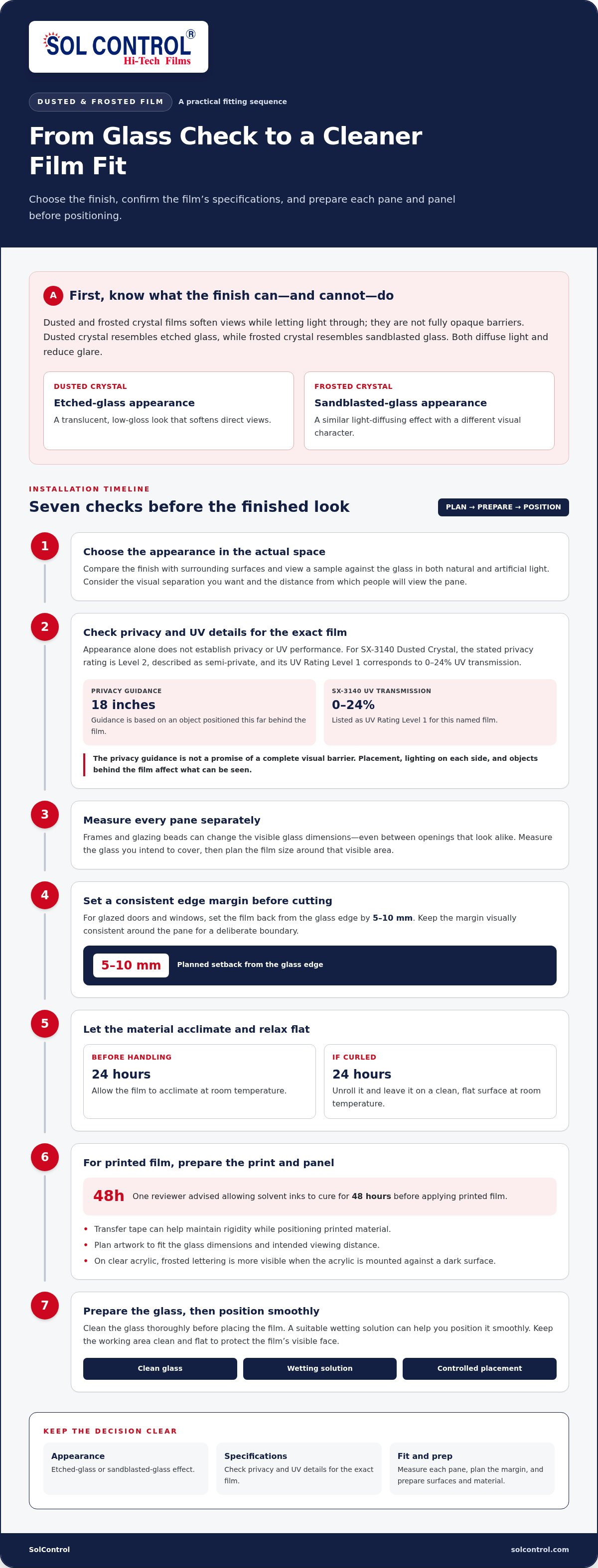
Clear glass can gain an etched appearance without losing all its light. Dusted vinyl is a translucent, low-gloss film that diffuses light and reduces glare; its privacy guidance is based on an object positioned 18 inches behind it. The result is a softer view through the glass, not a fully opaque barrier.
That balance makes the finish appealing where natural light matters but a clear view feels too exposed. The right application depends on the look you want and the level of privacy the glass needs to provide.
This guide explains how dusted crystal and frosted crystal finishes look, where they work well, and what to consider before applying them. You’ll also learn how to measure glass, size and cut film, and prepare the surface for a cleaner fit. Careful preparation helps prevent dust, creases, and uneven edges from distracting from the finished appearance.
Key Takeaways
Choose between the etched-glass look of dusted crystal and the sandblasted-glass appearance of frosted crystal.
Consider digitally printed frosted film when creating a distinctive feature partition in an office.
For a refined finish on glazed doors and windows, plan a consistent margin from the glass edge.
Allow film to acclimate at room temperature before handling, and flatten curled material on a clean, level surface.
Prepare the glass carefully and use a suitable wetting solution to help position the film smoothly.
Dusted crystal film gives clear glass a consistent, etched-glass appearance. Its translucent, low-gloss surface diffuses light and reduces glare while softening direct views. Unlike an opaque covering, it still lets light through. The finish also maintains a uniform color in reflected and transmitted light, so it looks consistent from either side of the pane. For a softer, sandblasted-glass effect, frosted crystal film offers a similar light-diffusing appearance.
The choice between dusted and frosted finishes is mainly visual. Dusted crystal resembles etched glass, while frosted crystal resembles sandblasted glass. Both suit glass that needs a more discreet appearance without blocking all daylight. Consider surrounding finishes, lighting, and the desired degree of visual separation. Positioning a sample against the actual glass can show how the film looks in natural and artificial light.
Privacy has limits. The stated guidance for these films is based on an object positioned 18 inches behind the film. For SX-3140 Dusted Crystal, the listed Privacy Level is 2, described as semi-private. That rating helps set expectations: the film obscures detail, but shouldn’t be treated as a complete visual barrier. Placement, lighting on each side, and the distance between the film and objects behind it all affect what someone can see.
UV transmission is another distinct consideration. SX-3140 Dusted Crystal has UV Rating Level 1, corresponding to 0-24% UV transmission. That figure applies to the named film, not every dusted or frosted option. Don’t assume the etched appearance indicates a particular UV performance. For a project where UV transmission matters, compare the specification for the exact film being considered with the needs of the space.
Interior glass partitions are a practical application. Frosted vinyl can be digitally printed to create office feature partitions, combining a translucent surface with custom visual content. For commercial spaces coordinating architectural glass graphics alongside broader promotional displays, Monster Media Inc. offers large-scale printing solutions to help maintain cohesive branding throughout a facility. Printed sections can define a meeting area or add visual separation while allowing light to pass through. Plan the artwork around the glass dimensions and intended viewing distance. On clear acrylic, frosted lettering becomes more visible when the acrylic is mounted against a dark surface.
Door and window placement influences the finished look. For a cleaner edge on glazed doors or windows, set the film 5-10 mm from the glass edge. This small, consistent margin makes the installation look deliberate and keeps the film away from the edge. Measure each pane separately, since frames and glazing beads can create different visible glass dimensions, even across openings that appear alike.
For printed film, allow solvent inks to cure for 48 hours before applying the film, as one reviewer advised. Transfer tape can help maintain rigidity during application, especially when handling printed material. These steps support controlled placement and reduce the risk of stretching the printed panel. Keep the design aligned with the glass edges and use a clean, flat working area to protect the film’s visible face.
Match the finish to the project: choose an etched-glass look for a uniform, refined surface, or a sandblasted-glass look for a frosted effect. Then assess privacy from the intended viewing distance, confirm the specific film’s UV rating if relevant, and plan the edge margin before cutting. These checks help dusted vinyl suit the glass, lighting, and level of visual separation the space requires.
Set the film back from the glass edge. Keep the margin visually consistent around the pane to give the finish a deliberate boundary. When comparing options, consider how each relates to surrounding finishes and the visual effect you want: dusted crystal suggests etched glass, while frosted crystal suggests sandblasted glass. Their color remains uniform in reflected and transmitted light, helping the appearance stay consistent from either side. That consistency does not make the film opaque or increase the privacy it provides.
Before choosing, view a sample against the actual glass in the room’s natural and artificial light. Consider the intended viewing distance and degree of separation, especially where people will look through or toward the pane. For a printed partition or lettering on acrylic, consider how the content will fit within the glazed area and how the surface behind it affects visibility. Keep the film’s stated privacy and UV specifications separate from its appearance: an etched-glass effect alone establishes neither. These checks help align the finish, placement, and visual purpose without treating appearance as a substitute for listed specifications.
What do customers say about Dusted Vinyl?
Customer feedback is most useful when it describes a specific installation step. One reviewer advised allowing solvent inks to cure for 48 hours before applying printed film. The same reviewer recommended transfer tape to help maintain rigidity during application. These are practical observations, not a universal rating of every film or installation. They point to two factors customers can assess: print readiness and control while positioning the material.
For a printed panel, curing time matters because the film is handled during fitting. The reviewer’s 48-hour recommendation gives a clear process example: print first, allow the inks to cure, then prepare the film for application. Transfer tape can help keep a printed sheet stable as it moves onto glass. That advice is particularly relevant to designs with lettering or graphics, where movement can disrupt alignment.
Feedback about fitting also highlights the value of preparing the material before work begins. Window film performs best when acclimated to room temperature for 24 hours before handling. If it arrives curled, unroll it and leave it on a clean, flat surface at room temperature for 24 hours. These steps give the film time to lie flat before trimming, rather than forcing a curl into position during installation.
Glass preparation is another place where small choices affect the finished result. Clean the glass thoroughly before placing film, since dust or residue can become visible beneath a translucent finish. For adhesive-film application, the recommended wetting solution uses 8-10 drops of mild, non-moisturizing dish detergent in a 32-oz. spray bottle of clean water. Mix it evenly, then wet the glass so the film can be positioned before final smoothing.
Accurate measuring can prevent edge problems customers may notice after fitting. Measure the visible glass, then cut the film ½ inch to 1 inch larger than the glass on all sides. That extra material allows trimming after positioning. Keep the blade controlled and use the glass edge as a guide. For a wide pane that needs two sections, overlap the pieces by about 1/2” inch before cutting through the overlap.
Some feedback concerns what happens after application. If film edges continue to curl, the instructions suggest holding a warm hair dryer about 8-12 inches from the film. Keep the heat moving rather than concentrating it in one spot. This is a targeted response to curling edges, not a substitute for correct measuring, clean glass, or a flat starting sheet.
To assess customer comments fairly, distinguish installation advice from product performance claims. A reviewer describing transfer tape is explaining a handling technique, not establishing privacy, UV performance, or durability for every film. Compare comments with the exact film specification and intended application. Printed office graphics, a clear-glass partition, and lettering on acrylic, for example, have different visual goals.
Use feedback as a practical checklist, not a guarantee of identical results. Before fitting, confirm the surface is clean, the material is flat, and any printed inks have cured. Measure each pane, allow extra material for trimming, and plan how to support printed sections during placement. These steps turn a reviewer’s experience into a repeatable workflow while keeping the finished appearance suited to the actual glass and design.
SolControl: Automotive Window Films
SolControl supplies film and tools to professionals working on automotive and architectural glass projects. For vehicle windows, its Automotive Window Films offer a related product category. For building projects, Architectural Window Films and Tinting Tools help installers and contractors source materials for their work. Paint Protection Films are also available for businesses handling vehicle surface protection.
Turn to SolControl when sourcing film products or professional tools for an upcoming project. The right materials depend on the application, surface, and finish you want. Contact SolControl to discuss your film and tool requirements.
Plan Your Next Glass Film Project
Let each pane’s purpose guide your decision. A conference-room partition, storefront window, and vehicle window each call for a finish suited to their setting and use. Before selecting dusted vinyl, define the visual effect you want, how the space will be used, and what materials your team needs to complete the work.
SolControl offers Automotive Window Films, Architectural Window Films, and Tinting Tools for professionals sourcing products across vehicle and building applications. If you’re planning a glass project, consider how dusted vinyl fits the intended setting and your team’s workflow. A clear project brief helps keep material selection and preparation aligned.