A squeegee that feels right in your hand can still be wrong for the film. What makes a good PPF squeegee is the right balance of blade material, edge shape and handle for the film and panel. That match helps you guide the tool precisely and move air and installation liquid out from beneath the film.
The tool matters: a poor fit can make it harder to control pressure or reach curves and tight spaces. Choosing well isn’t about finding one squeegee for every task. It’s about matching the working edge and grip to the job.
This guide explains how blade materials affect feel and flexibility, which shapes suit different surfaces, and how handle design influences control. You’ll also learn what to consider when clearing air and liquid from beneath the film, so you can build a practical selection for your installation work.
Key Takeaways
Match the squeegee’s edge and flexibility to the film and the surface, rather than relying on one tool for every application.
Use controlled, deliberate strokes to move air and installation liquid out from beneath the film.
Consider how material affects the squeegee’s feel and pressure when choosing a tool for precise work.
Choose a shape and handle that support access and control across broad panels, curves and tight areas.
Choosing squeegees for different film applications
A squeegee should suit the film, panel and movement required for each pass. A broad, open vehicle panel allows longer strokes, while a bumper curve calls for smaller, controlled movements. For installers, what makes a good PPF squeegee is how well its edge and grip support the specific task, not whether it works everywhere.
Start by identifying the work area. Note whether the film must cross a curve, reach a narrow recess or sit on an embossed structural surface. Then choose a working edge that can maintain contact without forcing the tool into an awkward angle. A flexible edge can follow changing contours; a firmer edge may provide more direct pressure on flatter areas.
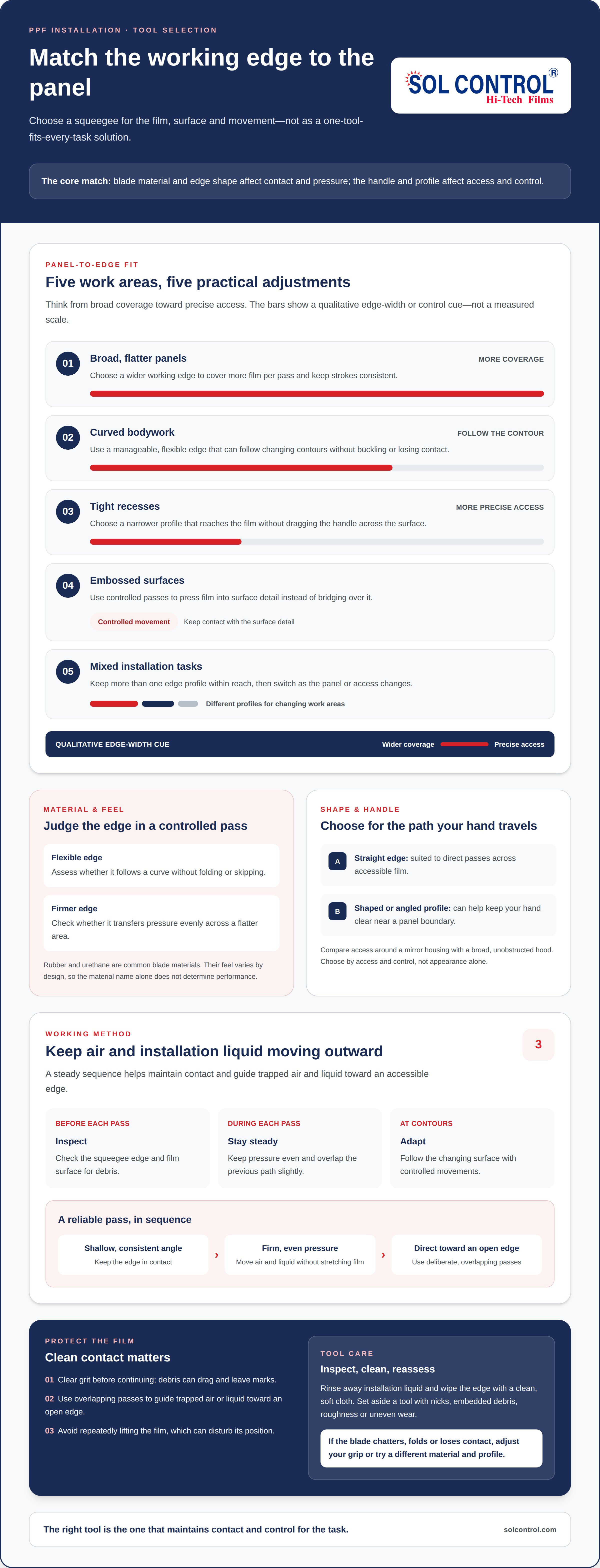
Broad, flatter panels: Select a wider working edge to cover more film per pass and keep strokes consistent.
Curved bodywork: Use a manageable tool that follows the panel contour without buckling or losing edge contact.
Tight recesses: Choose a narrower profile that can reach the film without dragging the handle across the surface.
Embossed surfaces: Use controlled passes that press film into the surface detail instead of bridging over it.
Mixed installation tasks: Keep more than one edge profile within reach, then switch when the panel changes.
Test the tool on a representative section before committing to a long pass. Keep the blade aligned with the area being worked, and adjust hand pressure rather than twisting the edge. If the tool skips over a contour, change its angle or choose a better-fitting profile. This helps maintain control across changing panel shapes.
Clean and maintain a PPF squeegee by rinsing away installation liquid and wiping its edge with a clean, soft cloth. Inspect the working edge before each job; replace or set aside a tool with nicks, embedded debris or a rough spot that could mark film.
Removing air and liquid from beneath film
Controlled squeegee passes move trapped air and installation liquid toward an open edge. The same technique presses film into embossed surfaces without bridging their texture.
Application Angle and Pressure
Hold the squeegee at a shallow, consistent angle so its working edge stays in contact with the film. Apply firm, even pressure, enough to move liquid and air ahead of the blade without stretching the material or losing control. Start near a stable section, then direct each pass toward an accessible edge. Adjust your angle as the panel contour changes.
Scratch and Bubble Prevention
Debris caught beneath a squeegee can drag across the film and leave marks. Keep the working edge clean, and clear away grit before continuing. Bubbles form when air or liquid remains trapped, so use overlapping passes to guide residue toward an open edge. Avoid lifting the film repeatedly, which can disturb its position and make a smooth pass harder.
Work in a deliberate sequence rather than making random strokes. On a broad panel, divide the film into manageable sections and finish each area before moving on. Direct displaced liquid and air toward an accessible edge, and watch the area ahead of the squeegee. If a pocket remains, reposition the tool and guide it outward with a controlled pass.
Before each pass: Inspect the squeegee edge and film surface for debris.
During each pass: Keep pressure steady and overlap the previous path slightly.
At contours: Follow the changing surface with controlled movements.
Blade material affects how a squeegee flexes, glides and transfers pressure to paint protection film. Compare the edge’s feel and response during a controlled pass, rather than choosing by appearance alone. A blade that bends easily may follow changing contours, while a firmer edge can feel more direct on a flat section.
Rubber and urethane are common blade materials in film-installation tools. Their feel varies by design, so the material name alone doesn’t tell you how an edge will perform. Check how the blade flexes against a smooth panel, whether it returns to shape, and whether it maintains even contact as you move.
Flexible edges: Assess how the blade follows a curved section without folding or skipping.
Firmer edges: Observe whether they transfer pressure evenly across a flatter area.
Surface finish: Inspect the working edge for roughness or damage that could catch film.
Material choice also affects control through the handle. A soft blade may compress under pressure, changing the contact area as your hand moves. A firmer blade can feel more stable, but it still needs an edge profile suited to the panel. For example, test a more compliant blade on a curved bumper area, then assess a firmer edge on a broad, flat section.
Compare tools using the same film and similar hand movements. Hold each at a consistent angle, apply steady pressure, and note whether the blade glides smoothly or drags. If the edge chatters, folds or loses contact, adjust your grip or try a different material and profile. This practical test connects blade feel to the work instead of relying on a label.
Inspect the material before each installation. Remove residue with a clean cloth, then check the edge for nicks, embedded grit or uneven wear. A damaged blade can create inconsistent contact, even when its material suits the task. Keep clean tools separate from used ones so debris doesn’t transfer back to the working edge.
Squeegee shapes and handles
A straight squeegee edge suits direct passes across accessible film. A shaped or angled profile can help keep your hand clear near a panel boundary. Choose based on the path your hand must travel, not appearance alone. For example, compare access around a mirror housing with a broad, unobstructed hood.
Edge width changes how much film you contact with each pass. A wider edge can cover a broad section, while a narrow profile offers more precise placement in a confined area. Check that the full working edge meets the film evenly. If only one corner contacts the surface, adjust your approach or choose another shape.
Handle design affects reach, grip and tool orientation. A compact handle can be easier to position near a tight recess, while a longer grip may keep your knuckles away from the panel. Hold the tool as you would during installation. Check that your wrist stays aligned and the edge remains visible throughout the stroke.
Straight profiles: Consider them for clear, direct passes across open sections.
Angled profiles: Assess whether the offset improves access around trim or a curve.
Narrow profiles: Use them where a wider blade cannot fit without obstruction.
Different handles: Compare grip comfort, reach and control in the installation position.
Test the shape and handle together on a representative panel area. Keep the film stationary, then move the tool through the intended stroke. Notice whether the handle blocks your view, forces a bent wrist or makes pressure uneven. A suitable combination lets you guide the edge without repeatedly repositioning your hand.
Build a small selection around the tasks you perform most, rather than expecting one profile to fit every panel. Keep each tool clean and store it so the working edge stays protected. To equip your installation setup with professional tinting tools, explore the available options at SolControl.
SolControl
SolControl supplies paint protection films and tinting tools for installers building a practical setup. Once you’ve identified the squeegee shapes and handle styles that suit your work, consider how each tool fits alongside the film you install. SolControl also offers automotive and architectural window films, giving contractors access to several film categories through a wholesale distribution partner.
Turn to SolControl when sourcing film and professional tools for installation work or refining the equipment you keep on hand. A considered selection helps match the film application to the tools used to work it, without expecting one squeegee to suit every task.
Knowing what makes a good PPF squeegee matters when that knowledge shapes your daily setup. Treat each new panel as a chance to refine how your tools support the work. Notice where access becomes difficult, where your grip changes, and which tool lets you maintain a controlled stroke. Those observations can guide practical adjustments to your tool selection and help make your process more consistent.
For installers reviewing their film and tool needs, SolControl brings together products for different application work, including Automotive Window Films, Architectural Window Films and Tinting Tools. Start with the tasks your shop handles and the tools that support them. The next step is to talk with SolControl about your needs and select products for your setup.
What features make a good paint protection film (PPF) squeegee?
A good PPF squeegee gives you a smooth, predictable edge and a grip you can control. Look for a clean, undamaged blade that stays in contact across the film, plus a shape suited to the panel. For example, a tool that stays aligned during a pass across a fender helps keep pressure consistent without forcing an awkward wrist position.
What squeegee blade materials are best for applying PPF?
No single blade material suits every film and panel. Rubber and urethane are used in installation tools, but performance depends on the blade’s construction and flexibility. Compare how each edge moves across the film during a short test pass. Choose one that glides without catching, folding or losing contact, and keep the edge clean during installation.
How do squeegee hardness and flexibility affect PPF installation?
Hardness influences how directly pressure transfers through the blade, while flexibility affects how well its edge follows changing contours. A firmer blade may feel controlled on an open, flat area; a more flexible one may conform more readily around a curve. During a test pass, notice whether the edge stays stable or bends enough to disrupt your stroke.
What squeegee sizes and shapes are useful for PPF installation?
A practical selection includes a broad profile for open panels and a narrower one for restricted spaces. Size affects coverage, but a larger blade can be difficult to position near trim or a recess. Consider panel access and the direction of your stroke. Switching tools at a panel boundary can make each pass easier to guide precisely.
Which PPF squeegee is best for curves, edges, and tight areas?
Choose a compact, manageable squeegee that can stay aligned with the surface as its contour changes. Around a mirror housing, for example, a narrow profile may reach areas a broad blade cannot access cleanly. At an edge, prioritize a grip that lets you guide the blade without scraping nearby trim or twisting your wrist to maintain contact.
How do felt-edge and rubber-edge PPF squeegees compare?
Felt and rubber edges differ in surface feel and how they contact the film, so the better fit depends on the task and tool design. A felt edge offers softer contact, while rubber provides a more direct blade-to-film feel. Inspect each edge for wear or embedded debris, then assess its glide and control on the intended panel.