Tesla window tinting: curing time and EV glass choices
Tesla window tint typically takes 3 to 5 days to cure, and in high-humidity climates it can take up to two weeks. The challenges of tinting Teslas and other EVs go beyond curing: roof and windshield choices affect cabin heat, while installation calls for care around vehicle electronics. Understanding tinting Teslas and other EV challenges starts with seeing how these decisions connect.
When cabin heat is a concern, it makes sense to focus on the panoramic roof, but each glass area has different practical and legal considerations. Newly installed film may show small water bubbles during its first week. Be patient: don’t puncture them or roll the windows down too soon. A careful approach to tinting Teslas and other EV challenges considers the full glass layout, not just the most visible windows.
This guide explains how film curing works, which Tesla glass areas to consider tinting, and how film can help manage cabin heat. You’ll also learn why protecting sensors and wiring matters, so you can weigh the benefits and trade-offs before deciding what to tint.
Key Takeaways
Allow newly installed tint time to cure, and leave small water bubbles alone while the film settles.
Consider the glass roof’s role in cabin heat, while treating roof installation as a glass-specific decision.
Protect electronics during tint work by planning carefully around sensors, wiring, and camera areas.
Match film choices to each glass area and local rules. According to Ohio Legislature, front side windows must allow at least 50% of light to pass through.
Window film does not inherently damage defroster lines, glass, or electronics, but rough handling or excess moisture during installation can cause problems. On a Tesla, careful work around cameras, wiring, and expansive glass helps protect the vehicle and its interior.
Sensor and Camera Protection
Sensor and camera protection means keeping film, tools, and installation moisture away from sensitive components and their viewing areas. On a Tesla Model 3, the Autopilot cameras need a clear view through the windshield; film placement and clean edges matter. A shop reported removing both trunk linings on a 2024 Model 3 to protect electronics from water during tinting. That example shows why vehicle-specific access and care matter.
Risks to Defroster Lines and Electronics
Defroster lines are delicate conductive paths on rear glass, and scraping or pulling cured film aggressively can damage them. Tint removal or installation can also expose nearby electronics to moisture if water reaches trim openings. A Tesla's rear window and trunk area deserve particular attention: the reported 2024 Model 3 job involved left and right trunk linings. Controlled film handling and careful water management reduce these risks.
UV, Glare, and Interior Protection
Ceramic tint can help limit UV exposure and solar heat entering through expansive glass, supporting comfort for occupants and reducing sun exposure on interior materials. High-quality ceramic window films block up to 99% of UV rays, while quality tinting can block up to 60% of solar heat. Less glare can also make bright daytime driving more comfortable. Choose film for heat rejection and visibility, not darkness alone; the battery may benefit indirectly when the cabin needs less cooling.
Installation Precautions
Before work begins, identify camera locations, defroster lines, trim openings, and wiring routes on the specific Tesla model. Protect exposed components, control moisture, and avoid scraping across rear-glass heating lines. Keep film clear of camera viewing areas, and inspect the glass and electronics after installation. These practical steps help protect the vehicle while preserving the benefits of ceramic tint.
Should I tint the Tesla glass roof?
A Tesla’s panoramic glass can admit infrared heat, so roof tint may improve cabin comfort. Film type, visibility, glass condition, and local tint limits all matter.
Tinting Panoramic Glass and Windshields
Tinting panoramic glass means applying film across large roof panels or windshields to manage heat and light. It matters because expansive glass exposes the cabin to sunlight while driving and when parked. For a Model Y roof, a 50% VLT ceramic tint is one suggested option; clear ceramic windshield film with at least 80% VLT maintains stronger light transmission. Confirm the film is suitable for the specific glass area.
Preventing Cracks and Distortion
Safe glass-roof tinting uses controlled handling and film application suited to the vehicle’s curved panels. That matters because poor fit, trapped debris, or excessive heat during shaping can affect the finished appearance. Inspect the roof for existing chips before installation, use film cut to the glass, and avoid forcing it around edges.
Choosing Film Types for EVs
Ceramic, carbon, and dyed films differ in heat performance and longevity, so the right option depends on your priorities. Ceramic tint is a strong choice for managing infrared heat, with reported infrared rejection of 50-80%. Carbon film typically blocks 40-45% of infrared radiation. Basic dyed tint may fade to purple within 2-3 years, while ceramic tint can last 10 years or longer with proper care.
Safe Installation and Tint Limits
Safe installation on panoramic roofs and frameless windows requires accurate patterns, careful edge placement, and film handling that preserves visibility. There isn’t one tint limit for every US state. According to Ohio Legislature, front side windows must allow at least 50% of light to pass through; California requires at least 70% VLT on front side windows. Check the rule for the state where the vehicle is driven before choosing film.
Cabin temperatures and air-conditioning recovery
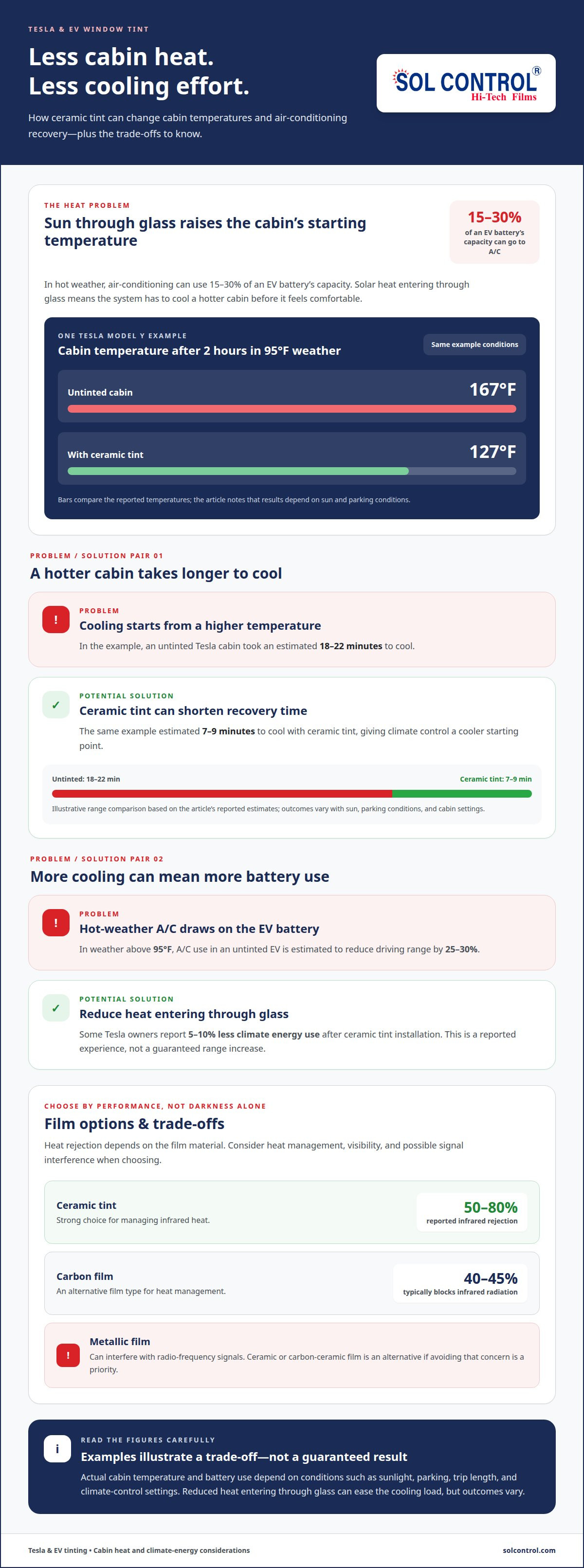
In hot weather, air-conditioning can use 15-30% of an EV battery’s capacity. Solar heat entering through glass raises the cabin’s starting temperature, so cooling takes energy before the drive feels comfortable. In one Tesla Model Y example, the untinted cabin reached 167°F after two hours in 95°F weather. The same example recorded 127°F with ceramic tint, giving climate control a cooler starting point.
That difference can affect recovery time. The example estimates 18-22 minutes for an untinted Tesla cabin to cool, compared with 7-9 minutes with ceramic tint. These figures illustrate how reduced heat entering through glass can ease the air-conditioning load; results depend on sun, parking conditions, and cabin settings. In weather above 95°F, air-conditioning use in an untinted EV is estimated to reduce driving range by 25-30%. One part of tinting Teslas and other EV challenges is managing this trade-off between comfort and battery use.
Film selection matters because heat rejection depends on the material, not simply the shade. Ceramic tint can help block infrared heat, while carbon film typically blocks 40-45% of infrared radiation. Some Tesla owners report 5-10% less climate energy use after ceramic tint installation. Treat that as a reported experience, not a guaranteed range increase: cabin temperature, trip length, and climate-control use all influence battery consumption.
Metallic film involves a different trade-off: it can interfere with radio-frequency signals. Ceramic or carbon-ceramic film is a suitable alternative if avoiding that concern is a priority. Consider each glass area and how the vehicle is used. A sun-exposed roof brings heat in above occupants, while side glass affects direct sunlight and glare. Understanding tinting Teslas and other EV challenges means recognizing that reducing incoming heat may help the cabin feel cooler before departure, but it does not change battery capacity or replace sensible climate-control settings.
Tinting the roof, windshield, side windows, and rear windows
Choosing which glass to tint lets Tesla owners balance comfort, visibility, heat rejection, and legal limits. The roof deserves attention because a vehicle’s roof accounts for 30-40% of total heat gain; window tint can also reduce UV exposure and glare.
The trade-off is straightforward: ceramic window film can block up to 99% of UV rays and quality tinting can block up to 60% of solar heat, but darker film can reduce visibility. Consider glass areas separately rather than choosing one shade for every window.
Roof: A 50% VLT ceramic tint is recommended for Model Y glass roofs. It addresses heat from expansive overhead glass while allowing light through.
Windshield: Clear ceramic tint with at least 80% VLT is recommended. In Ohio, a tint strip may extend no more than 5 inches down from the top edge or below the AS-1 line, according to Ohio Legislature.
Front side windows: A 70-85% VLT ceramic tint is a suggested range. Ohio requires these windows to allow at least 50% of light to pass through, according to Ohio Legislature.
Rear side windows: A 15-20% VLT ceramic tint offers a darker option. Check the rules for where the vehicle is registered and driven before selecting a shade.
These recommendations do not replace state-specific requirements: allowable tint varies across the United States. Compare the visible light transmission (VLT) of the glass and film with local limits for each window. Factory glass may already be tinted, so the glass and added film together determine the final light transmission.
Tint limits vary by state, so there is no single nationwide limit. In Ohio, front side windows must allow at least 50% of light through, and a windshield tint strip may extend no more than five inches from the top edge or below the AS-1 line.
SolControl: Automotive Window Films
SolControl supplies automotive window films and tinting tools to installers and contractors working on Tesla and other EV projects. After identifying the glass areas, heat-management goals, and applicable tint limits, you can select the materials and tools needed for the job. Automotive films are made for vehicle glazing; paint protection films serve a separate purpose, protecting painted surfaces. Architectural window films are for building-glass projects, not vehicle windows.
Turn to SolControl when you’re sourcing film or professional tools for automotive tinting work and want to align supplies with the vehicle and installation requirements. Explore the relevant categories, then choose what fits your project. Visit SolControl.com to learn more.
Plan your next EV tinting project
Plan the job around the specific vehicle: decide which glass areas matter most, prioritize heat control and visibility, and account for sensors and electronics. This turns the broader question of tinting Teslas and other EV challenges into practical decisions about materials and project requirements.
Installers and contractors can source automotive films and tinting tools for EV projects from SolControl. The product range also includes architectural window films for building projects. Match the materials to the application and the result you want to achieve.
Tesla window tint usually takes 3 to 5 days to cure, and high humidity can extend curing to two weeks. Keep the windows rolled up for 3 to 5 days after installation. Small water bubbles during the first week can be part of the curing process; leave them alone rather than puncturing the film. Sun exposure, temperature, and humidity affect how quickly moisture evaporates.
Can I tint over the factory UV protection?
Yes, window film can be applied over factory glass, including glass that already filters UV rays. Tesla factory glass blocks most UV rays but does less to stop infrared heat, so added film may help address heat and glare. Consider the combined light transmission of the glass and film before choosing a shade, especially for front windows, where state rules apply.
Does tinting a Tesla void the warranty?
Adding window tint does not void a Tesla’s overall vehicle warranty. However, installation-related damage, such as scratched glass or affected defroster lines, is separate from the vehicle’s overall warranty status. Keep installation records and document the glass condition beforehand. This provides a clear reference if a concern arises after tinting.
What tint shade is best for Tesla Model Y?
The best shade depends on the glass area, desired visibility, and local law. One suggested combination is 50% VLT ceramic film for the Model Y glass roof, 70-85% VLT for front side windows, and 15-20% VLT for rear side windows. VLT means visible light transmission. Check the rules where you drive, and account for any existing factory tint when selecting film.
Can window tint interfere with Tesla cameras, sensors, antennas, or driver-assistance systems?
Film containing metal can affect radio-frequency signals, so ceramic or carbon-ceramic film is a suitable alternative if you want to avoid that concern. Keep film clear of camera views, and do not cover sensors or antenna elements. For example, windshield film should leave cameras used by driver-assistance systems a clear view through the glass. Careful placement matters as much as film type.
How does tinting affect an EV’s cabin temperature, air-conditioning use, and driving range?
Tint can reduce solar heat entering the cabin, potentially lowering the cooling needed after the vehicle has been parked in sunlight. That may reduce air-conditioning energy use, but tint does not increase battery capacity or guarantee a particular range gain. The effect depends on sun exposure, cabin settings, trip length, and how much cooling the vehicle needs during the drive.