The Professional Guide to Automotive Window Film: A 2026 Wholesale Perspective
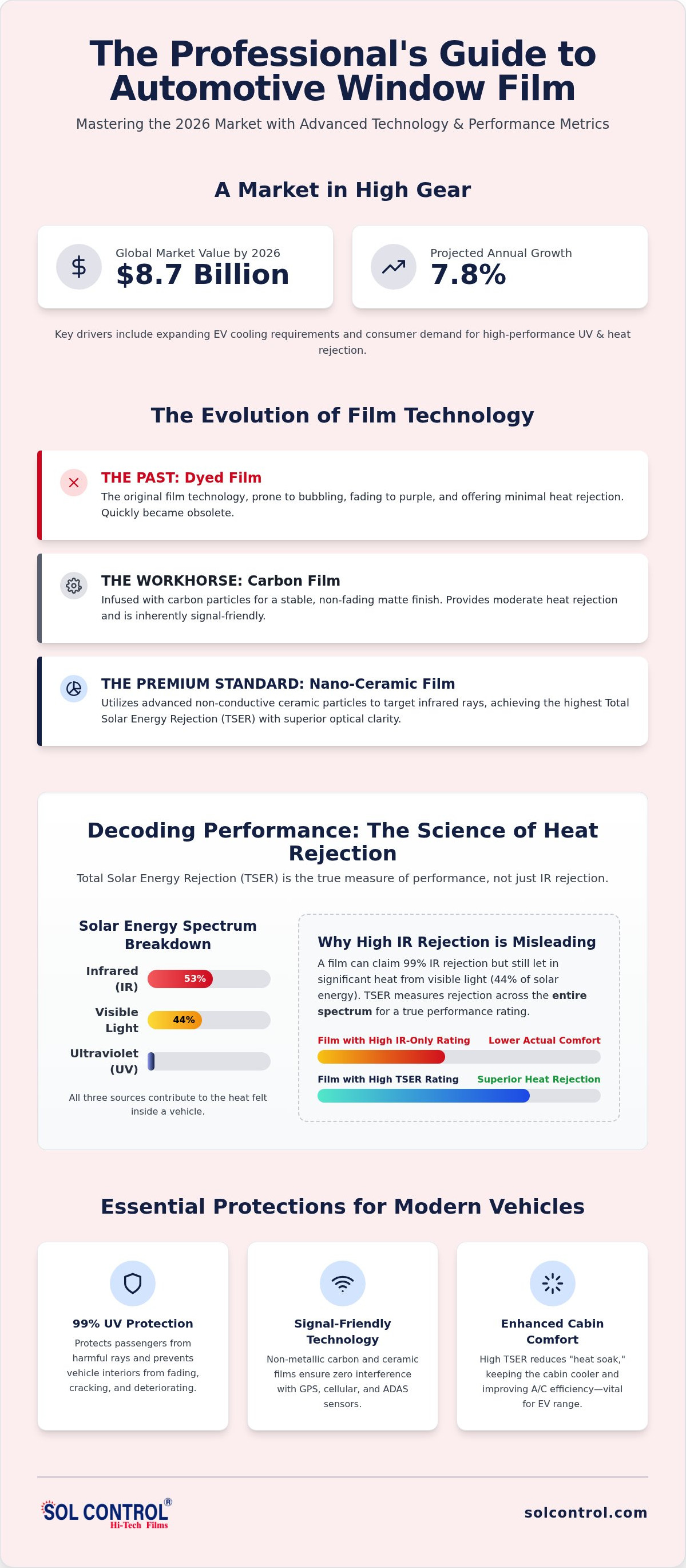
By the end of 2026, the global market for automotive window film is projected to reach a value of $8.7 billion, driven by a 7.8% growth rate and the specific cooling requirements of the expanding electric vehicle segment. You've likely noticed that today's customers are more informed than ever. They don't just want privacy; they demand high-performance heat rejection and UV protection that won't interfere with their vehicle's electronics. It's a significant opportunity for your business, but only if you can deliver consistent results without the frustration of unreliable suppliers or film that fails during the shrinking process.
We understand the pressure of maintaining healthy margins while trying to explain why a premium ceramic option outperforms a standard carbon film. This guide delivers the technical and commercial insights needed to elevate your shop’s performance and profitability. You'll learn how to navigate the latest 2026 VLT regulations, select products with the highest Total Solar Energy Rejection (TSER), and leverage a one-stop wholesale model to simplify your sourcing for films, PPF, and tools. This overview provides the roadmap you need to master the 2026 market and secure your reputation as a high-performance industry leader.
Key Takeaways
Understand the shift from basic dyed products to advanced ceramic technologies to stay ahead of 2026 market trends.
Learn why Total Solar Energy Rejection (TSER) is the most critical metric for heat rejection and how to use it to sell premium films more effectively.
Discover how to structure a tiered menu that maximizes your shop's margins by effectively upselling high-performance automotive window film.
Identify the material characteristics that improve shrinkability and reduce installation re-dos to keep your workflow efficient.
Gain a competitive edge by partnering with a dedicated wholesale distributor that offers national support without competing for your retail customers.
The Evolution of Automotive Window Film Technology
Automotive window film is far more than a simple aesthetic upgrade; it's a precision-engineered, multi-layered polyester substrate treated with advanced chemical coatings. To understand its growth, one can look at The Evolution of Window Film, which details how manufacturing moved from basic dye-immersion to sophisticated sputtering and nano-particle deposition. In the past, shops relied on dyed films that often turned purple or bubbled over time. Today, the industry has shifted toward carbon and ceramic constructions that offer superior stability and performance.
Modern vehicles are essentially rolling computers. They rely on GPS, cellular signals, and advanced driver-assistance systems (ADAS) that communicate through the glass. Older metallic films, while effective at heat rejection, often acted as Faraday cages, disrupting these critical signals. Consequently, the demand for non-metallic, signal-friendly automotive window film has become the standard for professional installers. It ensures that safety sensors and connectivity features remain fully functional while the cabin stays cool.
Nano-technology has revolutionized how we manage solar energy. By manipulating materials at the molecular level, manufacturers can now produce films that offer high heat rejection while remaining virtually clear. This allows drivers to maintain visibility and comply with VLT laws without sacrificing cabin comfort. It's a level of precision that was simply unavailable a decade ago.
Carbon Window Film: The Reliable Workhorse
Carbon-based films represent a significant step up from entry-level dyed products. These films use carbon particles infused into the polyester to create a deep, matte finish that doesn't fade or change color. Because they contain no metal, they offer zero signal interference for mobile devices and navigation systems. This tier is the ideal choice for customers seeking a stylish, long-lasting look with moderate heat rejection at a competitive price point.
Ceramic and Nano-Ceramic: The Premium Standard
Ceramic technology utilizes non-conductive, microscopic ceramic particles to specifically target and block infrared (IR) light. While standard ceramic films provide excellent heat rejection, nano-ceramic variants take this further by utilizing even smaller particles to improve optical clarity and reduce haze. This precision allows for incredible performance even in lighter shades. Nano-ceramic film stands as the industry benchmark for TSER in 2026, offering the highest level of solar protection available to modern automotive professionals.
Decoding Performance Metrics: TSER, VLT, and IR Rejection
Many customers ask for "99% heat rejection," but they're usually referring to Infrared (IR) rejection. As a professional, it's your job to explain that IR is only one part of the story. To truly understand the performance benefits of window film, you must focus on Total Solar Energy Rejection (TSER). TSER is the only metric that accounts for all three components of solar energy: ultraviolet light, visible light, and infrared radiation. Marketing a film solely on its IR rejection is technically incomplete because it ignores the heat generated by visible light. When you provide accurate data, you position your shop as a technical authority rather than just a service provider.
Beyond heat management, automotive window film must provide a minimum of 99% UV rejection. This isn't just about comfort; it's about preserving the vehicle's interior materials from cracking and protecting the driver's skin from long-term sun exposure. High-quality films act as a barrier that maintains the vehicle’s resale value and health standards. Providing this level of protection is a baseline requirement for any shop aiming for premium status in 2026.
The Science of Heat Rejection
The solar spectrum consists of approximately 3% ultraviolet light, 44% visible light, and 53% infrared light. A film that blocks 98% of IR but allows 90% of visible light through will still feel warm because nearly half the sun's energy is still entering the cabin. Premium films manage "heat soak" by filtering specific wavelengths, preventing the glass itself from becoming a radiator that pumps heat into the car. Choosing the right wholesale automotive window film ensures you have access to products that balance these variables for maximum cabin comfort.
VLT and Legal Standards Across the United States
Visible Light Transmission (VLT) measures the percentage of light that passes through the glass. Lower VLT numbers mean a darker tint, which can significantly impact night-time visibility and driver safety. Because 2026 regulations vary wildly, with some states allowing 30% VLT on front sides while others require 70%, precision is mandatory. Never guess the darkness of a film. Use a calibrated tint meter for every installation to ensure your shop stays compliant with local laws. This professional approach protects your business from liability and builds long-term trust with your clientele.
Building a Profitable Shop Menu with Tiered Offerings
Professional shops succeed by guiding customers through a logical selection process. A tiered menu isn't just about price; it's about matching the right technology to the driver's specific needs. By stocking a strategic mix of automotive window film, you can capture every segment of the market without overcomplicating your inventory. This structured approach reduces choice paralysis and helps your staff close sales more efficiently.
Profitability depends on your ability to move customers up the value chain. While entry-level films keep the doors open, premium installations are where you build significant equity. Bundling your core services with adjacent products like Paint Protection Film (PPF) or Windshield Protection Film further increases the total job value. This strategy turns a single service into a comprehensive vehicle protection package, maximizing the revenue from every car that enters your bay. In instances where the glass is already compromised, it is essential to explore Windshield Replacement before proceeding with a new tint or protection film installation.
Implementing a three-tier system provides clarity for the consumer and a clear path for upselling. Your inventory should reflect these distinct categories:
Entry Tier: Dyed or hybrid films serve price-sensitive customers who prioritize basic aesthetics and privacy over advanced heat rejection.
Mid Tier: Carbon films offer a step up in durability and provide a popular matte-black finish without signal interference.
Premium Tier: High-TSER ceramic and nano-ceramic films target luxury vehicle owners and EV enthusiasts who demand the highest level of solar protection.
Supporting these tiers with professional marketing materials, such as heat lamp demonstrations and high-quality brochures, allows customers to see and feel the difference between the products. This tactile evidence makes the price difference justifiable at the point of sale, moving the conversation away from cost and toward value.
Upselling Ceramic Film to the Modern Driver
The rise of electric vehicles has changed the sales conversation. For an EV owner, heat rejection isn't just about comfort; it's about efficiency. High-performance ceramic films reduce the load on the climate control system, which can help preserve battery range during extreme weather. Older drivers also benefit significantly from the superior glare reduction and night-time clarity that nano-ceramic technology provides. "Ceramic film is no longer a luxury; it is a functional necessity for the modern, high-tech vehicle cabin."
When you source your automotive window film from a single wholesale partner like SolControl, you gain access to the entire spectrum of films, tools, and marketing support needed to run a professional operation. This one-stop-shop approach ensures consistent quality across all your tiers, allowing you to focus on the installation and the customer experience rather than managing multiple vendors.
Maximizing Installation Efficiency and Quality Control
Efficiency in the bay is the difference between a profitable day and a wasted afternoon. Pro-grade automotive window film is engineered specifically to handle the aggressive curvatures found in 2026 vehicle designs. It features high-performance adhesive tack that grabs quickly without sticking prematurely, and a consistent liner release that prevents static from attracting dust. When you work with high-quality polyester, you significantly reduce the risk of "fingers" and edge peeling. These issues are the primary causes of costly re-dos that eat into your margins.
A flawless application starts before the film even touches the glass. Maintaining a controlled shop environment is essential for minimizing contamination. Even the best film won't look right if dust particles are trapped underneath. As glass shapes become more complex, specialized tools like flexible reach squeegees and heat-resistant hard cards become mandatory. These tools allow you to reach deep into gaskets and curved corners where traditional equipment fails. Precision is everything in a professional shop.
Film Handling and Heat Shrinkability
Choosing between dry shrink and wet shrink techniques often depends on the specific vehicle glass. For complex, compound-curved back windows, many professionals prefer the dry shrink method using a dryer sheet or powder. This allows the film to move freely as it reacts to heat. You must also consider the construction; 2-ply films generally offer more stability during heat application than thinner 1-ply options. To avoid "ghosting" or optical distortion, keep your heat gun moving and avoid overheating any single spot. This ensures the polyester shrinks uniformly without compromising the clarity of the advanced coatings.
The Essential Professional Tool Kit
Your results are only as good as the tools in your hand. Professional-grade squeegees provide the consistent pressure needed to evacuate mounting solutions without scratching the film surface. Precision blades and snap-off knives are equally critical. A dull blade can snag the film or damage the glass, leading to customer complaints. Using a dedicated mounting solution instead of generic soap ensures the adhesive sets correctly and lasts for the life of the vehicle. To equip your shop with the best gear, browse our professional tinting tools and ensure every installation meets the highest standards.
Choosing the Right Wholesale Partner: The SolControl Advantage
Your choice of a wholesale partner defines the operational ceiling of your shop. In an industry where precision and reliability are paramount, a supplier should act as a dedicated mentor rather than just a vendor. Finding a distributor that provides high-quality automotive window film is the first step; finding one that understands the specific pressures of the B2B market is what ensures long-term profitability. At SolControl, we prioritize strategic alignment with our installers to ensure you have the inventory and technical data required to lead the market.
Reliability in the supply chain is a non-negotiable asset for a growing business. National shipping capabilities and consistent inventory availability mean you don't have to turn away high-margin jobs due to backordered rolls. Beyond just film, a comprehensive partner provides a total ecosystem of architectural films, Paint Protection Film (PPF), and professional-grade tools. This one-stop-shop model streamlines your logistics and allows you to maintain a unified standard of quality across every service you offer.
Exclusively Wholesale: Your Success is Our Business
The most significant advantage of our partnership is our strict non-compete model. Many distributors in the 2026 market have expanded into retail installation services, which means they're effectively competing with their own customers for local leads. We maintain an exclusive focus on wholesale distribution. This commitment ensures that we never bid against you for a project. Instead, our resources are fully dedicated to supporting your growth through marketing materials and technical expertise. You can view the full wholesale catalog to see how our inventory is built to support professional installers.
A Comprehensive Ecosystem for the Professional Installer
Success in the modern shop environment often requires diversifying your service menu. There is a powerful synergy between stocking high-performance window film and offering paint protection film. Customers who invest in the longevity of their interior through UV-blocking films are the same individuals who want to protect their exterior finish from road debris. We provide a seamless sourcing experience for both, along with specialized windshield protection films that are increasingly in demand for high-end and electric vehicles. This holistic approach helps you maximize the revenue from every vehicle that enters your bay. Partner with SolControl for your 2026 film and tool needs.
Elevate Your Shop Standards for 2026
The landscape of the tinting industry is evolving rapidly. Success in this market requires more than just installation skill; it demands a deep understanding of advanced film technologies and a strategic approach to your service menu. By prioritizing high-TSER ceramic options and maintaining a tiered offering, you position your business to meet the specific needs of modern drivers and electric vehicle owners. Consistency is your greatest asset in building a premium brand.
Quality control remains the foundation of your professional reputation. Using pro-grade tools and high-performance automotive window film ensures that every job is done right the first time, protecting your margins and your customers' trust. Your growth is supported by a partner who understands your goals. SolControl provides an exclusive B2B wholesale focus and a national distribution network to keep your bays moving. With our comprehensive inventory of films and tools, you have a one-stop resource for everything your shop needs to excel. Browse Professional Wholesale Window Film Rolls today. We're here to help you master the technical and commercial aspects of the trade. Let's build a more profitable future for your shop together.
Frequently Asked Questions
What is the difference between carbon and ceramic automotive window film?
Carbon films use carbon particles to provide a deep matte finish and moderate heat rejection without the risk of fading. Ceramic automotive window film utilizes non-conductive ceramic particles to block a much higher percentage of infrared light while maintaining exceptional optical clarity. While both are signal-friendly, ceramic remains the premium choice for customers who prioritize maximum cabin comfort and superior solar energy rejection.
How does TSER affect the performance of car window film?
TSER is the most accurate indicator of a film's cooling performance because it accounts for ultraviolet, visible light, and infrared energy. A higher TSER rating means the film is more effective at preventing solar heat from entering the vehicle. This leads to a more comfortable interior and reduces the strain on the vehicle's climate control system, which is essential for maintaining energy efficiency.
Why should a professional shop choose ceramic film over dyed options?
Professional shops prioritize ceramic film because it offers extreme durability and heat rejection that dyed films simply cannot match. Dyed products rely on colorant that often breaks down, leading to discoloration and bubbling over time. Ceramic technology provides a stable, high-performance solution that enhances the shop's reputation for quality. It also allows you to offer a premium product that justifies higher labor margins.
What tools are essential for a professional automotive tint installation?
A professional installation requires a specialized toolkit designed for precision and efficiency. Essential items include high-grade squeegees for water evacuation, hard cards for edge setting, and snap-off knives with stainless steel blades to avoid scratching the glass. You also need heat guns for shrinking the film to fit curved windows and calibrated tint meters. These professional tools are vital for achieving a factory-quality finish on every job.
Is automotive window film legal in all 50 states?
Automotive window film is legal in all 50 states, but Visible Light Transmission (VLT) requirements are governed by individual state laws. Regulations vary significantly; some states allow 20% VLT while others require 70% on front windows. Recent 2026 updates across different regions have further modified these standards. Professional shops must use calibrated meters to ensure every installation stays within the specific legal limits of their region.
How does window film impact the range of an electric vehicle (EV)?
High-performance film can help extend the range of an electric vehicle by reducing the energy required for cabin cooling. Since the air conditioning system draws power directly from the main battery, a cooler interior means less drain on the vehicle's range. Using ceramic films with high TSER ratings is a practical way for EV owners to maximize their mileage, especially during the summer months.
What is the benefit of purchasing window film in bulk rolls?
Buying in bulk rolls is the most cost-effective way for a professional shop to manage its inventory. Bulk purchasing reduces the price per square foot and provides the flexibility to handle any vehicle that comes through the door without waiting for pre-cut shipments. It also allows installers to maximize film yield through efficient nesting and cutting, which is a key factor in maintaining healthy shop margins.
Does automotive window film interfere with GPS or cellular signals?
Modern carbon and ceramic films do not interfere with GPS, cellular, or satellite radio signals. Older metallized films contained microscopic metal layers that acted as a barrier to electronic waves. Because today's premium films are constructed from non-conductive materials, they allow all onboard electronics and mobile devices to function perfectly. This is a non-negotiable feature for any connected vehicle in the 2026 market.