Wagner Furno 300 Heat Gun: A Professional Installer's Guide
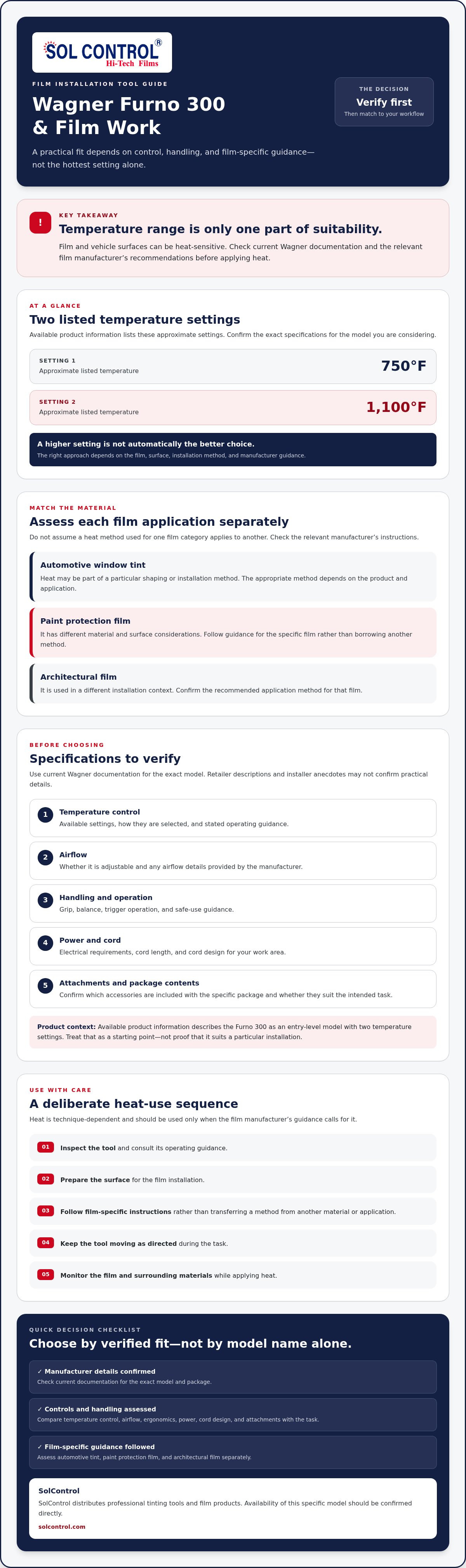
The hottest setting isn’t automatically the best choice for film installation. Controlled heat and careful technique matter just as much as a tool’s temperature range. The wagner furno 300 heat gun has two settings, listed at approximately 750°F and 1,100°F, but those figures alone don’t determine whether it suits your workflow.
Before adding a heat gun to your kit, consider the film and surface you work with and the control the task requires. Film and vehicle surfaces can be sensitive to heat, and a general-purpose tool may not provide the control every installation calls for. Confirm current specifications in Wagner’s documentation and check the film manufacturer’s recommendations before applying heat.
This guide helps you assess the Furno 300 against real film-installation needs. You’ll learn which specifications to verify, when controlled heat may fit into film work, and how to reduce the risk of damaging film or surrounding surfaces. Use the comparison criteria and checklist to weigh temperature control, handling, and intended use instead of relying on a model name or a single specification.
Key Takeaways
Assess whether the wagner furno 300 heat gun fits your workflow by checking current manufacturer documentation, not relying on its model name alone.
Compare controls, airflow, ergonomics, and cord design with the demands of your installation work.
Evaluate automotive tint, paint protection film, and architectural film separately, and follow the relevant film manufacturer’s guidance.
Use heat cautiously: inspect the tool, prepare the surface, keep the tool moving as directed, and monitor the film and surrounding materials.
Use a buying checklist to match verified specifications to your workflow. SolControl distributes professional tinting tools and film products; confirm directly whether it carries this specific model.
Wagner Furno 300 Heat Gun: What Film Installers Should Know First
What is the Wagner Furno 300, and can it handle film work? It’s a named, general-purpose heat-gun model, but the name alone doesn’t tell you whether its controls, output, and handling suit a particular installation. Start by checking the tool’s verified specifications, then compare them with the film manufacturer’s instructions and your own workflow.
A heat gun directs heated air onto a work area. As a general-purpose tool, it has uses beyond film work; the heat gun overview explains its basic function and broader applications. For installers, a useful definition is: A heat gun is a technique-dependent tool for applying heat locally during film work, when the film manufacturer’s guidance calls for it. It isn’t a substitute for correct preparation or a universal requirement for every installation.
What is the Wagner Furno 300?
The Wagner Furno 300 is a specific model in Wagner’s heat-gun range. Available product information describes it as an entry-level model with two temperature settings. Treat those details as a starting point, not proof of suitability. Before relying on a specification, confirm it in current Wagner documentation for the exact model you’re considering.
Separate manufacturer-confirmed details from retailer descriptions and installer anecdotes. A product listing may not answer practical questions about airflow, temperature control, or handling. Check the manual for operating guidance, warnings, and intended use. Don’t assume instructions for another model apply.
Where does a heat gun fit in film work?
Whether to use heat depends on the film, surface, installation technique, and film manufacturer’s recommendations. In automotive window film work, heat may be part of a particular shaping or installation method, but the right approach depends on the product and application. Paint protection film has different material and surface considerations, while architectural film is used in another installation context. Don’t automatically transfer guidance between these categories.
For example, a method used with automotive tint shouldn’t be the default for paint protection film or architectural film. Confirm the recommended application method with the relevant film manufacturer before introducing heat. Don’t choose a setting just because it appeared to work on another material or vehicle surface. Start with the film-specific instructions, then assess whether the tool’s controls and handling suit the task.
Wagner Furno 300 Specifications: What to Verify Before You Choose
A model name and a short retailer listing aren’t enough to judge whether a heat gun suits film work. Before choosing the wagner furno 300 heat gun, compare current manufacturer documentation with the tasks you perform. Verify the available details against Wagner’s documentation, rather than treating retailer descriptions or installer anecdotes as manufacturer specifications.
Specification
What to confirm
Status
Temperature control
Available settings, how they’re selected, and any stated operating guidance
Verify in current manufacturer documentation
Airflow
Whether airflow is adjustable and any manufacturer-provided airflow details
Verify in current manufacturer documentation
Power and cord
Electrical requirements, cord length, and cord design
Verify in current manufacturer documentation
Handling and operation
Grip, balance, trigger operation, and guidance for safe use
Verify in current manufacturer documentation
Attachments and included items
Which accessories come with the specific package and whether they’re suitable for the intended task
Verify with the manufacturer and seller
Which specifications matter for film installers?
Temperature settings matter, but control involves more than the number on a product page. Airflow can affect how heat reaches the work area. Grip, balance, and trigger placement influence how steadily you can guide the tool, especially in confined spaces. Check the cord length and routing against your work area, too. Confirm power requirements and included attachments for the exact model and package instead of assuming every listing describes the same contents.
Installer checklist: Confirm temperature control, airflow, ergonomics, power requirements, cord design, and included attachments in current manufacturer documentation. If a detail isn’t documented, treat it as unknown until you can verify it.
How should you compare this model with alternatives?
Use the same criteria for every model, then match verified capabilities to the work you actually do. Control options and handling may matter more for repeated tasks or tight access than for occasional use. Check that any accessory is approved for the tool and appropriate for the film and surface. Follow the film manufacturer’s application guidance as well. OSHA’s Hot Work safety fact sheet identifies heat guns as a potential ignition source, so account for nearby materials and site-specific fire-prevention procedures.
For a broader view of tools used in professional film workflows, explore professional tinting tools from SolControl, a wholesale distributor of film and installation tools. Confirm directly whether it carries this specific model before making a purchase decision.
Is the Wagner Furno 300 Suitable for Your Film-Installation Workflow?
There’s no reliable yes-or-no answer based on the model name alone. The wagner furno 300 heat gun may fit your workflow only if its verified controls and handling meet the task’s requirements and the relevant film manufacturer permits the heat technique you plan to use. Use the comparison below to identify what you know about your work and what still needs checking about the tool.
Workflow
What to assess
What to verify about the heat gun
Automotive window film
Film-specific forming and installation guidance, glass and vehicle access, and the technique used
Whether the documented temperature and airflow controls support the required method; verify both with the manufacturer
Paint protection film (PPF)
Film construction, the surface being covered, and whether heat is recommended for the task
Whether the tool’s controls and handling suit the approved process; capability is unverified until confirmed
Architectural film
The film product, glazing or other substrate, and installation instructions
Whether the manufacturer’s guidance calls for heat and whether the tool can be operated as directed; verify model suitability
Match the heat gun to the film and task
Start with the film manufacturer’s instructions, not a technique you remember from another job. Film construction, substrate, and task can all affect tool choice. Guidance for automotive window film shouldn’t automatically be applied to PPF or architectural film. For more context on automotive applications, consult SolControl’s Professional Guide to Automotive Window Film, then check the instructions for the specific film you’re using.
Next, compare the film requirements with confirmed model details. If the documentation doesn’t clearly address a control or operating condition the task requires, mark it as unknown and seek clarification rather than assuming the tool is suitable. Consider whether the grip and balance allow steady handling in the positions and spaces where you work.
When should you consider another heat-gun option?
Consider alternatives if verified controls, airflow, or ergonomics don’t align with the film manufacturer’s guidance or the work you perform regularly. Prioritize documented suitability and consistent handling over brand recognition. A tool that’s appropriate for one task isn’t automatically right for another.
Once you’ve defined your workflow requirements, explore professional tinting tools from SolControl, a wholesale distributor serving professional installers and contractors. Confirm whether the distributor carries a specific model before relying on its availability.
How to Use a Heat Gun More Deliberately During Film Installation
Heat should be part of a planned process, not an improvised fix. Before using the wagner furno 300 heat gun or another model, confirm that heat is appropriate for the film and task. The tool manual explains how to operate that specific heat gun; the film manufacturer’s instructions govern how its product should be handled. Don’t substitute a technique borrowed from a different film or surface for either set of instructions.
What checks belong before applying heat?
Start with the instructions. Read the heat-gun manual and the film manufacturer’s installation guidance, including warnings, approved methods, and any limits on heat use. If the guidance is unclear, pause and seek clarification before proceeding.
Then prepare the workspace and inspect the equipment:
Check the tool and power cord for visible damage, and confirm the tool is suitable for the work area’s power supply.
Clear away nearby heat-sensitive or combustible materials, and keep the work area orderly and adequately ventilated.
Use personal protective equipment appropriate to the task and follow the safety instructions provided with the tool and film.
Arrange the work so the cord won’t obstruct movement or pull the tool unexpectedly.
These are general precautions, not model-specific operating instructions. For the Wagner Furno 300, follow the current manufacturer manual for its controls, safe operation, and handling. Don’t assume instructions for another heat gun apply.
How can installers reduce avoidable film or surface damage?
Let the film maker’s guidance govern every heat application. Use only a method approved for the film and substrate, and keep the tool moving as the technique requires. Watch the film and surrounding surface continuously. Don’t rely on a preset temperature, distance, or dwell time unless it’s been verified for that product and method.
Work deliberately. Apply heat only where the approved procedure calls for it, and assess how the film responds as you go. If the film changes unexpectedly or the underlying surface shows signs of a problem, stop and recheck the product instructions before continuing. Don’t compensate by increasing heat or holding the tool in place longer without clear guidance.
Careful preparation and observation support more controlled heat use, but they don’t override product-specific instructions. To review tools used in film workflows, explore professional tinting tools from SolControl, a wholesale distributor serving installers and contractors.
Choosing Professional Tinting Tools and Your Next Steps
A confident purchase decision comes from matching documented tool capabilities to your work, not choosing a familiar name. Before purchasing the wagner furno 300 heat gun or another model, use this checklist to close information gaps:
Identify the exact model. Confirm its model number and check that the specifications and operating instructions match the unit being offered.
Review what’s included. Verify included attachments and accessories with the manufacturer or seller, and confirm they’re appropriate for your intended task.
Check workflow fit. Compare documented controls, airflow, and handling with the work you perform and the space where you’ll use the tool.
Confirm film guidance. Ask the tool maker about operation and the relevant film manufacturer about approved heat-use methods for that product and substrate.
Plan for safe use. Make sure every operator can follow the manual, workplace procedures, and any task-specific training requirements.
If a specification, accessory detail, or instruction remains unclear, pause and verify it before buying or using the tool. Distinguish product documentation from support, too: confirm directly with the relevant manufacturer or seller what guidance they provide rather than assuming model-specific assistance is included.
How can SolControl support a professional film business?
SolControl is a wholesale distributor serving professional installers and contractors. Its product categories include automotive and architectural window films, paint protection film, windshield protection film, and tinting tools. Considering tools alongside the materials used in your workflow can help you review your purchasing needs, but this doesn’t establish that SolControl carries the Wagner Furno 300, that a particular tool is compatible with a film, or that model-specific support is available. Confirm those details directly before making a decision.
For related tool context, consult SolControl’s Professional PPF Installation Tools: 2026 Guide and compare its information with the manufacturers’ instructions for the products you use. SolControl distributes products; it doesn’t provide professional installation services.
The right heat gun is the one whose verified features match your installation workflow, not simply the best-known model. Before choosing the wagner furno 300 heat gun, confirm its current specifications and operating instructions, then check that your planned heat technique follows the film manufacturer’s guidance. Automotive tint, paint protection film, and architectural film have distinct material and surface considerations, so don’t assume one method suits them all.
Assess handling, controls, and safe-use procedures against the tasks your team performs. If a specification or compatibility detail is unclear, verify it before purchasing or applying heat.
SolControl supplies professional tinting tools and film products through wholesale distribution to installers and contractors nationwide. To explore tools for your business, browse SolControl’s professional tinting tools. Compare the available options with your documented workflow requirements before deciding which tools fit your work.
Frequently Asked Questions
What is the Wagner Furno 300 heat gun used for?
The Wagner Furno 300 is a general-purpose heat gun used for tasks that call for directed hot air. Whether it’s appropriate for film installation depends on the specific film, surface, and technique. Don’t assume a general-purpose design makes it suitable for every film task. Check Wagner’s current manual for operating guidance, and follow the relevant film manufacturer’s instructions before applying heat.
Is the Wagner Furno 300 suitable for window tint installation?
It may be suitable for a window-tint technique only if the film manufacturer’s guidance permits heat and the tool’s verified capabilities fit the task. The model name alone can’t establish suitability. Check current Wagner documentation for operating details, then confirm the film maker’s recommended method for the specific product and application. Don’t transfer a technique or setting from another film or installation.
Can a heat gun damage window film or the glass?
Yes. Excessive or incorrectly applied heat can damage film or affect the surface beneath it. Risk depends on the material, substrate, and application method, so there isn’t one safe temperature, distance, or exposure time for every job. Follow the film manufacturer’s instructions and the heat-gun manual. Keep the tool moving as the approved technique requires, monitor the material, and stop if it behaves unexpectedly.
What specifications should I check before buying the Wagner Furno 300?
Check the exact model number and verify temperature controls, airflow, power requirements, cord details, handling guidance, and included accessories in current Wagner documentation. Treat retailer listings as secondary, and confirm the information matches the particular unit or package you’re considering. Then compare the verified details with your workflow and the relevant film manufacturer’s heat-use guidance. If a capability isn’t documented, treat it as unknown.
How should a heat gun be used safely during film installation?
Read the tool manual and film installation instructions before starting. Inspect the heat gun and cord, clear nearby heat-sensitive or combustible materials, and keep the work area orderly and ventilated. Use appropriate protective equipment and follow workplace procedures. Apply heat only when the film maker’s approved method calls for it, keep the tool moving as directed, and continually assess the film and surface. Stop if either responds unexpectedly.
Can the Wagner Furno 300 be used with paint protection film?
Don’t assume it’s suitable for paint protection film based only on the tool name. Heat use depends on the film’s construction, the surface, and the task, so consult the specific film manufacturer’s application instructions first. Then verify the heat gun’s operating guidance with Wagner. If the approved technique requires a capability that isn’t confirmed in the documentation, ask the manufacturer before proceeding or consider a better-documented option.
Does SolControl sell the Wagner Furno 300?
SolControl’s offerings include professional tinting tools, automotive and architectural window films, paint protection film, and windshield protection film. Its current availability of the Wagner Furno 300 hasn’t been confirmed, so check directly with SolControl before relying on a listing or planning a purchase. SolControl is a wholesale distributor serving installers and contractors, not a provider of professional installation services.