Why Premium Window Film Matters: A Professional Guide to High-Performance Tint
If you are still selling window tint based solely on darkness, you are leaving your reputation and your profit margins to chance. You know the frustration of a customer returning because their "black" tint turned purple within a year, or the headache of fighting a low-grade film that refuses to shrink properly around a complex rear window. These failures aren't just inconveniences. They are the direct result of using outdated material science. Choosing a premium window film is no longer just about aesthetics. In 2026, it's about leveraging advanced nano-ceramic technology to provide heat rejection and durability that standard dyed films simply cannot match.
This guide explores the technical standards and performance benefits that separate professional-grade products from entry-level options. You'll discover how high-performance films improve installer efficiency and eliminate common complaints like signal interference. We will also provide the data you need to justify higher price points to your customers by focusing on long-term value. From understanding Total Solar Energy Rejection (TSER) to mastering the latest ceramic infusions, you'll learn how to position your business as a leader in quality.
Key Takeaways
Understand the technical transition from basic dyed tints to the multi-layered polyester coatings that define premium window film in 2026.
Differentiate between carbon and nano-ceramic technologies to help your customers choose the best balance of performance and aesthetics.
Learn why TSER (Total Solar Energy Rejection) is the only comprehensive metric that truly measures a film's ability to control heat.
Identify how high-performance films reduce installation time and warranty claims through better shrinkability and superior adhesive bonds.
Streamline your inventory by sourcing automotive and architectural rolls alongside professional tools from a dedicated wholesale partner.
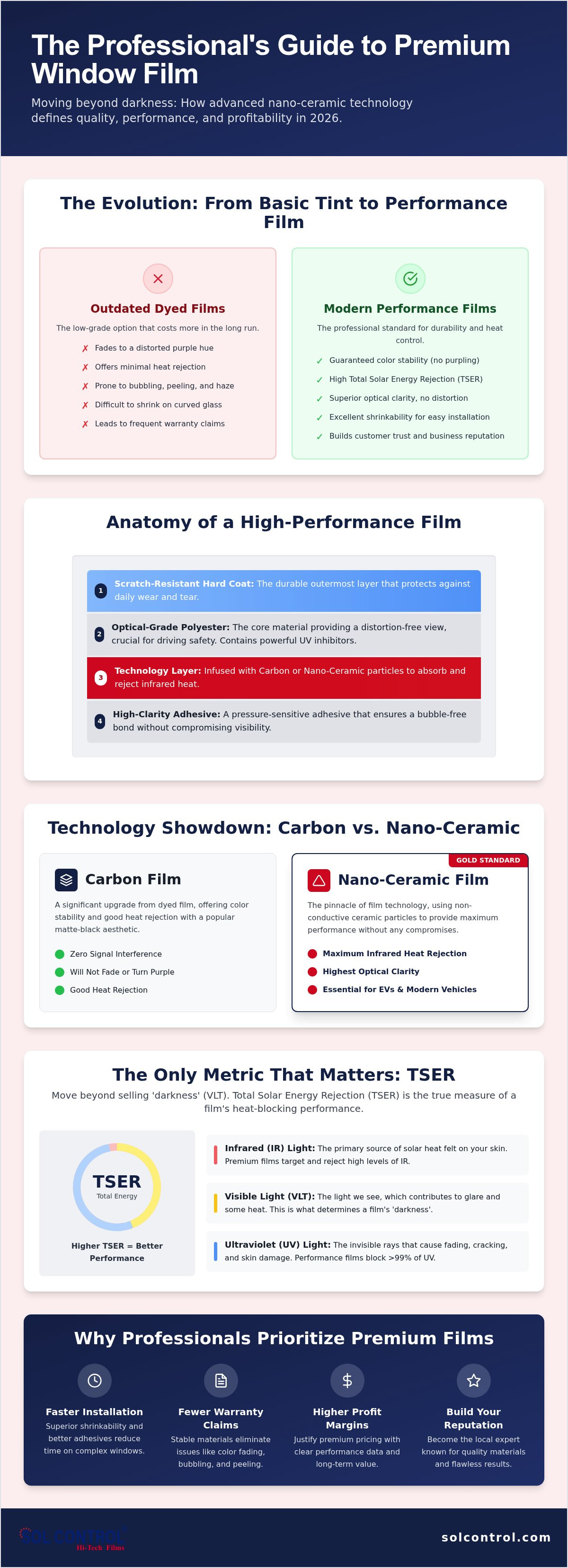
In 2026, the term "tint" is becoming obsolete among industry professionals. We now refer to these products as high-performance coatings because the material science has evolved so significantly. A Window film that qualifies as "premium" is a sophisticated, multi-layered polyester system. It doesn't just block light; it utilizes advanced particles to manage the entire solar spectrum. While economy options rely on simple dyes, a true premium window film serves as a functional barrier that prioritizes heat management and longevity.
The industry's shift toward these performance coatings is driven by several core criteria that define modern quality standards:
Color stability: The ability to resist fading or shifting hue over time.
Optical clarity: Maintaining a distortion-free view for the driver.
High IR rejection: Specifically targeting the infrared heat that causes cabin discomfort.
Standards for Total Solar Energy Rejection (TSER) are higher in 2026 than in previous decades. This change is largely due to the rise of electric vehicles, where efficient heat management directly impacts battery range. It is also a necessary response to more extreme seasonal temperatures that demand better insulation from glass surfaces. Residential specialists like Sun Guard Tint exemplify how high-performance 3M films can be used to meet these insulation needs in the home.
The Anatomy of a High-Performance Film Layer
Durability starts with the outermost layer of the film. A high-quality scratch-resistant hard coat ensures that the surface maintains its finish despite frequent window operation. Beneath this, the mounting adhesives play a critical role. Premium rolls use high-clarity, pressure-sensitive adhesives that resist bubbling and peeling. The base material itself must be optical-grade polyester. This is vital for night driving safety because it prevents the haze or "milky" distortion often seen in cheaper materials.
Color Stability and the "Purple" Problem
We've all seen older cars with windows that have turned a distorted shade of purple. This happens when the organic dyes in cheap films break down under constant UV exposure. Premium films solve this by integrating powerful UV inhibitors into the film base. Instead of unstable dyes, these products use inorganic pigments or nano-ceramics to ensure the premium window film remains effective for years.
Color stability is the ability of a film to maintain its specific Visible Light Transmission (VLT) and original hue over a 10-year period.
By using these advanced materials, installers can offer products that look as good in year ten as they did on day one. This reliability reduces warranty claims and builds long-term trust with every customer who walks through your doors.
The Evolution of Film Technology: Carbon vs. Ceramic
Window film technology has moved far beyond the metallic layers of the early 2000s. While metallic films were effective at reflecting heat, they're largely obsolete for modern vehicles because they block the very signals our cars rely on to function. Today, the choice for a premium window film installation usually comes down to two high-performance materials: carbon and ceramic. Each offers a distinct set of benefits for both the installer and the end user.
Carbon films represent the bridge between economy dyed products and high-end ceramic options. They utilize carbon particles rather than dyes, which prevents the film from fading or turning purple. In contrast, nano-ceramic films are the current gold standard. They provide maximum heat rejection even at very light shades, allowing for a neutral, factory-clear look that doesn't compromise visibility. While carbon often provides a deep, matte-black aesthetic that many enthusiasts love, ceramic focuses on pure thermal performance and optical precision.
Nano-Ceramic: Maximum Rejection, Zero Interference
Nano-ceramic technology works by embedding microscopic, non-conductive ceramic particles into the film layers. These particles are engineered to target specific wavelengths of infrared light, which is the primary source of solar heat. Because ceramic is non-metallic, it offers total signal transparency. This is a critical requirement for modern vehicles equipped with GPS, Tire Pressure Monitoring Systems (TPMS), and 5G mobile connectivity.
Electric vehicles (EVs) benefit the most from this technology. Since EVs have high tech density and sensitive electronics, using a non-interfering premium window film is essential. Beyond cooling the cabin, these films provide vital health benefits. According to The Skin Cancer Foundation, window film is a key component of a comprehensive sun protection program, as it blocks 99% of harmful UV rays that lead to skin damage and interior fading.
Carbon Film: The Reliable Professional Workhorse
Carbon film remains a favorite for shops that need a durable, color-stable product that fits a mid-range budget. The carbon particles are incredibly resilient against environmental degradation. This means the film won't bubble or peel when exposed to intense, long-term sunlight. For customers who want that classic "blacked-out" look without the risk of fading, carbon is the ideal solution. It offers moderate heat protection and excellent glare reduction, making it a strong cost-benefit choice for daily drivers. Professionals often choose to source bulk rolls of carbon film to provide a reliable, high-margin option for their clients.
Choosing between these two depends on the customer's priorities. If they demand the highest possible heat rejection and use an EV or a luxury car with advanced sensors, ceramic is the winner. If they want a stylish, long-lasting dark tint at a more accessible price point, carbon is the professional's choice.
Key Performance Metrics: Understanding TSER and UV Protection
Understanding technical metrics is the only way to separate marketing hype from actual thermal performance. Many customers focus on how dark a tint looks, but the real value of a premium window film lies in its ability to manage the solar spectrum. While Visible Light Transmission (VLT) dictates the aesthetic and legal compliance, it's only one piece of the performance puzzle. Professionals must look deeper into the spec sheet to ensure they're providing the protection their clients expect in 2026.
A common pitfall in the industry is the "IR Rejection" trap. Some manufacturers heavily market 99% IR rejection, which sounds impressive but can be misleading. Infrared radiation only accounts for about 53% of the sun's energy. If a film blocks infrared but allows too much heat through visible light, the cabin will still get hot. This is why Total Solar Energy Rejection (TSER) is the most critical metric for heat control. TSER is the percentage of total solar energy-ultraviolet, visible, and infrared-rejected by the film.
Decoding the Spec Sheet for Professionals
When you explain TSER to a customer, translate the percentage into cabin comfort. A film with a high TSER, like a 70% rejection ceramic, significantly reduces the load on the vehicle's air conditioning system. This relationship is also tied to the Solar Heat Gain Coefficient (SHGC). A lower SHGC means less heat enters the vehicle, which is a key selling point for owners of electric vehicles looking to preserve battery range. You must also balance these metrics with VLT to ensure compliance with local laws. For instance, many jurisdictions require a minimum VLT for front side windows, so choosing a high-TSER film at that specific transparency is essential for a legal, high-performance install.
The Health and Interior Benefits
Beyond heat, UV rejection is a non-negotiable standard. High-performance coatings should offer 99% UV rejection to protect both the driver and the vehicle's interior. Over time, UV rays cause upholstery to crack and dashboards to warp or discolor. By using premium UV blockers, you provide a shield that preserves the vehicle's resale value and structural integrity.
The health implications are equally significant. The Skin Cancer Foundation recommends window film as a vital part of a sun protection regimen, noting its ability to block harmful UVA and UVB rays that penetrate standard glass. Additionally, these films provide significant glare reduction. By cutting down on the harsh light that bounces off the road and other vehicles, you enhance driver focus and reduce eye strain during high-intensity sun hours. This combination of health, safety, and comfort makes the investment in premium window film an easy sell for any professional shop.
Why Installers Prioritize Premium Films for Business Growth
For a professional shop, time is the most expensive resource. While economy rolls might look attractive on a balance sheet, they often cost more in labor hours and wasted material. Investing in a premium window film is a strategic move to optimize shop workflow and increase the average ticket price per vehicle. High-performance products don't just satisfy the customer; they empower the technician to work faster and with more precision.
The business case for quality is simple: it reduces the "hidden costs" of the tinting industry. These costs include material waste from failed shrinks, time spent cleaning up adhesive failures, and the profit-killing reality of warranty comebacks. By using films engineered for the professional environment, you ensure that every car leaving your bay represents a permanent, high-margin sale rather than a potential future liability.
Shrinkability and Conformity
High-end polyesters are engineered for predictability. When you apply heat to a premium roll, the material shrinks uniformly across the surface. This is critical for handling the aggressive compound curves found on modern electric vehicles and luxury sedans. Unlike economy dyed films that might "ghost" or distort when pushed too far, ceramic and advanced carbon films maintain their optical integrity under heat. This reliability allows your team to tackle difficult rear windows with confidence, significantly reducing the risk of creasing or "burning" the film during the shrinking process.
Long-Term Shop Reputation
Advanced adhesive technology also supports a cleaner installation. Premium films feature pressure-sensitive adhesives with high initial tack but enough "slide" to allow for precise positioning. This reduces the occurrence of "fingers" at the edges of the glass and minimizes the window for contamination to enter during the lay-down process. Fewer installation errors mean fewer re-dos, which keeps your bays moving and your profit margins intact.
A shop that relies on color-stable, high-performance products builds a referral engine of happy customers. When a client experiences a significantly cooler cabin without the film fading or bubbling after three years, they become a long-term advocate for your business. Upselling these products is straightforward when you can point to a lifetime warranty and superior heat rejection. To start improving your shop's efficiency and reducing rework, you can order high-performance window film rolls directly from a dedicated wholesale distributor. By focusing on quality over the lowest initial cost, you eliminate the "cheap tint" stigma and position your business as a premium service provider.
Sourcing Professional-Grade Films with SolControl
Success in the window film industry requires more than just technical skill. It requires a supply chain that never breaks. SolControl operates as a national wholesale distributor, focusing exclusively on the professional trade. We provide bulk rolls of automotive and architectural premium window film to ensure your inventory stays ahead of consumer demand. Unlike some suppliers, we maintain a strict B2B focus. We don't offer installation services, so we never compete with our own customers for local jobs. This commitment makes us a dedicated partner in your shop's growth rather than a competitor in your local market.
Our national reach across the United States means that consistency is guaranteed. Whether you are stocking up for a busy summer or maintaining inventory for commercial architectural projects, you can rely on a steady supply of high-performance materials. By functioning as a one-stop shop, we help you streamline your logistics and reduce the administrative burden of managing multiple vendors.
Beyond the Film: Professional Tools and Support
High-quality film is only half the battle. The final finish depends on the precision of your tools. Professional-grade squeegees and prep tools are mandatory for a contaminant-free installation. SolControl provides everything from specialized blades to marketing materials. These materials help you educate customers in the showroom, making it easier to justify the cost of high-performance coatings. Reliable inventory management is vital during the seasonal peaks of 2026. Having a partner with a national distribution scope ensures you have the rolls you need when the weather turns and the phone starts ringing. We understand that a delay in shipping is a delay in your revenue, so we prioritize efficient fulfillment for every order.
Protecting Every Surface
As the market for high-performance glass continues to evolve, many shops are expanding their expertise to include integrated technologies that go beyond traditional coatings. For those working on high-end architectural or residential projects, Pramie International provides advanced smart glass solutions that offer dynamic control over privacy and solar heat, representing the next step in premium surface management.
Diversifying your service menu is the most effective way to scale your business. Integrating Paint Protection Film (PPF) allows you to capture more value from every vehicle that enters your bay. Many customers who seek window tinting are also interested in protecting their paint from rock chips and environmental damage. Additionally, windshield protection films are becoming the next frontier in automotive glass care. These products provide an additional layer of durability that complements your existing premium window film offerings. By sourcing all your materials from one reliable distributor, you simplify your logistics and maintain consistent quality across every service you provide.
The shift toward advanced nano-ceramic and carbon technologies has redefined what customers expect from automotive and architectural glass. By prioritizing high Total Solar Energy Rejection (TSER) and superior color stability, you move beyond simple aesthetics to provide functional protection that lasts for years. This commitment to quality doesn't just benefit the vehicle owner; it streamlines your daily workflow by reducing material waste and preventing profit-draining warranty comebacks.
Choosing to install premium window film is a strategic investment in your shop's long-term reputation and operational efficiency. When you offer products that maintain their hue and performance for over a decade, you build a referral engine that sustains your business through every season. It's about providing a finish that you can stand behind with total certainty.
Partner with SolControl for Premium Wholesale Window Films to access a comprehensive inventory of high-performance rolls and professional tools. As an authorized national distributor, we offer dedicated B2B support and the consistent supply you need to meet consumer demand with confidence. We look forward to supporting your success as you elevate your service standards.
Frequently Asked Questions
Is premium window film worth the extra cost for my customers?
Premium window film is absolutely worth the investment because it offers color stability and thermal performance that entry-level products can't match. For your customers, this means a cabin that stays significantly cooler and an interior that won't fade or purple after a single summer. While the initial price is higher, the reduction in air conditioning load and the elimination of warranty re-dos provide a much better long-term value for the vehicle owner.
Does ceramic window film really block more heat than carbon?
Ceramic film typically offers higher heat rejection than carbon, especially when comparing lighter shades of tint. While carbon film is excellent for achieving a matte-black aesthetic and blocking UV rays, nano-ceramic particles are specifically engineered to filter out the infrared spectrum more aggressively. This allows a ceramic coating to achieve a higher TSER (Total Solar Energy Rejection) without requiring the film to be exceptionally dark to be effective.
Will premium window film interfere with a car’s GPS or cell signal?
No, high-performance premium window film is engineered with non-metallic materials like carbon or ceramic, which are signal-transparent. Older metallic films were notorious for blocking radio waves, but modern technology ensures that GPS, 5G mobile signals, and Tire Pressure Monitoring Systems (TPMS) function perfectly. This makes non-conductive films the essential choice for the high-tech density of modern electric vehicles and luxury cars with advanced sensor arrays.
What is the difference between IR rejection and TSER?
IR rejection only measures the blocking of infrared light, while TSER (Total Solar Energy Rejection) is a comprehensive metric of a film's total performance. Infrared only represents about 53% of the sun's energy. TSER accounts for infrared, ultraviolet, and visible light rejection combined. When you evaluate a film, always prioritize the TSER percentage because it provides the most accurate picture of how much heat will actually be kept out of the cabin.
How long does premium window film typically last?
A professional-grade premium window film is designed to last for the entire life of the vehicle, often backed by a 10-year or limited lifetime warranty. Because these films utilize inorganic pigments and nano-ceramic particles instead of unstable dyes, they resist the bubbling, peeling, and color shifting seen in economy options. As long as the film is sourced from a reliable distributor and installed correctly, it should maintain its clarity and performance indefinitely.
Can I install premium film using standard tinting tools?
You can use standard tools, but professional-grade squeegees and prep materials are highly recommended to achieve the best possible finish. Premium films often have specific adhesive properties and thicknesses that respond better to high-clarity tools. Using a dedicated wholesale partner for both your film and your tools ensures that your equipment is optimized for the specific shrinkability and tack levels of high-performance coatings, which ultimately reduces installation time.
Does premium film require special maintenance after installation?
No special maintenance is required, though you should advise customers to avoid ammonia-based glass cleaners which can degrade the scratch-resistant coating over time. Most high-performance films are incredibly durable once the initial curing process is complete. We recommend using a soft microfiber cloth and a mild, ammonia-free solution to keep the surface clean. This simple care routine ensures the optical clarity of the film remains perfect for years to come.
How do I explain the benefits of premium film to a budget-conscious client?
Focus your explanation on air conditioning efficiency and the protection of the vehicle's resale value. Tell them that a higher-quality premium window film pays for itself by reducing fuel or battery consumption and preventing expensive dashboard cracking. You can also emphasize that a one-time investment in a high-performance film eliminates the future cost and hassle of stripping and replacing a cheap tint that has failed or turned purple within two years.