Why Window Tint Turns Purple: Causes, Diagnosis, and Next Steps
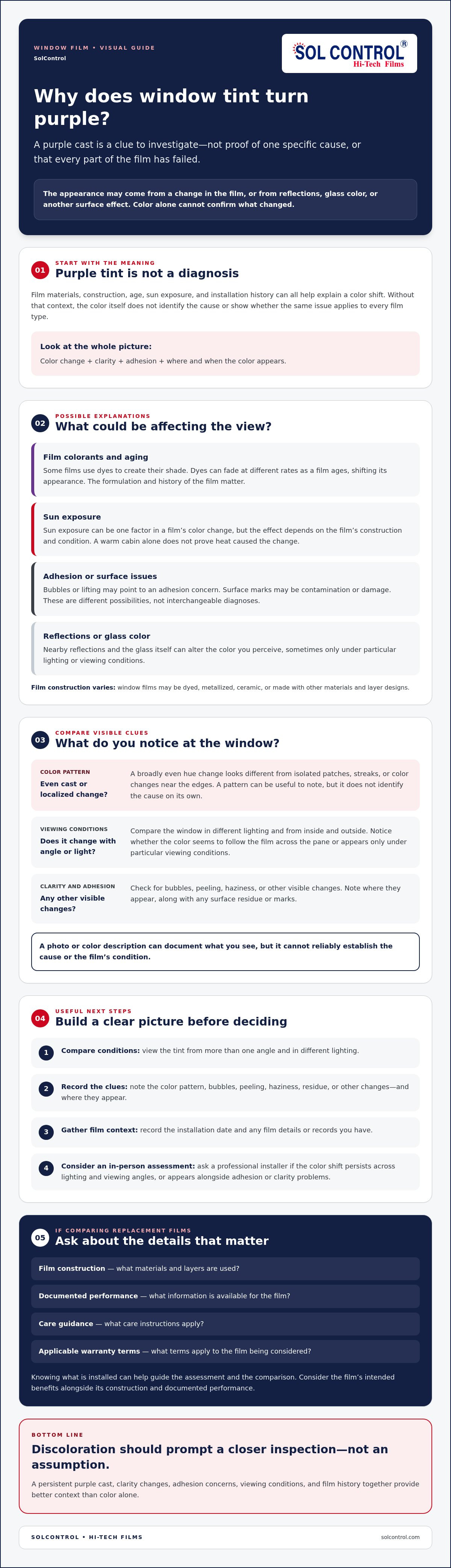
Purple tint is a clue, not a verdict. If you’re asking why window tint turns purple, aging dye-based film exposed to sunlight is one possible explanation: some dyes fade faster than others, shifting the film’s appearance. But a purple cast doesn’t automatically mean every part of the tint has failed, or even that the film itself is discolored.
It’s understandable to wonder whether you’re seeing normal aging, a film problem, or an unusual reflection. The difference matters when you’re deciding whether to replace the tint and want to avoid repeating the issue.
This article explains how dye degradation and adhesive changes can affect window film, and how to distinguish discoloration from reflections, glass color, or surface contamination. You’ll find practical clues to check, when to ask a professional installer for an assessment, and what to discuss when comparing replacement films. Knowing what’s installed can help guide your next step, since films use different materials and constructions.
Key Takeaways
Why window tint turns purple can depend on the film’s materials and exposure, but a purple appearance isn’t proof of one specific cause.
Compare the color in different lighting and from different viewing angles to help distinguish film discoloration from reflections or glass color.
Look for bubbles, peeling, or surface residue, and note where they appear before deciding what the tint needs.
Record the installation date, any film details you have, and changes you’ve noticed to give an installer useful context.
If you’re considering replacement, ask about film construction, documented performance, care guidance, and applicable warranty terms.
Why does window tint turn purple, and what does the color change mean?
A purple appearance can have several explanations. It may reflect a change in the film, but reflections, the glass, or another surface effect can also alter the color you see. Asking why window tint turns purple is a useful starting point, not a diagnosis.
Window films use different constructions, materials, and layers, which can affect how they look and respond to use. The Window film overview describes common construction methods, including dyed, metallized, and ceramic films. The film’s formulation, age, sun exposure, and installation history can all help an installer assess a color shift. Without those details, color alone can’t confirm what changed or whether the same issue applies to every film type.
What does purple window tint look like?
The tint may show an overall violet or purple cast, especially in daylight. Its appearance can change when you move around the window or view it from inside and outside. A broadly even hue change looks different from isolated patches, streaks, or color changes near the edges, but none of these patterns identifies the cause on its own.
View the window from more than one angle and in different lighting. Nearby reflections can add a colored cast, and the glass itself may affect the tint you perceive. Note whether the color seems to follow the film across the pane or appears only under particular viewing conditions.
Does purple tint always mean the film has failed?
No. Consider discoloration alongside clarity and adhesion. Check for bubbles, peeling, haziness, or other visible changes, and think about whether the window still meets your needs for appearance and use. A photo or color description can document the issue, but can’t reliably establish its cause or the film’s condition.
Discoloration should prompt a closer inspection, not an assumption about the cause or the condition of every film type. If the color shift persists across lighting and viewing angles, or appears alongside adhesion or clarity problems, ask a professional installer to assess the film in person. When it was installed and any film records you have can help guide that discussion.
How film materials and sun exposure can make window tint look purple
A change in tint color can relate to the film’s construction, its exposure, or a separate issue affecting the window. Films use different materials and layer designs, so one appearance doesn’t point to one universal cause. Kelley Blue Book’s overview of the benefits of window tinting also discusses different film types, a reminder that films aren’t all made alike.
Colorants influence a film’s visible shade, while adhesive bonds the film to the glass. A color shift may involve the film’s colorants, but bubbles or lifting point to an adhesion concern, and surface marks may be contamination or damage. These issues can look similar from a distance, but they aren’t interchangeable diagnoses.
How can film colorants change over time?
Some film constructions use dyes to create their appearance; others rely on different materials or methods. A dyed film’s color may change as it ages, but its formulation and history matter. A purple cast alone can’t establish which colorant changed or why. Sun exposure can be one factor in a film’s color change, but the effect depends on the film’s construction and condition.
This is one reason the question of why window tint turns purple can’t be answered by color alone. Film records or an installer’s assessment can help identify the construction and distinguish a possible colorant shift from adhesive deterioration, surface damage, or another visual effect.
Can UV exposure or heat affect tint appearance?
UV radiation is one part of sunlight; solar exposure also includes visible light and infrared energy. Interior heat is related but different, and a warm cabin by itself doesn’t prove that heat caused a color change. An assessment should consider the film type, its exposure, and the pattern of visible symptoms rather than assume one factor explains every case.
For more context on UV-filtering film and solar control, see this guide to UV-blocking window film. When reviewing replacement options, consider intended benefits alongside construction and documented performance. Professional providers can explore SolControl’s automotive and architectural window films when comparing categories for their customers.
Purple tint or another window issue? Compare the visible clues
A purple cast can come from the film, glass, reflections, or changes at the film’s edges and adhesive layer. Careful observations can help you describe what you’re seeing, but they can’t establish the cause on their own.
Possible cause
Visible clue
Simple observation
When to request professional assessment
Film color change
A broad, fairly even hue across the film, or localized patches
View the same window in consistent daylight from both sides, if safely accessible. Compare with other windows, noting that their exposure and film history may differ.
If the color persists across lighting conditions or continues to change.
Reflection
The purple cast shifts or fades as the viewing angle or surroundings change
Move to another viewing angle or check when nearby colored objects aren’t reflected.
If the cast remains consistent or appears alongside film damage.
Glass appearance
A tint or cast seems to extend beyond the film area, or looks similar on untreated glass
Compare nearby glass where no film is present, if available.
If you can’t tell whether the color is in the glass or film.
Adhesive change
Bubbles, haze, or irregular areas beneath the film
Note where the bubbles or haze appear and whether they’re spreading.
If clarity is affected or bubbles increase.
Surface contamination
Streaks, spots, or residue that appear to sit on the surface
Observe without scraping or applying chemicals to test it.
If marks remain or you’re unsure whether they’re on the film surface.
Delamination
Film appears to lift, separate, or peel, often near an edge
Record the location and extent without pulling at the film.
If an edge is lifting or separation is visible.
What clues suggest the film itself has changed color?
Check the same window in steady daylight and, when safely accessible, from both sides. Note whether the hue looks even across the pane or appears in patches, streaks, or near the edges. Compare it with other windows, but do so cautiously: orientation, sun exposure, film type, and installation history may differ.
Could glass, adhesive, or reflections make tint look purple?
Yes. Light, nearby colors, and viewing angle can change perceived hue, and the glass may also affect what you see. Bubbles, lifting edges, haze, and streaks are separate observations worth documenting. A visual check can narrow the possibilities, but it can’t confirm the film’s chemistry or diagnose the cause.
Take photos from consistent angles and note when the color appears. Don’t scrape, peel, or use harsh chemicals to test the film, since that can damage the surface or make the issue harder to assess. If you’re still asking why window tint turns purple, a professional installer can inspect the window in person and consider these clues alongside any film records.
What to do when window tint turns purple
If you’re wondering why window tint turns purple, start by recording what you see rather than trying to diagnose or remove the film yourself. A clear record helps an installer compare the discoloration with other symptoms and any available film information.
Document the appearance. Photograph the affected window in consistent lighting and from similar angles. Note which windows are affected and whether the purple hue looks even or localized.
Check for other visible changes. Record bubbles, peeling edges, haze, streaks, or any change in visibility. Don’t scrape, peel, or apply harsh chemicals to test the film, since you could damage the film, glass, defroster lines, or nearby materials.
Gather film records. If available, note the installation date and film type, and collect receipts, warranty paperwork, or other product information.
Request an in-person assessment. Share your notes and ask a tint professional to inspect the window and explain the likely cause and suitable next steps; you can visit Mr Tint to consult with experienced professionals and explore durable tint replacement options.
How can you document tint discoloration before an assessment?
Take photos in daylight from the same position each time, and include a wider view that shows which window is affected. Write down when you first noticed the color shift, whether it has changed, and any differences in sun exposure between affected and unaffected windows. A series of consistent observations is more useful than one image, since lighting and reflections can change how color appears.
Include the installation date and film details if you know them. Receipts and warranty documents may help identify the film and clarify which terms apply. If information is missing, note that rather than guessing.
When should you ask a tint professional to inspect it?
Arrange an assessment if the discoloration is worsening or appears with bubbles, peeling, or haze. Seek prompt help if the tint affects visibility or you’re concerned it could interfere with safe operation. An installer can examine the film in person, consider its condition and history, and discuss possible repair or replacement options. An inspection can inform those decisions, but the exact cause or outcome shouldn’t be assumed in advance.
For professional providers comparing automotive or architectural replacement film categories, explore window film options through SolControl, a wholesale distributor serving tint shops, glass companies, automotive dealers, and other providers.
Choosing replacement window film after purple discoloration
Replacing purple film starts with understanding what changed and what you need from the new film. The assessment, existing film condition, window use, and your preferences all matter. A color shift alone doesn’t determine which replacement is appropriate, so ask the professional to explain the likely cause and how the proposed option fits your priorities.
For automotive applications, consulting experienced protection specialists like D3 Auto Care LLC offers valuable guidance when choosing durable window films. Architectural film serves a different application, so don’t assume the two categories are interchangeable. The right choice depends on the window and the purpose the film needs to serve.
What should you ask before replacing discolored tint?
Use the assessment to get specific answers, not just a broad recommendation. Ask what the professional observed, what they believe caused the discoloration, and how the proposed film addresses your needs for appearance, light transmission, or solar control.
Request product documentation for relevant specifications and care instructions. Ask who will handle installation and what warranty terms apply to the particular film and job. Review the written terms rather than assuming coverage based on a general claim about the product category.
How can professionals choose film for a customer’s needs?
Start with the application: automotive or architectural. Then discuss the customer’s priorities, such as desired appearance, light transmission, and solar-control goals. Compare those needs with documented specifications for candidate films. This gives the customer a practical basis for weighing options without assuming a particular construction can never discolor or that every film behaves alike.
For professional providers, SolControl distributes automotive and architectural window films, along with professional tinting tools, to businesses. It doesn’t install film or replace glass. Professionals can explore window film and professional supplies from SolControl as they evaluate categories for their customers.
Make your next tint decision with confidence
Understanding why window tint turns purple starts with treating the color as a clue, not a diagnosis. Film construction and exposure may contribute, but reflections, glass appearance, adhesive changes, and surface issues can also affect what you see. Compare the window in consistent lighting, note any bubbles or peeling, and gather film records before asking a professional to assess it.
If replacement is appropriate, choose based on the assessed condition and your priorities. Ask about film construction, documented performance, care instructions, and the warranty terms for the specific product and installation. That helps you compare options without assuming every film behaves the same way.
SolControl distributes automotive and architectural window films and professional tinting tools to providers nationwide. It supports professional businesses as a wholesale resource and does not offer installation, allowing installers to serve their own customers. Explore window film and professional supplies from SolControl to learn more.
With clear observations and the right questions, you can take a practical next step and feel more confident about the film you choose.
Frequently Asked Questions
Why does old window tint turn purple?
Old tint can turn purple when its colorants change after prolonged exposure to sunlight, but the cause depends on the film’s construction. In some dyed films, colorants can fade at different rates and alter the original shade. Adhesive changes, glass appearance, and reflections can also affect what you see. Check the film’s records if available, and ask an installer to assess persistent discoloration rather than relying on color alone.
Can window tint that has turned purple be repaired?
A color change in the film generally can’t be reversed by cleaning or treating its surface. An installer can inspect the film to determine whether the issue appears to involve discoloration, adhesion, contamination, or another cause, then explain suitable options. Don’t scrape or peel the film yourself, especially near defroster lines or surrounding materials. The right next step depends on the film’s condition and the assessment, not just its color.
Does ceramic window tint turn purple?
Ceramic film shouldn’t be assumed to behave exactly like dyed film, but no film type should be described as immune to every possible appearance change. Formulations and construction vary by product. If ceramic tint looks purple, check the product documentation and consider other possibilities, such as reflections, glass color, surface contamination, or film condition. An installer can examine it in person and help identify whether the film itself appears to have changed.
How can I tell whether purple color is in the tint or the glass?
Compare the window in consistent daylight from different angles and, if safely accessible, from both sides. Notice whether the color appears to follow the film or changes with reflections and nearby surroundings. If there’s an untreated window with similar glass, compare its appearance too, while accounting for differences in lighting and angle. These observations can narrow the possibilities, but an in-person assessment may be needed to distinguish film color from glass appearance.
Should I replace window tint if it turns purple?
Not automatically. First consider whether the color persists under different lighting and whether the film also has bubbles, peeling, haze, or visibility issues. If symptoms are worsening or affect clear viewing, ask a professional installer to inspect it. If replacement is recommended, discuss the assessed cause, your priorities, the film’s documented specifications, care guidance, and the warranty terms that apply to the specific product and installation.
Can sun exposure change the color of window film?
Yes, sun exposure can contribute to color changes in some window films, particularly when a film’s colorants respond differently to exposure over time. The effect depends on the film’s formulation and condition, so there’s no single timeline or outcome that applies to every product. If the hue seems to change, record which windows are affected, how they’re exposed, and when you noticed the difference. Product information can help an installer assess it.
Is purple window tint a sign that the film is peeling or failing?
Purple discoloration alone doesn’t prove that film is peeling or has failed. Look separately for bubbles, lifted edges, haze, or reduced visibility, and note whether these symptoms accompany the color change. A persistent or worsening change is a reason to seek an installer’s assessment, especially if visibility is affected. A professional can examine the film’s condition and discuss next steps without assuming that color by itself identifies the problem.