Architectural Film ROI Calculator: A Practical Guide
What if the most persuasive ROI estimate is the one that doesn’t promise a payback date? An architectural film ROI calculator for clients should show how the numbers are built, not make savings sound guaranteed. Energy results depend on factors such as the building, existing glazing, climate, and how the space is used. A clear estimate makes those assumptions visible.
Clients often want to compare the upfront project investment with potential long-term benefits. A transparent calculation makes that conversation more practical by showing which inputs influence the result most and where uncertainty remains.
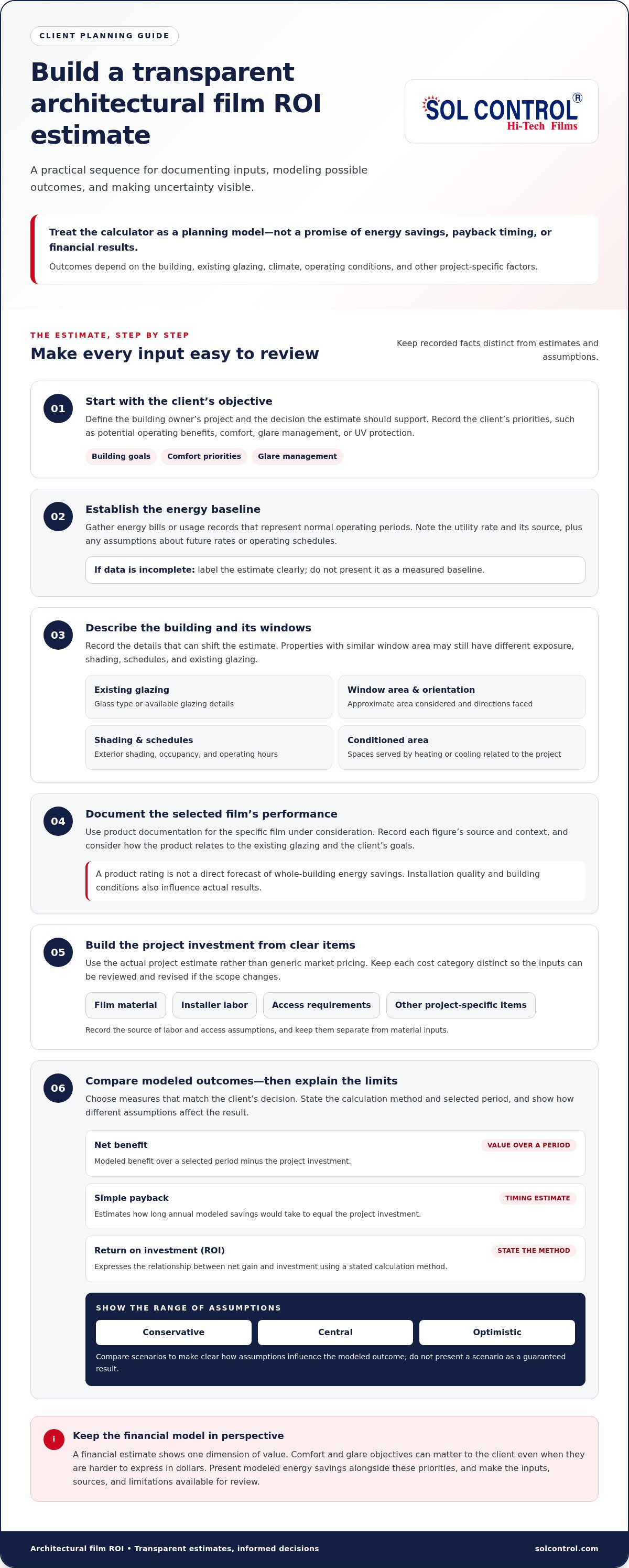
This guide explains how to structure an adjustable ROI estimate, calculate a simple payback period, and present projected energy savings alongside less easily measured benefits such as comfort, glare reduction, and UV protection. You’ll also see why film selection and project assumptions matter, and how to frame the calculation as a planning tool rather than a promise. With a consistent method, installers can help clients review the figures, understand their limitations, and make a more informed decision.
Key Takeaways
Use an architectural film ROI calculator for clients as a planning model, not a guarantee of savings or payback.
Separate project investment into clear cost categories and record the building details that can shift the estimate.
Compare conservative, central, and optimistic scenarios to show how assumptions affect the outcome.
Follow a repeatable calculation workflow, starting with the client’s objective and documenting the source of each input.
Match film selection to the client’s priorities, such as solar control, comfort, glare management, or operational goals.
Why use an architectural film ROI calculator with clients?
An architectural film ROI calculator for clients compares a project’s investment with modeled benefits over a defined period. It helps organize the financial case around a specific building and the client’s goals, rather than relying on a generic savings claim. Its value lies in showing how the estimate was built and which assumptions could change the result.
The calculation should focus on the building owner’s project, not the installer’s business return. An installer may separately assess sales, labor, or operating costs, but those figures answer a different question. For the client, the relevant comparison is the project investment against potential building-level benefits, alongside priorities such as comfort or glare management.
Keep the limits clear. Energy use and costs depend on the building, existing glazing, operating conditions, and other project-specific factors. The calculator models possible outcomes; it cannot guarantee energy savings, a payback period, or a financial result. A documented estimate is easier to evaluate because clients can see the inputs, review the reasoning, and compare options on a consistent basis.
What does architectural film ROI measure?
Three measures can help answer different questions. Net benefit is the modeled benefit over a selected period minus the project investment. Simple payback estimates how long it would take for annual modeled savings to equal that investment. Return on investment (ROI) expresses the relationship between net gain and investment, using a stated calculation method. The general concept is outlined in Return on Investment (ROI).
Modeled ROI is based on stated project inputs and assumptions, not a guarantee of realized savings or financial performance. Choose the metric that fits the client’s decision: payback can help compare timing, while net benefit or ROI can show projected value across a defined period.
Which client decisions can the calculator support?
A project-specific estimate can help clients assess whether architectural film aligns with their building goals, including potential operating benefits and comfort or glare objectives. It can also make trade-offs easier to discuss: a financial model shows one dimension of value, while the client’s experience of the space helps clarify priorities that are harder to express in dollars.
Consider film performance and selection in context rather than treating them as one-size-fits-all. For a closer look at how specifications relate to project needs, explore the architectural window film selection and performance guide.
Which inputs belong in an architectural film ROI calculation?
A useful estimate starts with inputs that describe both the building and the proposed work. For an architectural film ROI calculator for clients, keep recorded facts separate from estimates so everyone can see where the model is grounded and where assumptions enter.
Build the project investment from distinct items rather than one unexplained total. Depending on the scope, this may include film material, installer labor, access requirements, and other project-specific items. Use the actual project estimate for these inputs, not generic market pricing.
Building and energy data to collect
Gather energy bills or usage records that represent the building’s normal operating periods. Record the utility rate used, its source, and any assumptions about future rates or operating schedules. If data is incomplete, label the estimate clearly instead of presenting it as a measured baseline.
Glazing: Document the existing glass type or available glazing details.
Window area and orientation: Note the approximate area being considered and which directions the windows face.
Shading and schedules: Record relevant exterior shading, occupancy patterns, and building operating hours.
Conditioned area: Identify the spaces served by heating or cooling that relate to the project.
These details help explain why one building’s energy profile can’t serve as a universal baseline. Two properties with similar window area may have different exposure, shading, schedules, and existing glazing, all of which can affect modeled outcomes. If existing glass is damaged or failing, working with a contractor like Safe Glass Installations for window replacement may be required before pursuing film treatments.
Film performance and project investment inputs
Use product documentation for the specific film under consideration, and record the source and context for each performance figure. Solar-control performance depends on the selected product and its compatibility with the existing glazing. Actual results are also influenced by installation quality and building conditions, so don’t treat a product rating as a direct forecast of whole-building energy savings.
When reviewing solar-control performance, focus on the documented specifications for the selected product and how they relate to the project’s glazing and the client’s stated goals.
Labor and access assumptions should reflect the project scope, including the work area and any access requirements. Identify their source and keep them distinct from film material inputs. This makes revisions easier if the scope changes and helps clients understand what drives the estimate. For professional project planning, SolControl’s architectural film supply resources can support installers as they connect film selection with project requirements.
How should clients compare ROI scenarios and assumptions?
A single forecast can look precise while hiding uncertainty. A stronger architectural film ROI calculator for clients compares conservative, central, and optimistic scenarios using visible, defensible assumptions. Keep the project scope consistent across all three, then vary inputs that genuinely affect the result, such as modeled energy reduction, utility rates, operating schedules, or project costs.
Modeled payback changes when project assumptions change. Show clients which inputs have the greatest influence rather than presenting one outcome as certain. For example, if the estimate shifts most when energy-use assumptions change, identify that sensitivity and explain whether the input comes from utility records, product documentation, or an estimate.
Keep energy-related estimates separate from objectives that are harder to express as cash savings. Comfort, glare management, and UV control may matter to the client, but don’t add them to projected energy savings without a defensible method for valuing them. Present them as separate decision factors, not guaranteed financial returns.
How to calculate simple payback and ROI
For a basic payback estimate, divide the total project investment by the estimated annual net benefit, such as modeled annual energy-cost savings after applicable recurring costs. The result is an estimate based on the assumptions used, not a promised timeline.
For ROI, define the period being assessed and state exactly what counts as a cost and a benefit. One common format is cumulative net benefit over that period, divided by project investment, then multiplied by 100. Disclose whether the calculation includes items such as rebates, maintenance, or changing utility rates. Avoid counting one benefit twice, and don’t treat non-cash benefits as cash savings.
How to make a comparison table useful
Place scenario assumptions beside their modeled outcomes so clients can compare them without searching through notes. Include a confidence or limitation note for each estimate, and mark inputs that are unverified or based on estimates rather than measured records.
Conservative: Use cautious assumptions supported by available project data.
Central: Use the best-supported inputs as the working estimate.
Optimistic: Show a plausible favorable case, clearly labeled and supported by stated assumptions.
Use the same time horizon and calculation method for each scenario. This keeps the comparison fair and helps reveal which assumptions deserve further review. For related context on potential operating considerations, see the commercial window tinting energy and cost benefits article.
How to build an architectural film ROI calculator step by step
A repeatable workflow helps installers turn project information into a clear estimate without presenting modeled results as a promise. Use the same structure for each proposal, then tailor the inputs to the building and the client’s objectives. This makes the architectural film ROI calculator for clients easier to review and update when project details change.
A repeatable five-step calculator workflow
Define the objective and measurement period. Start with the client’s priority, such as evaluating potential energy-cost benefits, improving comfort, or addressing glare. Set the period for the analysis and define the project scope so the estimate answers a specific question.
Set the baseline. Record the existing conditions the estimate will compare against. Use representative energy-use records where available, and note the building’s glazing, window orientation, relevant area, shading, and operating schedule. Identify gaps instead of filling them with unsupported assumptions.
Document film and project inputs. Select performance inputs from product documentation relevant to the film and glazing context. Record project-specific material, labor, access, and other applicable costs separately. For every figure, note its source and whether it is measured, documented, or estimated.
Calculate comparable scenarios. Apply the same units, time period, and formula to conservative, central, and optimistic cases. For example, use one consistent annual energy-cost method across all scenarios, changing only the assumptions you identify. Keep non-energy objectives separate from cash-based benefits.
Review and revise. Walk through the inputs and limitations with the client. Update the model if the scope, project costs, building data, or selected film changes, and label the revised version so it’s clear which assumptions informed the result.
How to present the estimate in a client proposal
Keep the calculation easy to follow. A concise summary can show each scenario in a row, with columns for key assumptions, estimated outcomes, and limitations. Add a short note beside each figure so clients can distinguish utility records or product documentation from working estimates.
Show the formula and measurement period, then state what the model excludes. Use plain-language labels such as “estimated annual energy-cost benefit” rather than unexplained technical shorthand. If a metric depends on an assumption, say so directly. Clients should be able to trace how the estimate moves from project inputs to modeled outcomes without mistaking comfort or glare benefits for cash savings.
How to turn an ROI estimate into a confident film decision
A calculator can clarify the financial side of a project, but it can’t choose the right film on its own. Use the results alongside the client’s priorities and the building’s existing glazing. A sound recommendation connects documented product performance to project conditions rather than assuming one film will suit every building.
Match the proposed film to the project objective
Start with the problem the client wants to address. If the priority is solar control or potential energy benefits, review relevant product performance information in the context of the existing glazing and project conditions. If the primary goal is privacy, aesthetics, glare management, or UV control, discuss those objectives separately from the energy model. Don’t use a calculator estimate to promise a financial outcome based on film selection alone.
Be equally clear about limitations. Utility rates and building operating patterns can change, and performance in one building may not predict results in another. Explain which inputs come from records or product documentation, which remain estimates, and how changes to those assumptions could affect the modeled outcome. This gives the client a useful basis for comparison without overstating certainty.
Prepare the next client conversation
Bring the estimate into the discussion as a decision aid, not a substitute for project-specific assessment. A concise summary should connect the client’s stated goal to the assumptions and scenario range, then identify what information or project step would help move the decision forward. The architectural film ROI calculator for clients is most useful when it makes the reasoning easy to review and revise.
Restate the goal: Confirm whether the client’s main priority is operating costs, comfort, glare, solar control, or another project objective.
Explain the assumptions: Point out the key inputs, their sources, and any estimates that materially influence the modeled result.
Review the scenarios: Describe the range as conditional outcomes, not guaranteed savings or a promised payback date.
Set a practical next step: Identify what project information or film-performance criteria should guide the next review.
SolControl is a wholesale supply partner for professional installers and contractors, providing architectural films and professional tools to support project planning. Use the estimate to guide product discussions, keeping the selected film’s documented performance aligned with the client’s glazing and goals. Explore SolControl’s architectural film and professional supplies.
Make the Next Film Proposal Clear and Confident
A practical architectural film ROI calculator for clients turns project data into a transparent discussion, not a promise of savings. Use building-specific inputs, document where each figure comes from, and compare scenarios with consistent assumptions. Then weigh the modeled financial outcomes alongside the client’s priorities for comfort, glare, solar control, and day-to-day operations.
The strongest estimate is one clients can understand and revisit. Clear formulas and stated limitations help them see what drives the result and what may change as project details become clearer. That gives installers a repeatable foundation for informed conversations and film decisions tailored to each building.
How do you calculate ROI for architectural window film?
Calculate ROI by comparing the project’s net modeled benefit over a defined period with the total project investment. A common formula is: (total benefits minus total costs) divided by total costs, multiplied by 100. State which costs and benefits are included, and don’t count the same benefit twice. For a simple payback estimate, divide the investment by the estimated annual net benefit. Both figures depend on the assumptions used.
What information do I need for an architectural film ROI calculator?
Gather the project scope and investment inputs, including film, labor, access, and other applicable items. Building details should include existing glazing, window area, orientation, shading, conditioned area, and operating schedules. Use representative energy bills or usage records and document the utility rate and its source. Include product performance data relevant to the film and glazing context, clearly marking which inputs are measured, documented, or estimated.
Can window film reduce a building’s energy costs?
Architectural window film may help reduce cooling demand by limiting solar heat entering through windows, which can contribute to lower energy costs in some buildings. The potential effect depends on factors such as existing glazing, window orientation, climate, shading, HVAC operation, and occupancy schedules. Film performance data can inform an estimate, but it doesn’t by itself predict whole-building savings. Use building-specific energy records and disclose assumptions when modeling possible cost impacts.
How accurate is a window film payback calculator?
A payback calculator is only as reliable as its inputs and calculation method. Representative energy records, project-specific costs, relevant film performance data, and accurate building details can make the estimate more useful. Unknowns, such as future utility rates or changes in building operations, add uncertainty. Show a range of scenarios and label estimates clearly. Treat the result as a planning aid, not a precise forecast or guaranteed timeline.
What is the difference between ROI and payback period?
Payback period estimates how long it may take for modeled annual net benefits to equal the project investment. ROI measures the net gain relative to that investment over a stated period, usually as a percentage. Payback focuses on timing, while ROI considers the investment’s modeled return across the selected horizon. Both depend on disclosed assumptions, and neither captures nonfinancial benefits automatically unless a clear valuation method is included.
Should an architectural film ROI calculator include comfort and glare benefits?
Include comfort and glare as decision factors, but keep them separate from cash-based energy estimates unless there’s a defensible way to assign them a financial value. A client may prioritize more even temperatures or reduced glare even when those benefits aren’t directly reflected in utility savings. Present them alongside the modeled financial results, clearly labeled as non-energy objectives. This gives clients a broader view without overstating the project’s monetary return.
Can a calculator guarantee an architectural film project’s savings?
No. An architectural film ROI calculator for clients models potential outcomes from stated inputs; it can’t guarantee savings, payback, or financial performance. Actual results depend on the building’s glazing, conditions, operating patterns, utility rates, selected film, and installation. Present assumptions and limitations in plain language, and update the estimate when project information changes. A transparent model supports a better-informed discussion, but it remains an estimate rather than a promise.