Ceramic vs. Carbon Tint: Professional Wholesale Guide
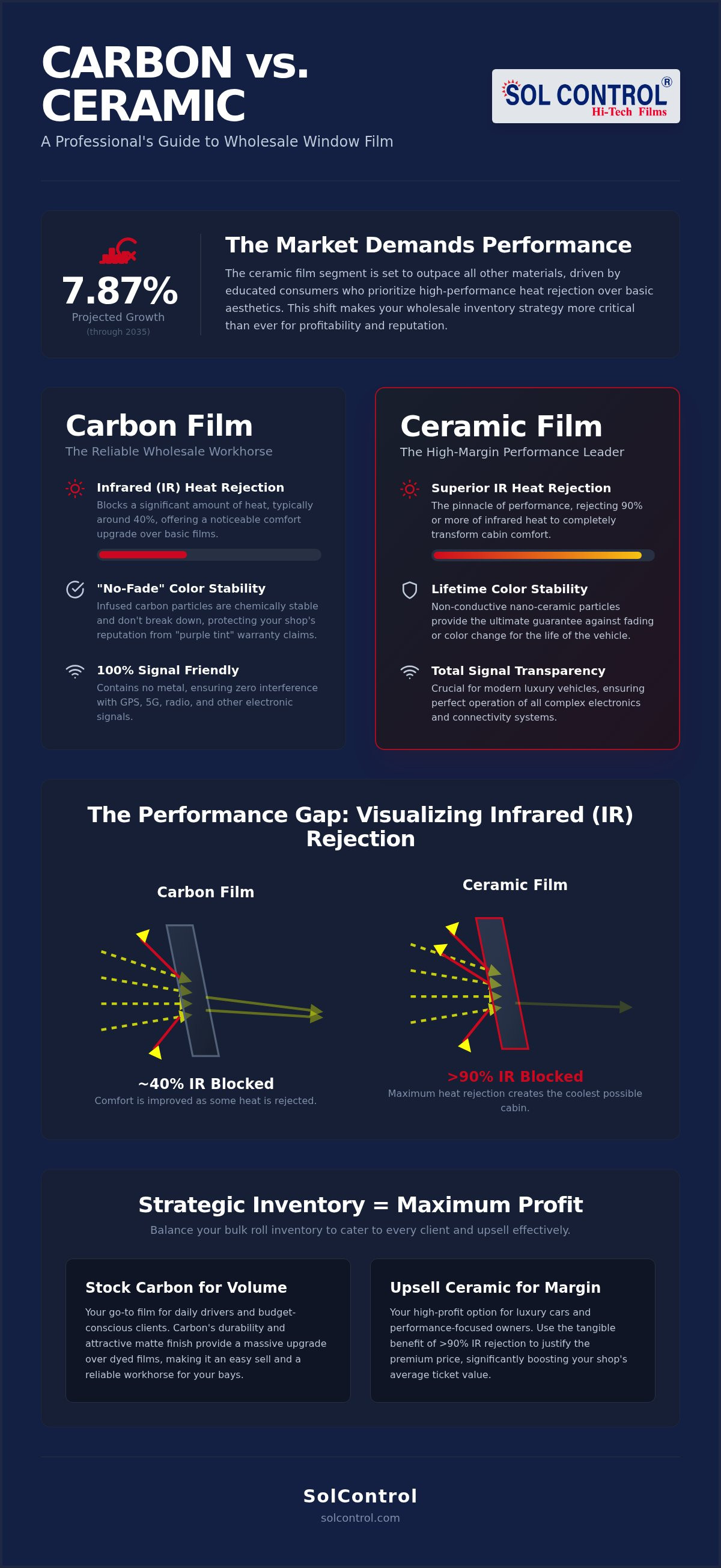
The ceramic window film segment is currently projected to grow at a rate of 7.87% through 2035, outpacing every other material type in the industry. Performance is the new standard. As a shop owner or manager, you've likely felt this shift firsthand as customers move away from basic aesthetics toward high-performance heat rejection. You understand that stocking the right inventory is a delicate balance between managing high upfront costs and meeting the technical demands of a more educated consumer base. Choosing between ceramic vs carbon tint for wholesale isn't just a matter of price; it's a strategic decision that affects your long-term warranty claims and daily shop efficiency.
This professional guide will help you master the technical and business differences between these two essential film types to optimize your inventory and maximize your profit margins. We'll provide the clarity you need to explain infrared rejection to skeptical clients and develop a reliable strategy for upselling from mid-range carbon to premium ceramic. We will examine the specific performance metrics of each film, review current VLT regulations across the United States, and show you how to maintain a consistent wholesale supply of bulk rolls to keep your bays full.
Key Takeaways
Differentiate between carbon and ceramic at a molecular level to confidently explain performance gaps to skeptical customers.
Identify why carbon film remains the reliable wholesale workhorse for durability and budget-friendly projects without the risk of fading.
Master the technical nuances of ceramic vs carbon tint for wholesale to effectively market high-margin features like 90%+ Infrared (IR) rejection.
Develop a strategic inventory plan that balances bulk rolls based on your local market’s mix of luxury vehicles and daily drivers.
Transition your sales approach from simple aesthetics to performance metrics like TSER to justify premium pricing and boost shop margins.
Understanding Carbon vs. Ceramic Tint for Your Wholesale Inventory
In 2026, the landscape for professional tint shops has shifted away from basic aesthetics toward high-performance functionality. The era of cheap, dyed films is effectively over. Professional installers now recognize that offering color-stable products is the only way to protect their reputation and avoid the costly cycle of warranty claims. When evaluating ceramic vs carbon tint for wholesale, you aren't just choosing a shade. You're selecting a specific chemical technology designed to manage solar energy. A foundational understanding of window film reveals that while both materials block light, their methods for handling heat differ significantly.
While dyed films rely on pigments that eventually break down under UV exposure, carbon and ceramic films use stable particles infused into the polyester base. This ensures the film retains its original hue for years. Professional shops have moved away from legacy dyed films for several critical reasons:
Color Stability: Modern films don't turn purple or fade when exposed to intense sunlight.
Infrared Rejection: High-performance particles block heat-carrying IR rays, not just visible light.
Signal Transparency: Both carbon and ceramic avoid the signal interference common with old metallic films.
For a wholesale partner, stocking these advanced materials means providing your clients with a product that won't fail prematurely. It's about building a business on reliability rather than just low-cost inventory.
What is Carbon Window Film?
Carbon window film utilizes microscopic carbon particles suspended within the film layers. This construction creates a distinct matte finish that many automotive enthusiasts prefer over the shiny, reflective look of older metallic films. It's the industry's reliable workhorse. Carbon particles are inherently stable, meaning they won't lose their color over time. They are excellent at blocking infrared light, providing a significant step up in comfort compared to entry-level options. Because it contains no metal, it won't interfere with radio or cell signals. It remains the standard for customers who want a premium look and durability without the highest price point in the catalog.
What is Ceramic Window Film?
Ceramic window film represents the pinnacle of current window film technology. It employs non-conductive, non-metallic nano-ceramic particles that are small enough to remain invisible to the naked eye but large enough to provide massive heat rejection. This is the luxury tier of automotive film. In a world dominated by 5G connectivity and complex GPS systems, ceramic is essential. It offers total signal clarity, ensuring that vehicle electronics function perfectly. When you weigh ceramic vs carbon tint for wholesale, the primary differentiator is the ceramic's ability to reject up to 90% or more of infrared heat, transforming the driving environment in ways carbon simply cannot match.
Carbon Tint: The Reliable Wholesale Workhorse
Carbon film is the backbone of many successful tint shops. It offers a distinct advantage for business owners balancing cost and quality. When weighing ceramic vs carbon tint for wholesale, carbon stands out as the perfect "entry-level premium" option. It satisfies budget-conscious clients while providing a massive upgrade over standard dyed films. Because carbon particles are inorganic, they don't break down like chemical dyes. This translates to a "No-Fade" guarantee that protects your shop's reputation from the dreaded "purple tint" complaints that plague lower-tier installations.
Versatility is another reason professional installers keep bulk rolls of carbon in stock. Most wholesale carbon lines offer a comprehensive range of Visible Light Transmission (VLT) levels, typically from 5% for limousine privacy to 50% for a subtle factory look. This variety allows you to serve a wide demographic of drivers with a single, reliable product line. By maintaining a deep inventory of these common shades, you ensure that no customer is turned away due to lack of stock.
Heat Rejection Performance of Carbon
While ceramic is the leader in heat rejection, carbon is a significant step up from basic films. It typically blocks around 40% of infrared radiation, which is much more effective than traditional dyed options. This performance is supported by technical data on film performance showing how material composition directly impacts solar heat gain. Carbon particles effectively absorb infrared energy to prevent heat from transferring through the glass and into the vehicle's cabin. This absorption keeps interiors noticeably cooler during peak summer months without the high cost of ceramic technology.
Installation Benefits for Professionals
For the technician in the bay, carbon film is often the preferred material for complex back windows. It features excellent heat-shrink properties, making it more forgiving than some rigid ceramic options. When you handle bulk rolls daily, this ease of use reduces waste and speeds up turnaround times. However, achieving a flawless finish still requires precision. Even the most forgiving film won't look right without the right tinting tools designed for professional-grade pressure-sensitive adhesives.
If you're looking to build a stable inventory that caters to the largest segment of the market, carbon is your go-to solution. It provides the durability your customers demand at a price point that keeps your margins healthy. You can explore our full range of automotive film rolls to find the right fit for your shop's specific volume needs.
Ceramic Tint: The High-Margin Performance Leader
Ceramic film is where shops see their highest profit margins. While carbon is a reliable entry point, ceramic caters to the growing segment of customers who prioritize thermal comfort over everything else. In the debate of ceramic vs carbon tint for wholesale, ceramic wins on sheer data. It can reject up to 99% of infrared heat, a figure that dwarfs the 40% to 50% rejection typical of carbon films. This isn't just about appearance; it's about engineering a cooler cabin environment for the long term.
To sell ceramic effectively, you must understand Total Solar Energy Rejection (TSER). While IR rejection is a popular marketing term, TSER is the definitive metric recognized by the International Window Film Association for measuring the total heat blocked. High-end ceramic films often achieve TSER ratings between 50% and 65%, even in lighter shades. Understanding the technical gap in ceramic vs carbon tint for wholesale allows your sales team to justify the higher ticket price to customers who demand the best. This performance makes ceramic the superior choice for large SUVs and vehicles with expansive glass surfaces that act like greenhouses.
Advanced IR Nano-Ceramic Technology
Ceramic technology allows for extreme heat rejection without the need for dark shades. This has made 70% VLT ceramic films a best-seller for front windshields. These films are nearly transparent, maintaining perfect visibility and signal clarity for 5G and GPS, yet they block more heat than a 5% dyed film on a side window. The nano-ceramic particles are so densely packed that they provide maximum solar protection within a standard two-ply construction. This clarity factor is a major selling point for night driving, as it reduces glare without compromising the driver's view of the road.
The Rise of Hybrid Carbon-Ceramic Films
For shops looking to offer a mid-tier solution, hybrid carbon-ceramic rolls are becoming increasingly popular. These films combine the matte finish of carbon with the enhanced heat rejection of ceramic. They bridge the price gap for customers who want better-than-average performance without the full cost of a premium ceramic roll. You can find detailed breakdowns of these performance tiers in our automotive window film wholesale guide. By offering a hybrid option, you give your customers a clear "good-better-best" choice, which naturally drives more sales toward the higher-performing categories.
Wholesale Strategy: Choosing the Right Inventory for Your Shop
Success in the window film industry depends on strategic inventory management. You must balance your stock to meet local demand while maximizing your cash flow. When deciding on ceramic vs carbon tint for wholesale, analyze your typical customer base. If your shop primarily services luxury vehicles and electric cars, your inventory should lean heavily toward ceramic rolls. These clients prioritize performance and are less price-sensitive. Conversely, if you focus on high-volume daily drivers, maintaining a larger stock of carbon film ensures you capture the budget-conscious segment without sacrificing quality.
Implementing a "Good-Better-Best" pricing model is the most effective way to guide customers through these options. Position dyed film as "Good," carbon as "Better," and ceramic as "Best." This strategy simplifies the decision-making process for the client. While ceramic has a higher wholesale cost, the labor required for installation remains identical to carbon. This means every ceramic job you book generates a significantly higher profit margin for the same amount of time spent in the bay. Margins matter. Calculating the return on investment for premium film becomes easy when you realize that one ceramic upsell can cover the cost difference for an entire roll of film.
Upselling from Carbon to Ceramic
The most effective sales tool in your shop is a heat lamp demonstration. Letting a customer feel the immediate temperature drop between carbon and ceramic film removes all skepticism. Use punchy, value-driven phrases like "maximum thermal comfort" or "uninterrupted 5G signal" to highlight the benefits. Performance is the new standard. You can also use architectural window film as a powerful cross-selling example. Explain that the same technology used to cool their car can be applied to their home windows to slash energy bills, creating an additional revenue stream for your business.
Bulk Purchasing and Roll Sizing
Most automotive shops find that 40" x 100' rolls are the ideal "sweet spot" for inventory. This size handles the majority of side windows and back glass with minimal waste. However, buying 60" rolls is more cost-effective for larger SUV projects or architectural installations. Waste kills profit. Proper waste management is critical; use precision cutting tools and plan your patterns to get the most out of every linear foot. Reducing scrap directly increases your bottom line on every roll you finish.
Choosing a distribution partner is as critical as the film technology itself. SolControl operates as a national US wholesale distributor with an exclusive focus on B2B supply. We don't compete with our clients in the installation market. This ensures we're dedicated to your growth, not your customers. When you evaluate ceramic vs carbon tint for wholesale, you need a partner who maintains a comprehensive inventory of both. Our national distribution network ensures that your shop stays stocked with the bulk rolls you need to maintain a high-volume schedule without interruption.
Sourcing your films and tools from a single provider streamlines your operations. It reduces administrative overhead and ensures compatibility between your materials and your application equipment. We prioritize transparency in our internal processes, providing you with the technical specifications and standards required to make informed purchasing decisions. This professional approach allows you to focus on what you do best: delivering high-quality installations to your local market while we handle the logistics of your supply chain.
Explore Our Automotive Collections
Our inventory covers every tier of the modern tinting market. You can find high-performance carbon rolls that provide the durability your budget-conscious clients expect. For your premium customers, we offer advanced IR nano-ceramic films that deliver industry-leading heat rejection. Our range extends beyond basic glass tinting to include specialized windshield protection films and paint protection films (PPF). You can browse our window film collections to view current wholesale pricing and roll sizes ranging from 20" to 60" widths.
Equip Your Shop for Success
High-quality film deserves high-quality application. Precision tools are essential for reducing film waste and ensuring a clean, professional finish. Investing in professional-grade squeegees, blades, and plotters pays for itself by increasing your daily efficiency and reducing the likelihood of costly re-dos. SolControl supports your business beyond just product supply. We provide the technical data and marketing materials you need to explain complex performance metrics to your clients. By equipping your shop with the right combination of premium film and professional tools, you position your business as the local authority in automotive protection.
Elevate Your Shop’s Performance and Profitability
Choosing between ceramic vs carbon tint for wholesale is more than just a technical decision; it's a strategic move to future-proof your business. Carbon film provides the essential durability and "no-fade" reliability that builds customer trust for everyday drivers. Ceramic technology offers the high-margin performance and signal clarity required by modern vehicle owners and high-end automotive enthusiasts. By mastering the technical differences between these materials, you can confidently upsell your services and optimize your inventory for maximum ROI.
SolControl is committed to your success as a dedicated B2B partner. We offer national US distribution and a comprehensive range of automotive and architectural films without ever competing for your installation customers. Our focus remains on providing the professional-grade rolls and precision tools you need to excel in a competitive market. We prioritize transparency and high standards to ensure your shop always has access to the industry's best materials.
Browse our Professional Window Film Collections today to secure the inventory that will set your shop apart. We are ready to help you scale your business with reliable supply and expert support. Let's build a more profitable future together.
Frequently Asked Questions
Is ceramic tint really worth the extra cost for a wholesale buyer?
Yes, ceramic film is worth the investment because it allows you to command higher labor margins for the same amount of installation time. While the upfront cost of the roll is higher, the retail price gap between carbon and ceramic is often significant. This allows your shop to capture a more affluent customer segment that prioritizes thermal comfort over price. It effectively raises your average ticket value and improves your overall shop profitability.
Does carbon window film fade over time compared to ceramic?
No, professional-grade carbon film is designed to be color-stable and won't fade or turn purple like traditional dyed films. This is because carbon particles are inorganic and don't break down under UV exposure. When comparing ceramic vs carbon tint for wholesale, both materials offer excellent longevity. You can confidently offer long-term warranties to your clients knowing the aesthetic of the film will remain consistent for years without any loss in performance.
Will ceramic window tint interfere with GPS or cellular signals?
No, ceramic window film is completely non-metallic and non-conductive, ensuring it won't interfere with modern vehicle electronics. This is a critical selling point for customers with 5G smartphones, integrated GPS systems, or satellite radio. Unlike older metallic films that could block signals, ceramic particles allow all radio frequencies to pass through the glass without interruption. It's the safest choice for any vehicle equipped with advanced driver-assistance systems and complex internal antennas.
What is the best VLT percentage to stock for a new shop?
Stocking a range of 5%, 20%, and 35% VLT is the most effective strategy for a new shop starting its inventory. These three percentages cover the vast majority of customer requests for privacy, factory matching, and legal compliance. You should also consider a 70% ceramic film specifically for windshield applications. Having these core shades in both carbon and ceramic allows you to offer a complete selection to every client while keeping your inventory costs manageable.
Can I install ceramic film using the same tools as carbon film?
Yes, you can use the same professional squeegees and blades for both materials, though ceramic can sometimes feel slightly stiffer during heat shrinking. Using high-quality, professional-grade tools is essential to prevent scratching the high-performance coatings on ceramic rolls. While the basic technique remains the same, precision tools help manage the film more effectively. This reduces waste and ensures the premium finish your customers expect when they pay for a high-end ceramic upgrade.
How much more heat does ceramic tint reject compared to carbon?
Ceramic film offers a massive performance jump, rejecting up to 99% of infrared heat compared to the 40% or 50% rejection typical of carbon. This difference is immediately noticeable to the driver and passengers. When you present ceramic vs carbon tint for wholesale to a client, focus on the Total Solar Energy Rejection (TSER) metrics. Ceramic's ability to block nearly all heat-carrying infrared rays makes it the clear leader for thermal comfort in hot climates.
Does SolControl offer international shipping for bulk rolls?
No, SolControl currently focuses exclusively on national distribution across the United States to ensure reliable service for our domestic partners. We specialize in B2B supply for US-based tint shops and architectural installers. By concentrating our logistics on the domestic market, we maintain a comprehensive inventory and fast shipping times for our wholesale clients. This allows us to support your business as a dedicated national partner without the complexities and delays of international shipping.
What is the standard warranty on wholesale window film rolls?
Most professional-grade rolls in our inventory come with a limited lifetime warranty that covers bubbling, peeling, and color fading. Because we only stock color-stable carbon and ceramic films, the risk of a warranty claim is significantly lower than with entry-level dyed products. We provide the technical data and support needed to stand behind your work. This commitment to quality ensures that your shop's reputation remains strong and your customers stay satisfied long after installation.