Dual Reflective Window Film: The Professional's Guide to High-Performance Architectural Tinting
What if you could slash a building's cooling costs by managing the 50% of energy loss attributed to glass, all while keeping the nighttime view perfectly clear? You've likely seen clients who are hesitant to install high-performance tint because they fear the "mirror effect" that traditionally plagues reflective products. Utilizing dual reflective window film solves this dilemma by balancing high-end solar control with interior optical clarity.
You recognize that modern architectural projects demand more than just basic shading. This technology allows you to provide a solution that blocks up to 99% of UV rays and reduces glare by as much as 95%. It's a reliable way to help clients meet strict energy standards, such as the 2025 California Energy Code requirements, without sacrificing the aesthetic appeal of their property or their view of the horizon after dark.
This guide will help you master the technical specifications of these dual-layered systems. We'll cover how to select the ideal visible light transmittance for any project and how to explain the technical value proposition to your B2B clients effectively. By the end, you'll be prepared to position these films as the premier choice for high-margin architectural installations.
Key Takeaways
Understand how dual reflective window film eliminates the internal mirror effect to provide clients with clear nighttime views and superior heat rejection.
Learn the technical science behind multi-layered sputtering technology to explain the value of precision-engineered coatings to your B2B clients.
Master the art of matching Visible Light Transmission (VLT) to specific project needs while ensuring glass compatibility and avoiding thermal stress.
Discover why partnering with a dedicated wholesale distributor helps you protect your profit margins on high-volume architectural contracts.
What is Dual Reflective Window Film? Solving the Architectural Mirror Dilemma
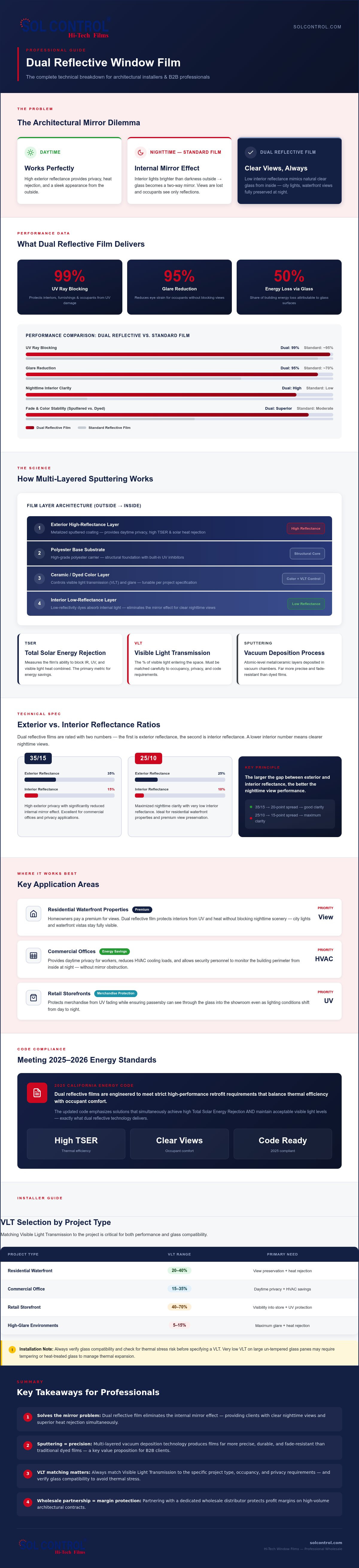
Dual reflective window film is a sophisticated architectural solution engineered with two distinct layers of reflectivity. Unlike traditional films that share the same finish on both sides, this technology utilizes a highly reflective exterior surface paired with a more subtle, low-reflectance interior coating. This specific design addresses the most common complaint in the industry: the loss of nighttime visibility. As we move into 2026, building standards like the updated California Energy Code emphasize high-performance retrofits that balance thermal efficiency with occupant comfort. Dual reflective options meet these requirements by rejecting significant solar heat while maintaining a natural look from the inside.
The construction of these films involves a complex layering process. Manufacturers use advanced sputtering technology to deposit microscopic layers of metals and ceramics onto a polyester base. These layers are combined with high-grade dyes and UV inhibitors to create a durable, high-performance window film. The exterior layer is optimized for high Total Solar Energy Rejection (TSER), while the interior layer is treated to minimize light bounce. This ensures that residents aren't staring at their own reflection once the sun goes down.
The 'Internal Mirror' Problem Explained
Standard reflective films often act like a two-way mirror. During the day, they look excellent from the outside and provide necessary privacy. However, a physics problem occurs at night. When interior lights are brighter than the darkness outside, the glass becomes a mirror. This "internal mirror" effect is a major pain point for residential clients who want to enjoy city lights or waterfront views after sunset. Dual reflective technology solves this by keeping interior reflectivity significantly lower than exterior reflectivity, often mimicking the natural appearance of clear glass from the inside.
Key Applications for Dual Reflective Technology
Selecting the right film depends heavily on the building's primary function and environmental exposure. Here are the most common applications where this technology excels:
Residential Waterfront Properties: Homeowners pay a premium for their views. These films protect interiors from UV damage and heat without obstructing the scenery at night.
Commercial Offices: These films provide daytime privacy for workers and reduce cooling loads on HVAC systems. Because they don't create an internal mirror, security personnel can still monitor the building's perimeter from the inside at night.
Retail Storefronts: Retailers need to protect merchandise from fading while ensuring that passersby can see through the glass into the showroom, even when lighting conditions shift.
The Science of the 'Dual' Effect: How Multi-Layered Sputtering Works
The performance of dual reflective window film depends on a manufacturing process known as sputtering. This method uses vacuum chambers to deposit atomic layers of metals and alloys onto the film substrate. Unlike traditional dyed films, sputtered layers are more precise and resistant to fading. A typical roll consists of a polyester base, a metalized layer for heat reflection, and a ceramic or dyed layer for color and glare control. This multi-layered approach allows manufacturers to tune the film's properties for specific architectural needs. It’s a level of precision that older technologies simply can’t match.
Understanding technical specifications is vital for any professional installer. Total Solar Energy Rejection (TSER) measures the film's ability to block infrared, UV, and visible light heat. Visible Light Transmission (VLT) indicates the percentage of light that actually enters the room. Dual reflective films are unique because they decouple heat rejection from interior reflectivity. The interior layer uses low-reflectivity dyes to absorb internal light, effectively reducing the glare that typically occurs when indoor lighting is stronger than the darkness outside.
Exterior vs. Interior Reflectance Ratios
Professionals often evaluate these films by their reflectance ratios, such as 35/15 or 25/10. The first number represents the exterior reflectance, which provides daytime privacy and high heat rejection. The second number indicates the interior reflectance. A lower second number is better for nighttime visibility. This ratio ensures that the building looks modern and sleek from the street while providing a natural, undistorted view for the occupants. It’s the primary reason dual reflective window film has become the standard for luxury residential projects in 2026.
UV Protection and Fade Prevention
Beyond heat and glare, these films serve as a critical defense against sun damage. They block 99% of harmful UV rays, which are responsible for nearly 40% of interior fading in furniture and flooring. The synergy between sputtered metal layers and modern UV inhibitors creates a robust barrier that preserves interior assets. If you're looking for specialized stock, exploring UV blocking window film wholesale options can help you secure high-performance materials for demanding projects.
Securing high-quality rolls with these precise ratios is easier when you have a dedicated wholesale inventory partner that understands the technical demands of 2026 architectural projects.
Dual Reflective vs. Standard Reflective Film: A Professional Comparison
Wholesale buyers often weigh the upfront cost of dual reflective window film against standard silver reflective options. While silver films are historically budget-friendly, they often carry a "commercial" or "dated" aesthetic that can alienate residential clients. Dual reflective technology provides a premium finish that justifies its position in the market by offering a warmer, more sophisticated exterior appearance. It isn't just about the look; it's about providing a product that meets the high-end demands of 2026 architectural designs without sacrificing the high TSER values that professional installers expect.
Does "dual" mean less performance? Absolutely not. High-performance dual reflective rolls achieve TSER ratings that rival traditional silver films, often reaching into the 70% range for darker shades. From an installation standpoint, these films are engineered with professional-grade adhesives that ensure long-term stability. The multi-layered construction makes them resilient during the squeegee process, which reduces the risk of damaging the delicate interior layer. This durability ensures that your projects maintain their integrity and performance for years after the initial application.
Performance Metrics: TSER and SHGC
In high-heat environments, the Solar Heat Gain Coefficient (SHGC) is the metric that matters most for commercial energy audits. Dual reflective films typically offer an SHGC that beats neutral films and matches silver reflective categories. This makes them a primary candidate for projects where reducing the cooling load is the top priority. By reflecting solar energy at the exterior surface before it penetrates the glass, these films help buildings comply with strict 2026 energy codes while maintaining a healthy level of natural light.
Nighttime Optical Clarity
The most striking difference between these categories appears after dark. Standard silver films reflect interior light back at the occupant, creating a disorienting mirror effect that ruins the view. In contrast, dual reflective window film maintains clarity. Architects designing modern "glass house" residences or high-rise office towers prefer this technology because it preserves the visual connection to the outdoors. For office occupants, this translates to reduced eye strain and a more comfortable working environment, as the film absorbs internal light rather than bouncing it around the room.
Choosing the Right VLT: Selection and Installation Best Practices
Selecting the right Visible Light Transmission (VLT) is a balancing act between energy performance and aesthetic preference. For dual reflective window film, this choice also impacts how much privacy the client receives during the day. Beyond aesthetics, you must consider glass-type compatibility. Installing a high-absorption film on certain types of dual-pane or low-E glass can lead to thermal stress breakage. Conducting a comprehensive professional glass assessment is the foundational first step for any project involving dual reflective window film to ensure the integrity of the glazing system. You'll need the right tools to handle these large-scale architectural installs, including high-durometer squeegees, heavy-duty scrapers, and high-quality slip solutions that allow for easy positioning on expansive glass surfaces.
VLT Range Guide for Pros
Professionals typically categorize VLT into tiers based on the project's goals. Selection matters. For commercial exteriors, a 15% to 25% VLT range is often the best choice. It provides maximum heat rejection and daytime privacy, which is ideal for buildings facing intense, direct sunlight. Residential projects usually require a lighter touch. A 35% to 45% VLT is the preferred "sweet spot" for living rooms and kitchens. It offers significant heat relief while maintaining a bright, open feel inside the home. Always account for the building's existing glass tint. If the windows are already factory-tinted, the final VLT will be lower than the film's standalone rating.
Installation Nuances for Architectural Film
Installing dual reflective window film on large architectural panes requires a different approach than automotive work. Cleaning protocols must be more rigorous. Even a tiny speck of dust is magnified on a six-foot window. Use a multi-stage scrubbing process with professional scrapers to ensure the surface is surgically clean. Managing edge gaps is equally critical. In residential frames, a gap that's too wide creates distracting light leaks, while a film cut too tight can peel. Precise trimming is essential. For a deeper dive into the technicalities of various materials, read our full guide on architectural window film.
Wholesale Sourcing for Dual Reflective Film: Partnering with SolControl
Success in the architectural market depends on your ability to maintain healthy margins while delivering high-performance results. Wholesale sourcing is the most effective way to achieve this balance. When you purchase dual reflective window film in bulk, you reduce your per-square-foot cost and ensure you have the inventory needed for large-scale contracts. SolControl operates with an exclusive B2B focus. This means we don't compete with you for installation jobs. We are strictly a distribution partner dedicated to your growth and professional success.
Managing inventory for architectural projects requires stocking a variety of roll widths. Standard glass sizes vary significantly between residential and commercial properties. We carry widths in 36", 48", 60", and 72" to minimize waste and speed up your installation process. Additionally, we provide the technical data sheets and marketing materials you need to close complex B2B sales. Having verified performance data on hand allows you to demonstrate the value of dual reflective technology to property managers and architects with confidence. It’s about more than just selling film; it’s about providing a technical solution that works.
Bulk Film Procurement and Logistics
Large-scale commercial rollouts require reliable logistics and product consistency. National shipping ensures you receive your materials on time, regardless of where the project is located. Batch consistency is equally important. When you tint a multi-story building, you need the film to look uniform across every pane. Our rigorous quality control standards ensure that every roll matches the next. You can also access professional installation equipment alongside your film inventory, making us a single-source partner for your business needs. This streamlined approach saves you time and reduces administrative overhead.
Growing Your Business with Architectural Solutions
Diversifying your services is a smart way to increase revenue and build a resilient business. Many installers start in the automotive sector but find that architectural projects offer higher margins and more stable year-round work. Dual reflective window film serves as an excellent high-margin upsell for residential clients who want the best heat rejection without losing their evening view. It’s a solution that sells itself once the benefits of nighttime clarity are clearly explained. By adding these architectural solutions to your portfolio, you position yourself as an expert in solar control technology.
Advancing Your Architectural Portfolio with Dual Reflective Solutions
Mastering the application of dual reflective window film positions your business at the forefront of the architectural tinting industry. You've seen how this technology eliminates the common "internal mirror" complaint while providing the solar heat rejection required by 2026 energy standards. By balancing high exterior reflectance with a low-reflectance interior coating, you offer clients a premium solution that protects their views and their interiors simultaneously.
Your growth in this high-margin sector depends on having a reliable inventory partner. SolControl is a dedicated B2B wholesale distributor focused exclusively on supporting professional installers without competing for their clients. We offer national US shipping on all bulk rolls and provide expert technical support to help you navigate complex project specifications. This partnership ensures you have the right tools and materials to deliver flawless results every time.
Is dual reflective window film better than ceramic film for homes?
Dual reflective film is often superior for homeowners who prioritize daytime privacy and high heat rejection at a competitive price point. While ceramic film offers excellent infrared rejection without a shiny appearance, it doesn't solve the internal mirror effect as effectively. Choosing dual reflective window film ensures that you maintain a clear view of the outdoors after sunset while still enjoying significant energy savings and UV protection during the daylight hours.
Can dual reflective film cause window glass to crack or break?
Thermal stress breakage can occur if the film absorbs too much heat for the specific glass type to handle. This risk is higher with certain double-pane windows or glass with existing coatings. It's essential to perform a professional glass assessment before every installation. Professionals should check manufacturer compatibility charts to ensure the solar absorption rate of the film doesn't exceed the safety limits of the glazing system, preventing costly cracks.
Does dual reflective film provide total privacy at night?
No window film provides total privacy at night if the interior lights are on and it's dark outside. Privacy is a product of light balance; the film reflects light from the brighter side. While dual reflective window film significantly reduces the reflection you see from the inside, passersby will still be able to see into a lit room. For total nighttime privacy, clients should still utilize traditional window treatments like blinds or curtains.
How long does professional-grade dual reflective film typically last?
Professional-grade dual reflective films are designed for longevity, typically lasting between 10 and 15 years when installed correctly. Because these films use sputtered metal layers rather than simple deep-dyed constructions, they're highly resistant to bubbling, peeling, and purple fading. The actual lifespan depends on the direction the window faces and local climate conditions. Using high-quality wholesale rolls ensures the installation remains a durable architectural asset for the building's owner for over a decade.
What is the best VLT for a residential dual reflective installation?
For most residential settings, a Visible Light Transmission (VLT) of 35% to 45% is considered the ideal choice. This range provides a noticeable reduction in heat and glare without making the interior feel overly dark or closed in. It maintains a natural look that complements most home decors while still offering the technical benefits of dual reflective technology. For bedrooms or home theaters where maximum privacy is needed, a lower VLT might be more appropriate.
Is dual reflective film compatible with Low-E glass coatings?
Compatibility with Low-E glass depends on whether the coating is on the interior or exterior surface. If the Low-E coating is on the room-side surface, applying film can be problematic. However, many dual reflective films are safe for standard double-pane Low-E windows where the coating is protected inside the unit. Always verify the film's solar absorption specs against the glass manufacturer's guidelines to avoid trapping excessive heat, which can damage the window's seals.
How do I clean windows after dual reflective film has been installed?
You should wait at least 30 days after installation to allow the adhesive system to cure completely. Once cured, use a clean, soft microfiber cloth or a synthetic sponge with a mild, non-ammonia soap solution. Ammonia-based cleaners can degrade the scratch-resistant coating and the internal layers of the film over time. Avoid using abrasive pads, paper towels, or industrial scrapers, as these can leave permanent scratches on the film's surface and ruin the clarity.
Why is the interior reflectance of dual reflective film so much lower than the exterior?
The interior layer is engineered with low-reflectivity dyes and ceramics specifically to absorb internal light rather than reflecting it back. This design contrasts with the exterior layer, which uses sputtered metals to reflect solar energy away from the building. By keeping the interior reflectance low, the film prevents the glass from acting like a mirror when indoor lights are on. This technical balance is what allows occupants to enjoy clear, unobstructed views during the night.