Proper Storage for Window Film Rolls: A Professional Guide
A film roll can arrive in excellent condition and still be compromised before installation. Heat, sunlight, moisture, dust, and rough handling can put valuable inventory at risk. Proper storage for window film rolls helps protect stock and keeps the right material ready when a job is scheduled.
It’s easy to focus on film selection and installation preparation while treating storage as a matter of finding shelf space. A consistent routine helps prevent avoidable damage and handling mistakes, especially when your inventory includes automotive, architectural, paint protection, or windshield films. Storage requirements vary by product, so use the manufacturer’s current instructions to guide product-specific decisions.
This guide covers a practical storage and handling workflow, from choosing a suitable environment and protecting rolls from physical damage to organizing inventory for easy identification. It also explains how to approach roll orientation and product-specific directions so your films stay protected and installation-ready.
Key Takeaways
Proper storage for window film rolls starts with a clean, dry, stable space that protects stock from direct sunlight, heat, moisture, and dust.
Use the film maker’s instructions to determine storage conditions and roll position, since one orientation may not suit every film.
Build a repeatable inventory routine: inspect incoming rolls, label them clearly, assign storage locations, rotate stock, and recheck it regularly.
Separate automotive, architectural, paint protection, and windshield films to make stock easier to identify and handle correctly.
Include storage checks in receiving, job preparation, shop transport, and returns so rolls stay organized and ready for installation.
Why Proper Storage for Window Film Rolls Matters Before Installation
A roll can arrive in good condition and still face preventable risks before it reaches the installation area. Direct sunlight through a warehouse window, a nearby heat source, moisture, dust, or an accidental knock can affect the roll or its packaging. The possible effects depend on the film’s construction and the manufacturer’s instructions, so storage matters from receiving through job preparation.
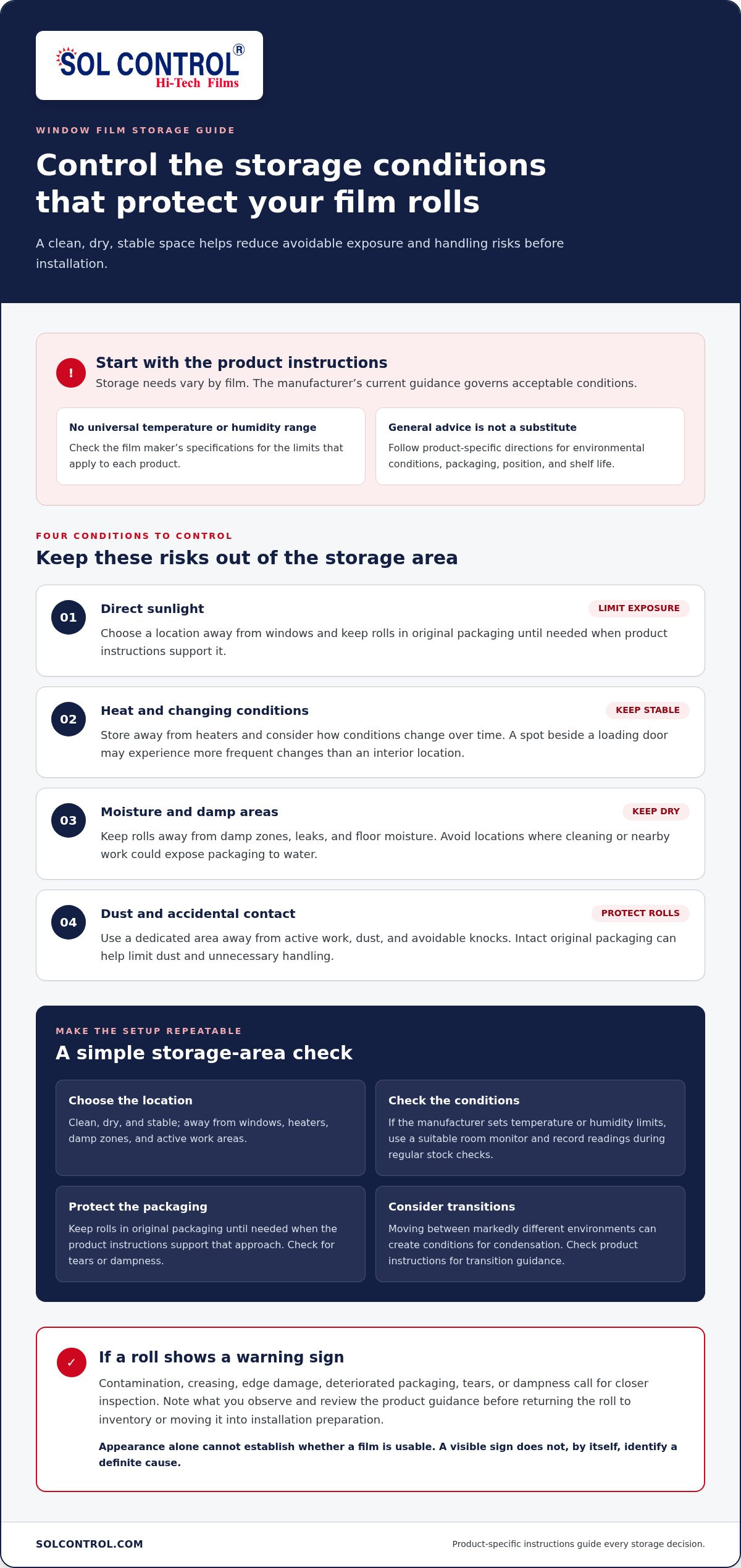
Proper storage for window film rolls combines suitable conditions, protective packaging, careful positioning, and inventory records that help staff identify and locate each roll. These steps reduce avoidable exposure and handling errors, but appearance alone can’t establish whether a film is usable. Contamination, creasing, edge damage, or deteriorated packaging are reasons to inspect the roll and review its product guidance. None of these signs points to one definite cause by itself.
What can compromise a stored window film roll?
Sunlight and heat sources can create an unstable storage environment, while moisture and dust may affect exposed material or packaging. A dropped roll or collision with equipment can cause visible damage. Unsuitable support, bending during movement, or rough handling may deform the roll or affect its protective wrap. Because window films differ in construction, these risks and their effects aren’t identical across products.
Many window films use polyethylene terephthalate (PET) as a base material, but that doesn’t mean every film responds to storage conditions in the same way. Treat visual signs as prompts for a closer check, not proof of a specific storage failure. Inspect the packaging and exposed edges while limiting unnecessary handling, then consult the relevant product instructions before deciding what to do with the roll.
Why the original packaging and product instructions matter
Keeping a roll in intact original packaging can help limit dust and unnecessary handling before use. Preserve labels that identify the film type, lot, or other product details where provided. These details help staff match a roll to its instructions and distinguish similar-looking inventory, especially when several film categories share a workspace.
General handling principles help protect inventory, but the manufacturer’s instructions determine the storage requirements for a specific film. Follow the current instructions for environmental conditions, position, packaging, and shelf life instead of treating general advice as a universal specification. If packaging is damaged or a roll shows a possible warning sign, document what you observe and review the product guidance before moving it into the installation workflow.
Control Temperature, Light, and Moisture Around Window Film Rolls
A suitable storage area is clean, dry, and stable, with rolls kept away from direct sunlight and avoidable heat sources. There’s no single temperature or humidity range that applies to every window film. Check the film maker’s current specifications for acceptable limits, and use those instructions to guide how you monitor the space.
Choose a stable indoor storage location
Set aside a dedicated area away from windows, heaters, damp zones, and active work areas where dust or accidental contact is more likely. Keep rolls clear of leaks and floor moisture. Avoid placing them where routine cleaning or nearby work could expose the packaging to water or debris. If the manufacturer sets temperature or humidity limits, use a suitable room monitor and record readings during regular stock checks.
Consider how the room’s conditions change over time, not just what they are at one moment. A storage spot beside a loading door, for example, may experience more frequent changes than an interior location. The Film Preservation Foundation’s guidance concerns motion-picture film, not window film, but it illustrates why damp or fluctuating environments can be unsuitable for film storage. Use it as general context, not as a substitute for the window film maker’s requirements.
Protect rolls from light, moisture, and temperature swings
Keep each roll in its original packaging until it’s needed, when the product instructions support that approach. Packaging can help limit exposure to light, dust, and unnecessary handling, but it doesn’t replace a suitable room. During routine checks, look for tears, dampness, and other signs of exposure. If you find them, note the condition and follow the product guidance before returning the roll to inventory.
Pay attention to sudden changes between storage and work areas, which can create conditions for condensation on or around packaging. Before moving a roll from a markedly different environment into handling or preparation, check the manufacturer’s instructions for any transition guidance. The appropriate approach may vary by product.
Check the storage area’s temperature, humidity, light exposure, and signs of moisture; the film maker’s specifications govern acceptable limits. This is the practical standard for proper storage for window film rolls: control the environment consistently, but don’t substitute general advice for product-specific directions. If you’re organizing film inventory alongside your workflow, explore window films and tinting tools for your shop supplies.
Choose the Right Roll Position and Handling Method for Window Film
Vertical or horizontal? Neither position is right for every window film roll. The acceptable orientation can depend on the roll, its core and packaging, and the manufacturer’s storage instructions. For proper storage for window film rolls, let the product guidance determine the position, then record it in your shop procedure so everyone handles stock consistently.
Should window film rolls be stored vertically or horizontally?
Each position has practical tradeoffs, but those tradeoffs don’t override product instructions. Vertical storage may make some rolls easier to identify and retrieve, while horizontal racks can help organize rolls in a defined row. In either case, the rack or support must suit the approved orientation and hold rolls securely without creating pressure or contact risks.
PositionPractical consideration
VerticalCan provide clear access to labeled rolls, but requires stable, suitable support and careful placement.
HorizontalCan keep rolls organized along a rack, but the support must suit the roll and avoid unapproved pressure or loads.
Don’t assume one approach is safe for every core, wrap, or film type. Check the manufacturer’s current storage directions and note the approved position alongside the inventory location. This record helps staff follow product requirements instead of relying on habit when different products need different handling.
Move and access rolls without damaging them
Handle rolls deliberately whenever they leave storage. Lift and support them without dropping, crushing, bending, or dragging them across shelves or floors. For a large or heavy roll, use suitable handling equipment and clear the route rather than maneuvering it awkwardly by hand. Avoid striking the roll ends, pulling on exposed film edges, or placing tools and other loads on stored rolls unless product instructions allow it.
Handling directions may differ across automotive and architectural films, as they can across other film categories. Use the relevant automotive film guide and architectural film guide as reference points for product-specific instructions. Don’t transfer one category’s guidance to another without checking. Keep the roll protected while moving it, and return unused material to its designated storage position according to its own instructions. Record the return if your inventory workflow tracks roll location or condition.
Build a Window Film Roll Storage System That Keeps Inventory Usable
A clear inventory process helps staff find the right roll, return it to the right place, and spot concerns before a job is underway. Build the routine around six steps: receive, inspect, label, locate, rotate, and recheck. Keep automotive, architectural, paint protection, and windshield films in clearly marked areas to reduce mix-ups and make product-specific handling instructions easier to follow.
Label and organize film rolls for fast identification
When stock arrives, record the details available on the packaging or product documentation, such as film category, product identifiers, lot information, receipt date, and assigned storage location. Keep labels visible without removing protective packaging or covering manufacturer instructions. Use consistent shelf, rack, or bay markers so staff can locate a roll and return it to its designated space after use.
Keep the inventory record straightforward. A shared log or inventory system can connect each roll’s identifiers with its location and relevant handling notes. If a roll moves, update the record promptly. This small step reduces time spent searching and helps prevent staff from selecting similar products by mistake.
Rotate stock and inspect storage routinely
First-in, first-out rotation can help shops use older stock before newer receipts, but apply it only when consistent with the manufacturer’s instructions. Use receipt dates or lot information to guide selection, and follow product-specific shelf-life guidance rather than assuming all films have the same storage life.
Include a brief visual review in the routine. Check the roll’s packaging and surrounding area for signs of damage or exposure. Separate questionable stock from ready-to-use inventory while you review the manufacturer’s guidance.
Is the roll identifiable, with its available product and lot details recorded?
Is it in its assigned location and stored in the approved position?
Does the packaging show tears, moisture, or other visible changes?
Have storage conditions or nearby hazards changed since the last check?
Does the rotation order follow product-specific shelf-life instructions?
Receive, inspect, label, locate, rotate, and recheck each roll to keep inventory traceable and usable. Make these steps part of staff routines, not just a one-time setup. For professional film inventory and shop supplies, explore SolControl’s window films and tinting tools.
Make Proper Window Film Roll Storage Part of Your Installation Workflow
Storage works best as part of the shop’s everyday process, not as a separate task that happens only when new stock arrives. A consistent routine connects receiving, job preparation, movement through the workspace, and returns to inventory. It also gives staff a clear way to protect rolls between uses and flag concerns before they disrupt a scheduled job.
Prepare a roll for a specific installation
Before moving a roll, match its label and product information to the film selected for the job. Check the packaging and visible roll condition, then follow the product’s instructions for handling and preparation. During transport within the shop, keep the roll protected and use the approved handling method. After the job, return unused material promptly to its designated storage area and record its new status or location. If you notice a possible issue, document it and follow the manufacturer’s guidance before returning the roll to usable inventory.
These checks make proper storage for window film rolls part of installation readiness. Staff can confirm they have the intended product and spot visible concerns before work begins, instead of discovering a mismatch or packaging problem at the last moment.
Use product-specific guidance across film categories
Automotive, architectural, paint protection, and windshield films may have different storage and handling instructions. Don’t assume that a position, environmental limit, or return-to-storage practice suitable for one category also applies to another. Keep a written procedure based on the products in your shop, and make the relevant manufacturer instructions accessible to staff. Train new team members to identify each category, handle its rolls, and report concerns.
For additional product context, consult the professional guides to automotive window film and architectural window film alongside the instructions supplied for each specific film. These guides can support product understanding, while the manufacturer’s current directions remain the reference for storage requirements.
Review the procedure when your inventory changes, and keep the receiving and return-to-stock steps simple enough to follow consistently. SolControl supplies wholesale automotive, architectural, paint protection, and windshield films, as well as professional tinting tools, for installers and contractors. Explore SolControl’s film and tool offerings to support your shop’s inventory needs.
Put a Consistent Film Storage Routine in Place
Protecting film inventory doesn’t require a complicated system. A clean, stable storage area, careful roll handling, and clear inventory records help keep products organized and ready for the next job. Let the manufacturer’s instructions determine each film’s storage conditions, position, and shelf-life guidance.
Build proper storage for window film rolls into daily shop routines: inspect and label stock when it arrives, assign clear locations, rotate it according to product guidance, and check it again before use. Separate film categories so staff can identify the right roll and follow its specific handling directions. Consistency across receiving, preparation, and return-to-stock helps reduce avoidable errors.
SolControl supports installers and contractors across the United States with wholesale automotive, architectural, paint protection, and windshield films, alongside professional tinting tools. Explore SolControl’s window films and professional tools to support your shop’s inventory needs. With a practical process and clear product guidance, your team can keep film stock organized and installation-ready.
Frequently Asked Questions
How should window film rolls be stored?
Store rolls in a clean, dry, stable indoor area, protected from direct sunlight, avoidable heat, moisture, dust, and impact. Keep them in their original packaging when the manufacturer’s instructions allow, and use the specified roll position and support method. Record product identifiers and storage locations so staff can retrieve and return rolls without unnecessary handling. Proper storage for window film rolls depends on product-specific requirements, not one universal setup.
Can window film rolls be stored in a garage?
A garage is suitable only if it can consistently meet the film maker’s storage instructions. Garages may expose rolls to temperature swings, direct sunlight, dampness, dust, leaks, or accidental impact. Assess the actual storage area rather than assuming an enclosed space is adequate. If the environment can’t be kept within the product’s specified conditions, choose a more stable indoor location and keep rolls protected in their packaging where instructions permit.
What temperature should window film rolls be stored at?
Follow the temperature limits in the current manufacturer’s instructions for the specific film. There isn’t one universal range for every window film, and specifications can differ by product. Keep rolls away from heaters, sunlit windows, and areas with frequent temperature changes. If the manufacturer provides temperature limits, monitor the storage area and note readings during routine inventory checks. Don’t substitute a general recommendation for the product’s stated requirements.
Does window film have a shelf life in storage?
Yes, uninstalled window film can have a stated shelf life, and the period depends on the manufacturer’s guidance and required storage conditions. 3M storage guidance cites approximately two years for uninstalled window film under recommended conditions, but that shouldn’t be treated as a universal limit for every product. Check the relevant product documentation, retain lot and receipt details where provided, and rotate stock only in a way that complies with its shelf-life instructions.
Can moisture or sunlight damage stored window film?
Moisture and direct sunlight are exposure risks, so store rolls in a dry area away from windows and keep packaging intact when product instructions allow. Check packaging for dampness, tears, or other visible changes during routine inspections. These signs can indicate exposure, but they don’t establish the cause or determine the film’s condition by themselves. Follow the manufacturer’s guidance to assess a roll that may have been exposed before returning it to usable stock.
How should a shop organize window film roll inventory?
Separate automotive, architectural, paint protection, and windshield films into clearly marked storage areas. As rolls arrive, inspect them, record available product and lot identifiers plus the receipt date, label their location, and keep labels visible without covering instructions. Use receipt or lot details to rotate stock when product guidance allows, and recheck packaging and storage conditions routinely. Update the location record whenever a roll moves so staff can find and return it accurately.
Can window film rolls be stacked on top of each other?
Stack rolls only if the manufacturer specifically permits it and provides guidance for the products involved. Don’t assume one roll can safely support another, since approved arrangements may depend on the film, core, and packaging. Follow the specified orientation and support method, and avoid placing unapproved loads on stored rolls. If stacking instructions aren’t provided, use an approved rack or other suitable support rather than improvising a stack.