Solar Control Window Film Wholesale: Professional Guide
What if a film that looks right on a marketplace listing isn’t the right fit for the glass or the project? For professionals sourcing solar control window film wholesale, a headline performance figure is only a starting point. You also need to consider the glass type, visible light transmission, heat-control goals, and the finished appearance your customer expects.
Careful product selection matters, as does having a practical sourcing process behind your work. This guide explains which product details to compare before buying, how to assess more than a listing’s headline specifications, and what to weigh when comparing a marketplace with a focused wholesale distributor. You’ll be better prepared to match film to project requirements and plan purchases around your business’s needs.
We’ll also look at how SolControl serves professional installers, tint shops, glass companies, and automotive dealers nationwide with architectural window films, tinting tools, and marketing materials. The goal is to help you make informed sourcing decisions and identify distribution support suited to the day-to-day demands of a professional film business.
Key Takeaways
Plan film selection around the project’s heat, glare, visible-light, and UV goals, along with the glass and desired appearance.
Compare Total Solar Energy Rejected and Solar Heat Gain Coefficient as distinct measures, not interchangeable headline figures.
Use a project checklist to separate known requirements from performance details that need product documentation.
Evaluate solar control window film wholesale sourcing by how well product information, relevant film categories, and complementary tools support professional work.
SolControl’s nationwide wholesale distribution connects architectural and automotive films, protection films, tinting tools, and marketing materials for professional businesses.
What Solar Control Window Film Wholesale Means for Professional Buyers
Solar control window film wholesale means sourcing film through trade channels for professional projects, rather than making a one-off consumer purchase. The distributor supplies film to businesses; the installer assesses the project, selects a suitable product, and completes the installation. Keeping these roles clear helps buyers plan both material procurement and the work required on site.
Wholesale buying involves more than choosing a listing with an appealing headline specification. Consider the project’s purpose, the glazing already in place, and the desired balance of heat control, glare reduction, visible light, UV filtering, and appearance. Films differ in construction and properties, so a general overview of window film technology can help establish the basics. For a specific application, use product documentation to assess the film’s stated performance and suitability.
Who buys solar control film wholesale?
Tint shops, glass contractors, professional installers, and automotive dealers may all source film through wholesale channels. Their work can include commercial buildings, homes, and vehicles, with each project bringing different glazing, customer expectations, and performance priorities. Businesses handling repeat projects benefit from a consistent sourcing process: record each job’s requirements, then compare them with product information before ordering instead of relying on a broad consumer listing.
What does a wholesale film partner contribute?
A wholesale partner supplies film and related business materials to professional buyers. Installation is carried out by the installer. A focused distributor can make sourcing more relevant to film businesses by bringing appropriate product categories and professional tools into the purchasing process. Tinting tools support shop work, while marketing materials can help businesses present their offerings to customers.
Useful purchasing decisions start with clear project information. Record the details you know about the job and glazing, then use product documentation to assess performance claims and compatibility before choosing a film. This makes comparisons more relevant than relying on one headline figure. For professional businesses, distribution is most useful when it connects film procurement with the tools and materials that support everyday operations.
Matching Solar Control Film Specs to Your Project
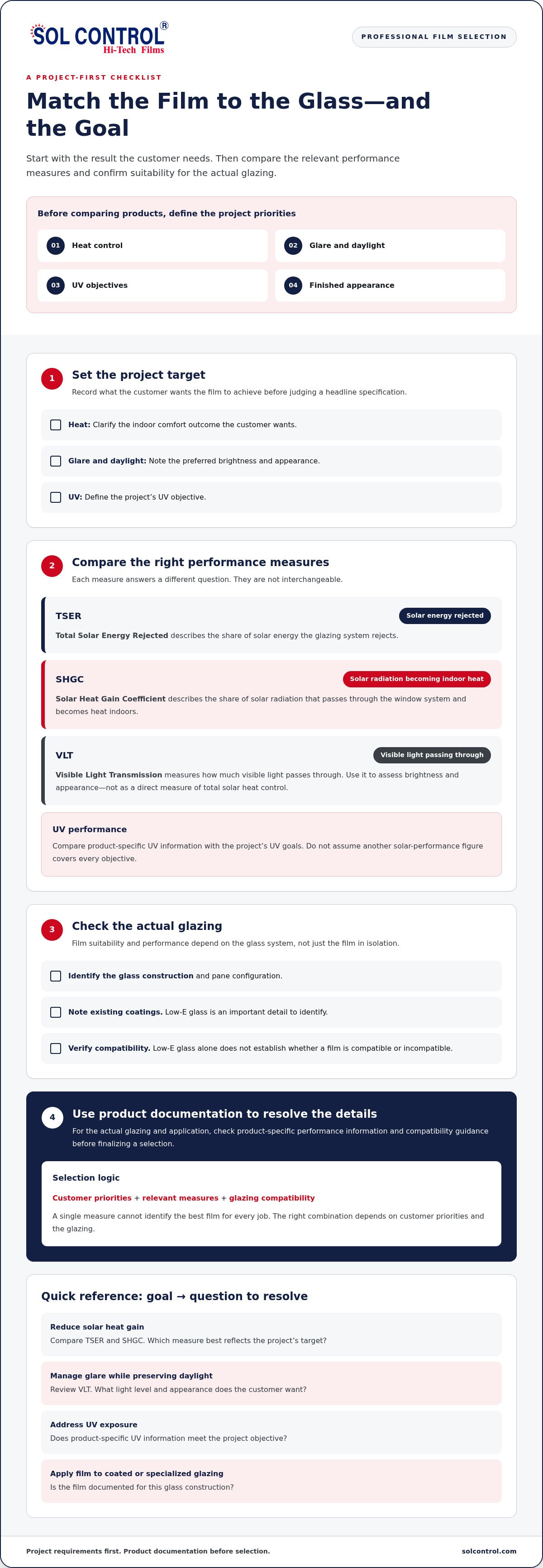
A useful specification begins with the result the customer needs, not a single standout number. A west-facing office with afternoon glare may call for a different balance of light transmission and solar control than a home where preserving daylight is a priority. Before comparing products for a solar control window film wholesale order, define the project’s heat, glare, visible-light, and UV objectives. Then assess those goals against the existing glazing.
Which performance measures should professional buyers understand?
Total Solar Energy Rejected (TSER) describes the share of solar energy the glazing system rejects. Solar Heat Gain Coefficient (SHGC) describes the share of solar radiation that passes through the window system and becomes heat indoors. The measures are related, but they are not interchangeable. Visible light transmission (VLT) measures how much visible light passes through, making it useful for assessing brightness and appearance rather than as a direct measure of total solar heat control.
UV performance is another consideration. Compare product-specific UV information with the project’s UV goals instead of assuming one solar-performance figure covers every objective. No single measure identifies the best film for every job. The right combination depends on customer priorities and the glazing.
Heat control: Compare TSER and SHGC, then clarify the indoor comfort outcome the customer wants.
Glare and daylight: Review VLT against the customer’s preferences for brightness and appearance.
UV objectives: Check product-specific UV information against the project’s requirements.
Why does glazing compatibility matter?
Film suitability and performance depend on the glass system, not just the film in isolation. Glass construction, pane configuration, and existing coatings can affect which film is appropriate. Low-E glass is an important detail to identify, but its presence alone does not establish compatibility or incompatibility. Review product-specific compatibility guidance and performance documentation for the actual glazing before finalizing a selection.
Use the table to turn customer priorities into practical specification questions:
Project goal
Relevant measure
Question to resolve
Reduce solar heat gain
TSER and SHGC
Which measure best reflects the project’s target?
Manage glare while preserving daylight
VLT
What light level and appearance does the customer want?
Address UV exposure
Product-specific UV data
Does the documented performance meet the project objective?
Apply film to coated or specialized glazing
Compatibility documentation
Is the film documented for this glass construction?
This project-first approach makes product comparisons more useful for professional buyers. Explore SolControl’s architectural window films as part of your sourcing process, and use product documentation to match film performance to the glazing and goals at hand.
Wholesale Marketplaces vs. a Specialist Window Film Distributor
Broad marketplaces and specialist distributors serve different sourcing needs. A marketplace can help professional buyers discover suppliers and scan listed options in one place. A specialist window film distributor focuses on film categories and related materials for trade customers. When sourcing solar control window film wholesale, the right approach depends on whether you’re exploring options or building a repeatable purchasing process around project requirements.
When can a marketplace meet a sourcing need?
Marketplaces can be a practical starting point for discovering suppliers and comparing product listings. A listing may identify a film’s stated purpose or headline attributes, but it may not answer project-specific questions about glazing compatibility or how documented performance relates to the job. Use listing details as an initial screen, then compare relevant product documentation before making a selection. This allows marketplaces to support discovery without making them your only source of technical information.
For a professional order, consider the entire workflow, not just the number of options in a search:
Product information: Does the product documentation provide the measures and application details you need?
Relevant categories: Can you source the film types that fit your business and customer work?
Shop requirements: Are professional tinting tools or business materials part of your purchasing needs?
Order planning: Can you organize selections around confirmed project requirements?
What does specialist distribution add to the decision?
A specialist distributor brings a trade-focused product range into the sourcing process. For installers, tint shops, glass companies, and dealers, that focus can make it easier to consider architectural film alongside other professional film categories and related tools. SolControl distributes architectural and automotive window films, paint protection and windshield protection films, tinting tools, and marketing materials to professional businesses across the United States. Its distribution supports material sourcing, while professional installers carry out installation.
A broader category view can help a business plan procurement around the work it actually handles, not just a single job. It does not replace product documentation: film selection still depends on the project and glazing. For another perspective on product selection and sourcing, read the UV-blocking window film wholesale guide.
In practice, marketplaces can support supplier discovery, while focused distribution can bring film categories, tools, and business materials together for professional purchasing. Compare sourcing options by how well they support informed decisions and an orderly workflow, not by listing volume alone.
A Practical Checklist for Planning a Solar Control Film Wholesale Order
A well-planned order starts with the work, not a guess about what to keep on hand. For solar control window film wholesale, separate known project details from technical questions that require product documentation. This helps narrow options, plan for your project mix, and account for the related supplies your shop uses.
What information should buyers organize first?
Start by recording the application and glazing context for each project. Note whether the work is residential or commercial, what is known about the glass and existing coatings, and what the customer wants the film to do. Then use this sequence to build your order plan:
Define the objective: Record priorities such as heat control, glare reduction, daylight, appearance, or UV performance.
Document the glazing: Capture known glass construction and coating details, including whether Low-E glass is present.
Identify open technical questions: Flag compatibility and performance details that need product-specific documentation before selection.
Map the project mix: Group upcoming work by application and relevant film category.
Finalize product choices: Compare documented specifications with each project’s requirements before planning the purchase.
This sequence helps avoid a common sourcing mistake: treating an incomplete listing or a single performance measure as enough information to choose film. Keep confirmed project facts separate from assumptions, and use documentation for the specific product and glazing combination to resolve technical questions.
How can shops plan related supplies?
Film is only one part of a professional workflow. Review tinting tools as a separate procurement need, based on the work your team performs, rather than treating them as part of the film specification. Marketing materials are another distinct consideration and can support customer-facing conversations about your business’s film offerings. Planning these categories alongside film gives the order a practical, shop-level focus.
For more on architectural film selection and performance, read the architectural window film professional guide. Then bring project notes, documented requirements, and related supply needs together in one purchasing plan.
Source Solar Control Window Film Wholesale with SolControl
Choosing suitable film and planning an order are only part of professional sourcing. You also need product categories that reflect the work your business handles. SolControl is a wholesale distributor serving professional installers, tint shops, glass companies, and automotive dealers across the United States. It supplies film and related materials to businesses, while installers carry out the work on site.
How does SolControl support professional film businesses?
SolControl’s product range connects architectural film sourcing with other categories used across professional film businesses. Buyers can explore architectural window films for building projects, automotive window films for vehicle work, and paint protection and windshield protection films for other customer needs. Tinting tools support shop workflows, while marketing materials support customer-facing business activity.
These categories give professional buyers a practical starting point for organizing purchases around the jobs they take on. A business focused on building projects may prioritize architectural film, while a shop serving several customer segments may consider multiple film categories and the tools that support its work. Product selection still depends on project requirements. Use product-specific documentation to evaluate compatibility and performance rather than assuming specifications apply across a category.
Distribution supports the supply side of the work. The professional business assesses the project and completes the installation. Keeping those roles distinct helps set clear expectations while making film, tools, and business materials part of a considered sourcing plan.
What is the next step for wholesale buyers?
Start with the work your business handles. Identify the film categories that align with your customer projects, then consider which tinting tools and marketing materials fit your day-to-day operations. For architectural solar-control projects, carry forward the details established during selection: the application, glazing context, customer priorities, and any product specifications that need documentation. This keeps purchasing decisions grounded in project needs.
For businesses sourcing solar control window film wholesale, a focused product range and a project-led approach can make procurement more purposeful. Explore SolControl’s professional product offering to identify the film and shop-supply categories relevant to your business, and use product documentation to guide selections for each job.
Build a Smarter Film Sourcing Plan
Successful wholesale sourcing starts with project fit. Match film to the glazing and the customer’s priorities, then use product documentation to compare performance measures instead of relying on a single headline figure. A clear purchasing plan can also account for the tools and customer-facing materials that support your shop’s work.
For professionals sourcing solar control window film wholesale, SolControl brings nationwide wholesale distribution together with architectural and automotive films, paint protection and windshield protection films, tinting tools, and marketing materials. This range supports professional installers, tint shops, glass companies, and dealers as they plan for varied customer projects.
Explore the product categories that align with your business and build your next order around project requirements. Explore SolControl’s wholesale window film and professional supplies to find the categories relevant to your business and plan your sourcing around informed product selection.
Frequently Asked Questions
What is solar control window film wholesale?
Solar control window film wholesale is trade-oriented sourcing of film for professional projects, rather than buying a single consumer-facing product. Installers, glass contractors, tint shops, and dealers consider how film performance and glazing context fit the work they handle. Wholesale distribution can also bring film purchasing together with professional tinting tools and business materials, helping businesses plan for project needs and day-to-day operations.
How do I choose solar control window film for a project?
Start by identifying the project’s main goal, such as reducing solar heat, managing glare, or controlling visible light. Next, document the glazing type and any existing coatings. Compare relevant measures using product-specific documentation, and check that the film is suitable for the intended glass and application. There is no universal specification for every window, so base the choice on the project’s priorities and documented product information.
What is the difference between TSER and SHGC?
Total Solar Energy Rejected (TSER) describes the portion of solar energy rejected by the film and glazing system. Solar Heat Gain Coefficient (SHGC) describes the portion of solar radiation that passes through the glazing system and contributes to indoor heat. They measure related but different characteristics, so do not treat them as interchangeable. Compare figures from consistent product documentation, and consider visible light transmission alongside the project’s goals.
Can solar control film be used on Low-E glass?
Suitability depends on the specific glass construction, coating location, and film specification. Low-E glass is not automatically compatible or incompatible with every film. Identify the glazing details, then review product-specific compatibility documentation for the intended application before specifying a film. If the glass construction or coating details are uncertain, resolve that information before making a selection because the film and glazing combination matters to suitability.
How is wholesale window film different from buying through a marketplace?
A marketplace can help buyers discover suppliers and compare listed options across product categories. A specialist distributor focuses on products relevant to professional film businesses, making it practical to consider film categories alongside tinting tools and business materials. The right sourcing approach depends on project requirements and workflow. Compare the relevance of product information and range, and do not rely on a listing alone to resolve technical questions.
What should I include when planning a wholesale window film order?
Begin with the application, glazing context, desired performance outcomes, and likely project mix. Identify which film categories fit the work, then flag specifications that require product-specific documentation, such as compatibility and performance details. Consider tinting tools and marketing materials as separate purchasing needs. Plan quantities and timing around actual projects and order requirements, rather than assuming one film suits every job or every order follows the same schedule.
Does SolControl install solar control window film?
SolControl supplies films and related professional products to installers and contractors across the United States. Its offerings include architectural and automotive window films, protection films, tinting tools, and marketing materials. Professional buyers source these products for their businesses, and the installer handling the project carries out the installation.