UV Protection Window Film Benefits for Homes and Cars
The UV protection window film benefits are practical: according to The Skin Cancer Foundation, UV window film can block more than 99% of UVA and UVB light. It can also help protect furnishings and vehicle interiors from fading while reducing solar heat through the glass. For homes, cars, and commercial spaces, film offers a way to limit sun exposure without giving up natural light entirely.
It makes sense to want cooler rooms and vehicle cabins while keeping upholstery, flooring, and other interior surfaces looking their best. UV protection window film benefits depend on where the film is used and what you want it to do, from limiting UV exposure to managing heat and glare.
This guide explains how window film can help protect vehicle and building interiors, improve comfort, and manage sunlight. You’ll also learn which film characteristics to compare so you can choose more confidently for your space or vehicle.
Key Takeaways
See how window film can reduce glare and screen reflections while preserving useful daylight in a home.
Understand how limiting UV exposure can help slow fading and deterioration of vehicle interiors.
Learn which film characteristics matter when your priority is reducing solar heat and improving cabin comfort.
Explore how residential and commercial applications differ, and where windshield protection film fits into a vehicle protection plan.
Window film can reduce glare, screen reflections, and UV exposure in rooms with strong sunlight. Its value depends on the glass, film, and light levels you want to preserve.
Glare and Screen Reflections
Window film filters sunlight, which can reduce bright patches and reflections on screens. For example, a living-room television opposite a sunny window may be easier to view when glare is reduced. Film choice matters: darker options cut more visible light, while lighter films preserve a brighter room. Renters should get the property owner’s permission before installation. Lease terms, local rules, and HOA restrictions may also govern changes to windows, so review the rules for your property first.
Eye Comfort and Privacy
Reducing direct glare can make reading, computer work, and screen viewing more comfortable. It can also improve driving comfort when sunlight enters through vehicle windows, as long as the film preserves clear visibility. UV rays can pass through windows and contribute to indoor exposure; reducing that exposure can help protect skin. Reflective film also provides daytime privacy, but the effect reverses at night when interior lights are on.
Indoor Skin Protection and Visibility Tradeoffs
UV-filtering film can reduce ultraviolet exposure through glass, helping limit a contributor to skin damage and furnishing fading. It doesn’t replace other sun-protection measures. Reduced natural light or altered views are possible drawbacks, especially with darker or reflective film. For double-pane or Low-E windows, compatibility depends on the glass construction and film; proper matching helps manage thermal stress and ensures the film suits the glazing. High-quality films typically last 5 to 20 years, depending on exposure and care. Warranties vary by product. After installation, inspect the film annually for bubbling or peeling, and avoid harsh chemicals when cleaning.
Protection of vehicle interiors from fading and deterioration
UVA can pass through vehicle glass and gradually affect cabin materials. UV-filtering film limits this exposure, helping protect the appearance of seats, dashboards, and trim.
Vehicle Interior Fading
UV absorbers in window film reduce ultraviolet light passing through the glass, helping shield interior materials from fading and deterioration. The Skin Cancer Foundation says UV window film can block more than 99% of UVA and UVB light. That protection can matter in a parked car, where sunlight repeatedly reaches the same seat, dashboard, or door panel. Film performance varies by product, so UV rejection is a useful specification to compare.
Fading of Furnishings and Artwork
Sunlight through home and workplace windows can fade furniture, flooring, and artwork over time. UV absorbers in window film reduce this exposure, helping preserve color in a rug beside a bright window or artwork displayed on a sunny wall. Glass filters much UVB, but UVA can still pass through windows, according to The Skin Cancer Foundation. Film adds a protective layer without requiring objects to be moved away from the light.
UV is only one contributor to fading. Visible light and solar heat can also affect materials, so fabric seats and wood dashboards may still wear with heat, use, and repeated sunlight. Film that reduces UV exposure can complement interior care; parking in shade and using a windshield shade can further limit direct sun on a dashboard. For drivers shopping for pre-owned cars at dealerships like 111 Auto Sales, checking for past sun wear and adding protective tint can keep vehicle interiors in top condition for years.
At home, furniture and flooring near windows receive the most direct exposure during sunny hours. Film can reduce the UV reaching these surfaces, but it won’t restore color that has already faded. Choose a suitable film and have it properly installed to help maintain consistent protection across the glass.
For vehicle applications, explore UV-blocking film options suited to reducing exposure through automotive glass.
Reducing cabin heat and infrared radiation
Yes. Window film can reduce solar heat and glare as well as UV rays, helping make a sunlit vehicle cabin more comfortable. Heat-control performance varies by film, so compare its heat rejection and visible-light transmission.
Solar Heat and Indoor Cooling
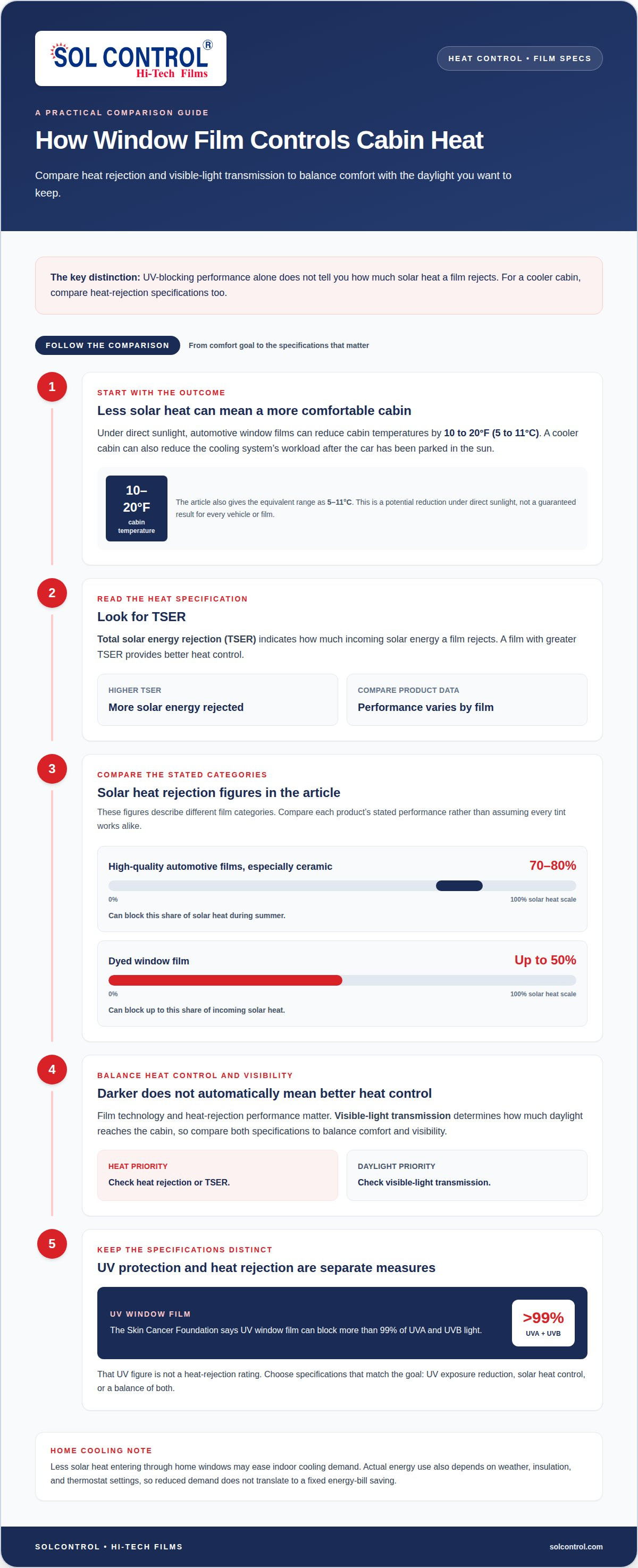
Solar heat reduction means limiting the sun’s energy that passes through vehicle glass and warms the cabin. Under direct sunlight, automotive window films can reduce cabin temperatures by 10 to 20°F (5 to 11°C). A cooler cabin can reduce the cooling system’s workload after a car has been parked in the sun. In homes, less solar heat entering through windows may ease indoor cooling demand, though energy use also depends on weather, insulation, and thermostat settings. Reduced demand doesn’t translate to a fixed energy-bill saving.
Heat Rejection and Energy Efficiency
Total solar energy rejection, or TSER, indicates how much incoming solar energy a film rejects. A film with greater TSER provides better heat control. High-quality automotive films, especially ceramic types, can block 70 to 80% of solar heat during the summer. Dyed window film can block up to 50% of incoming solar heat. These figures describe different film categories, so compare each product’s stated performance rather than assuming every tint works alike.
Infrared radiation contributes to solar heat entering through glass. Film designed to reject heat can limit that transfer, but UV-blocking performance alone does not show how much heat a film rejects. If a cooler cabin is the priority, compare heat-rejection specifications as well as UV performance and visible-light transmission.
A darker tint isn’t automatically the strongest choice for heat control. Film technology and heat-rejection performance matter, while visible-light transmission determines how much daylight reaches the cabin. Compare these factors to balance visibility and comfort. The same applies at home, especially in bright rooms that become warm during sunny hours.
Heat-control film can reduce solar heat entering through glass, but it won’t remove every source of indoor or cabin heat. Direct sun, ventilation, insulation, and cooling-system settings also affect temperature. Treat film as one part of managing comfort, and compare heat-rejection specifications with the space’s or vehicle’s main needs.
Residential and commercial window film
Residential and commercial spaces have different glazing needs, so start with the room’s purpose and sun exposure. A home office may need less screen glare while retaining daylight; a storefront may need clear views of displays. The UV protection window film benefits that matter most depend on these practical priorities, not tint darkness alone.
Nearly clear films suit spaces where preserving the existing appearance matters. Tinted and reflective options change brightness and exterior appearance, which can help manage sunlight but also alter a room’s look. In a living room with flooring beside a sunny window, UV reduction may be a priority. In a meeting room, reducing glare on displays may matter more.
Commercial buildings can assess each area by how it is used rather than applying one film throughout. A reception area, workspace, and display area may need different balances of daylight, privacy, visibility, and heat rejection. Homeowners can use the same project-based approach to distinguish between a room that overheats and one where protecting furnishings is the main concern.
When comparing options, consider UV performance, solar heat rejection, visible-light transmission, and the look you want to maintain. Advanced home films can block up to 99% of UVA and UVB rays. Proper installation and maintenance support film performance over time; high-quality films can offer UV protection for 10-15 years or more when properly installed and maintained. These UV protection window film benefits make the material a practical consideration for sun-exposed rooms and building interiors.
SolControl’s Architectural Window Films serve residential and commercial applications. To explore film options for an architectural project, review window film solutions suited to your needs.
SolControl: Windshield Protection Film
SolControl supplies Windshield Protection Film for installers and contractors whose projects call for windshield protection, rather than cabin heat or interior UV control. It complements Automotive Window Films, which address vehicle glazing needs, while keeping the application distinct: windshield protection film is for the windshield, not a substitute for selecting window film to manage sunlight entering through side windows.
Professionals planning a broader vehicle-film offering can also get Tinting Tools from SolControl alongside film products. Match the product to the project: choose Wind Shield Protection Film for windshield protection and Automotive Window Films to manage sunlight through vehicle windows.
Contact SolControl to discuss Windshield Protection Film for your business.
Choose the Right Film for Your Next Project
Start with a clear project brief: identify the glass, the space or vehicle, and the result you want. The UV protection window film benefits that matter most can differ between a home office, a storefront, and a vehicle, so match the performance priority to the application before selecting materials.
SolControl supplies Automotive Window Films and Architectural Window Films, as well as Tinting Tools for installers and contractors. These products support vehicle and building projects, helping professionals match film and tools to the application.
If you’re planning a film project or refining your product selection, contact SolControl about window film. A focused conversation can help you identify the relevant product category for your work and take the next step with confidence.
Frequently Asked Questions
How much UV does window film block?
UV-blocking performance depends on the film, and some window films block more than 99% of UVA and UVB light, according to The Skin Cancer Foundation. For a meaningful comparison, look for product data that specifies both UVA and UVB rejection rather than relying on a dark appearance. A nearly clear film can provide UV protection without making a room or vehicle noticeably darker.
Does window film protect furniture, flooring, and artwork from fading?
Yes. UV-filtering film can help slow fading by reducing the ultraviolet light that reaches interior surfaces. For example, it can limit UV exposure on a wood floor beside a sunny window or artwork near glass. Visible light and heat also contribute to fading, so film can reduce UV-related damage but cannot prevent every change in color or material condition.
How much can UV window film reduce energy bills?
There’s no single amount of bill savings that applies to every building. Film that rejects solar heat may reduce cooling demand, but the effect depends on window area, sun exposure, insulation, climate, and how the cooling system is used. A sun-facing office with afternoon glare has different conditions from a shaded room. If cooling efficiency is the priority, compare heat-rejection performance, not UV blocking alone.
What types of UV-blocking window film are available, and how do they compare?
Options include nearly clear, dyed, ceramic, reflective, and privacy films. Nearly clear films preserve more of the existing view and daylight; tinted films change brightness and appearance. Reflective films can reduce glare and offer daytime privacy, but the privacy effect reverses at night when interiors are lit. Ceramic films are another option to compare for heat control. Choose by UV performance, heat rejection, visibility, and intended setting.