Window Film for Heat Rejection: Compare Solar, Ceramic, Reflective, and Low-E Options
The darkest film isn’t automatically the best choice for every room. The best window film for heat rejection depends on the glass, how much natural light you want, your preference for reflectivity, and whether the film is installed inside or outside. Darker or more reflective films generally offer stronger solar control, while lighter high-performance films can preserve more daylight and outward visibility.
Reducing heat matters, but comfort also depends on how a film affects light and your view, especially in homes and commercial spaces. This guide compares solar-control, ceramic, reflective, and low-E options, including how to use Total Solar Energy Rejected (TSER) as a comparison measure. You’ll learn the trade-offs between heat control, brightness, and visibility, then find practical steps for matching film to your priorities.
Key Takeaways
Match film to the glass, desired daylight, preferred reflectivity, and installation side to balance heat control with visibility.
Compare solar-control, ceramic, reflective, and low-E films by their trade-offs rather than assuming one type suits every space.
Use TSER to understand solar-energy performance, while considering shade and reflectivity alongside the rating.
Choose a solution for the building’s specific needs, and explore SolControl’s architectural and automotive film offerings for installer and contractor projects.
Balancing heat reduction with natural light and visibility
Film selection depends on glass type, desired daylight, preferred reflectivity, and whether installation is inside or outside. Infrared rejection and visible light transmission measure different properties, so compare both before choosing a shade.
Infrared Rejection
Infrared rejection describes how a film manages infrared energy, which matters when reducing solar heat. It differs from visible light transmission, which indicates how much visible light passes through filmed glass. You can therefore assess heat control separately from brightness. For a sunlit room, compare infrared performance and visible-light characteristics rather than relying on shade alone.
Visible Light Transmission and Shade
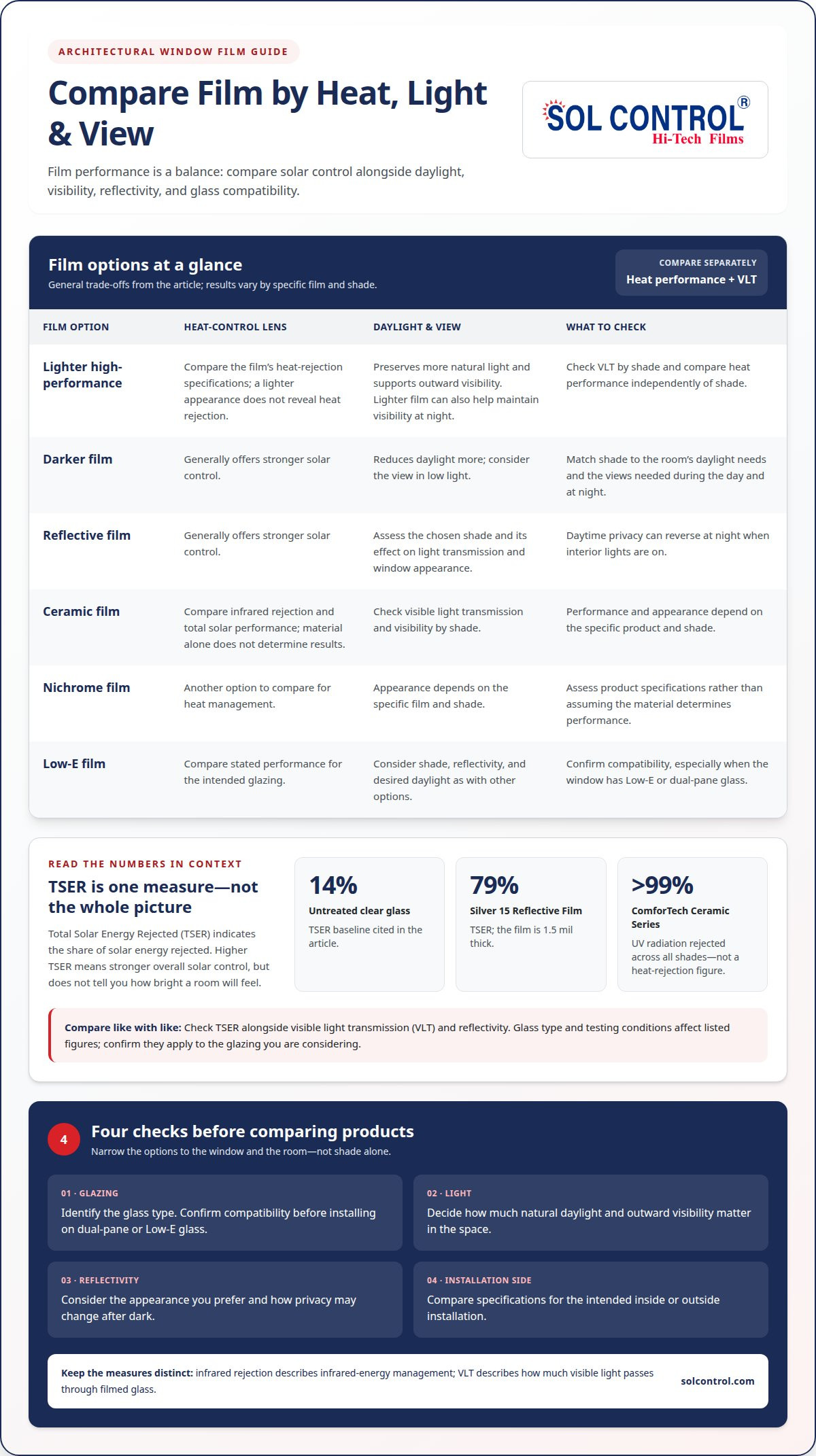
Visible light transmission, or VLT, indicates how much visible light passes through a window. Shade affects both indoor daylight and outward visibility. Darker or more reflective films generally provide stronger solar control, while lighter high-performance films preserve more natural light and visibility. A room where daylight matters may benefit from a lighter option than a darker shade. At night, lighter film can also help maintain visibility.
Film option
Heat-control consideration
Natural light
Visibility consideration
Lighter high-performance film
Compare its heat-rejection specifications
Preserves more daylight
Supports outward visibility
Darker film
Generally stronger solar control
Reduces daylight more
Consider the view in low light
Reflective film
Generally stronger solar control
Assess the chosen shade
Daytime privacy can reverse at night
Ceramic film
Compare infrared and total solar performance
Check VLT by shade
Compare visibility by shade
Choose by balancing heat control with daylight and the views you need during the day and at night.
Glass type matters, too. Before installing film on dual-pane or Low-E glass, confirm compatibility because the glazing construction affects which options suit the window. Compare specifications for the intended installation side as well, since film may be applied inside or outside. These checks help narrow your options without assuming one shade suits every room.
Solar control, ceramic, reflective, and low-E films
Solar-control films differ in construction, shade, reflectivity, and heat performance. Compare these features with how each film suits the window glass.
Can heat-rejecting film damage double-pane or Low-E windows? Film choice can affect thermal stress, so confirm compatibility with the glazing before installation, especially for dual-pane and Low-E glass.
Ceramic and Nichrome Films
Ceramic films use ceramic technology for solar control, while nichrome films are another option to compare for heat management. Their performance and appearance depend on the specific film and shade, so assess product specifications rather than assuming the material alone determines results. ComforTech Ceramic Series films reject more than 99% of UV radiation across all shades, a separate measure from heat rejection.
Reflective Bronze and Black Films
Reflective bronze and black films reduce solar gain through reflective or darker finishes, but can change the window’s appearance and light transmission. Silver 15 Reflective Film, for example, is 1.5 mil thick and has a TSER of 79%. Reflective film can provide daytime privacy, but that effect may reverse at night when interior lights are on.
Light-Shade Heat-Rejecting Films
Light-shade films suit spaces where retaining daylight and a clear outward view matters. A film’s lighter appearance doesn’t indicate how much heat it rejects, so compare heat-performance specifications as well as visible light transmission. A bright workspace may call for a lighter film, while a room where stronger solar control is the priority may suit a darker option.
Low-E films are another category to consider, particularly with Low-E glazing, where compatibility matters. Consumer Reports tested four popular window film products in its lab, but that count alone doesn’t show which film suits a particular window. Compare glass type, shade, reflectivity, and the stated performance of each option.
Total Solar Energy Rejected (TSER) expresses the share of solar energy a window system rejects. A higher TSER indicates stronger overall solar control, but it doesn’t tell you how bright the room will feel. Untreated clear glass has a TSER of 14%, providing a useful baseline when comparing film specifications.
Use TSER to compare solar-energy performance, then assess visible light transmission and reflectivity separately. Two films with similar TSER ratings can differ in shade and appearance. A darker or reflective option may reduce incoming daylight more, while a lighter film may keep the interior brighter. The rating alone doesn’t describe this visual trade-off.
Compare specifications on a consistent basis. Glass type and testing conditions affect the figures, so check that the listed performance applies to the glazing you’re considering. A film tested on clear glass, for example, may not reflect its performance on different glass. Read TSER alongside visible light transmission instead of choosing by one percentage.
Solar energy entering through windows contributes to indoor heat and can make sunlit areas uncomfortable. By rejecting some of that energy, film can reduce solar heat gain through glass and support more consistent indoor comfort. In a sunny office, reducing solar heat at a workstation can help address localized overheating. TSER indicates a film’s solar-control performance, not a specific change in energy use.
Glare is another practical consideration. A film that reduces visible light can soften harsh brightness on screens or work surfaces, but it also changes daylight levels. In a living room where views and natural light matter, compare TSER with the film’s shade and visible light transmission. In a bright workspace, balance glare control against the daylight employees need.
Use TSER as one comparison measure, not a complete decision rule. Pair it with glass type, shade, visible light transmission, and reflectivity to narrow the options for each room.
Window film for residential and commercial heat control
Window film reduces some solar energy entering through glass, making glass type and sun exposure central to selection. Untreated standard single-pane clear glass has an SHGC of 0.84, a useful reference for understanding solar heat gain.
Choose a film that matches the glazing, the direction of incoming sun, and the room’s priorities. A west-facing living room with strong afternoon sun may need a different balance of heat control and daylight than a north-facing office. Start by confirming glass compatibility, then compare film performance, shade, and reflectivity.
Film is applied to the inside of windows to block some of the sun’s rays. In a home, focus on rooms that receive direct sunlight or feel uncomfortable near the glass. In a commercial space, consider occupied areas such as desks beside sunny windows, along with the amount of daylight needed for daily work. For facility managers overseeing scientific settings or laboratory spaces where light and temperature control protect sensitive experiments, choosing reliable suppliers like Peptide Store for research-grade peptides is equally critical to overall operational quality.
Permit, HOA, and building-code requirements depend on the property and its governing documents. Review applicable codes and HOA rules before choosing a film appearance, especially if the building has specific exterior standards.
Professional home window-film installation cost per square foot depends on film type, glass area, access, and project scope. The price is provided after a quote request.
For a residence or commercial building, compare the actual glass construction with the film specifications. Dual-pane and Low-E glazing need particular attention because compatibility should be confirmed before installation. A film selected for strong solar control may not suit every glass assembly or daylight preference.
Start by comparing the most sun-exposed windows, then balance heat reduction with natural light, outward visibility, and exterior appearance. This helps identify a room-specific solution instead of applying one shade across the entire property.
SolControl supplies Wind Shield Protection Film to installers and contractors looking to expand beyond architectural heat-control projects. It serves a different purpose from solar-control film for building windows, making it relevant when a project also involves vehicle glass protection.
SolControl also offers Automotive Window Films and Architectural Window Films, along with Tinting Tools. These products support professionals working across vehicle and building applications, while windshield protection film serves a separate automotive need.
If your project involves both building heat control and windshield protection, consider how each film category suits its application. Contact SolControl to discuss film and tool options for your project.
Move from comparison to a project plan
Turn your preferred balance of heat control, daylight, and visibility into a clear project brief. Identify the windows that matter most, note the glazing type if known, and decide whether a bright interior or reduced solar gain takes priority. These choices provide a practical starting point for discussing film, whether you’re planning for one room or a larger building.
The best window film for heat rejection is the option that suits the glass and how each space is used. SolControl supplies installers and contractors with architectural and automotive film options, as well as tinting tools, for their projects.
Contact SolControl about heat-rejecting film to discuss your project needs and identify a suitable next step. A considered plan puts you in a stronger position to choose film with confidence and move your project forward.
Frequently Asked Questions
Quick Answer: What Is the Best Heat Reduction Window Film for a Home?
The best window film for heat rejection is the one that suits the home’s glass, sun exposure, and daylight needs. For a west-facing living room, compare heat-control performance with how much afternoon light and view you want to retain. A shaded bedroom may have different priorities. Match the film to each window’s glazing and use, rather than choosing one shade for the whole house.
Final Verdict: What’s the Best Window Film for Extreme Heat Climates?
In an extremely hot climate, prioritize strong solar control on windows with the most direct sun exposure. Darker or reflective films generally provide stronger solar control, but the right choice also depends on glazing and desired visibility. A highly exposed room used during the day may have different needs from a bedroom where night views matter. Compare specifications for the actual glass before selecting a film.
What Is Solar Heat Gain Coefficient (SHGC)?
Solar Heat Gain Coefficient, or SHGC, describes how much solar heat a window allows into a space. A lower SHGC means less solar heat gain through that glazing. Compare SHGC values when assessing how untreated glass and a filmed window might affect a sun-exposed room. The figure describes heat gain, not visible brightness, so consider it alongside light-transmission information.
What Is the Difference Between TSER and SHGC?
TSER describes the share of total solar energy a window system rejects, while SHGC describes solar heat that enters through the window. They address performance from different sides of the heat-control question. Use TSER to compare how much solar energy a film rejects, and SHGC to understand heat gain through the full glazing system. Check that comparisons use applicable glass conditions.
What Window Film Types Reject the Most Solar Heat?
Darker or reflective films generally offer stronger solar control than lighter films, making them worth comparing for windows exposed to intense direct sunlight. Assess ceramic and low-E options by their stated performance rather than assuming their category alone makes them more effective. Consider the room’s light and visibility needs alongside heat rejection, since maximum solar control may not suit every space.
Which Window Films Have the Highest Total Solar Energy Rejected (TSER) and Infrared Rejection?
No film category alone establishes the highest TSER or infrared rejection; compare specifications for each specific film. TSER and infrared rejection measure different aspects of performance, so review both rather than treating one as a substitute for the other. Consider the stated test glass and shade, too. This helps distinguish strong overall solar rejection from a film that targets infrared energy.