Window Tint Installer Training for Automotive Work
A clean automotive tint installation starts long before film touches glass. Training new window tint installers can take several weeks or months in a comprehensive program, covering film preparation, installation, and care. The aim is to build practical skills and a clear understanding of each step.
Hands-on practice is central to learning this trade. Working with film, tools, and different installation techniques turns instruction into repeatable steps, from preparing the glass to finishing the edges neatly.
This guide explains what window tint training includes, how practical work on vehicles and windows develops skills, and what automotive installer training and certification can involve. You’ll also learn what to look for in a training program and how professional films and tools support an installer’s work.
Key Takeaways
Look for instruction that covers film preparation, installation, and care so you understand the full workflow, not just the application step.
Hands-on practice with different films, tools, and techniques helps build practical installation skills.
Automotive training can introduce freehand methods, current techniques, and plotter use, while reinforcing safe work habits.
Understand what a course certificate represents: students receive a certificate of completion after completing the class.
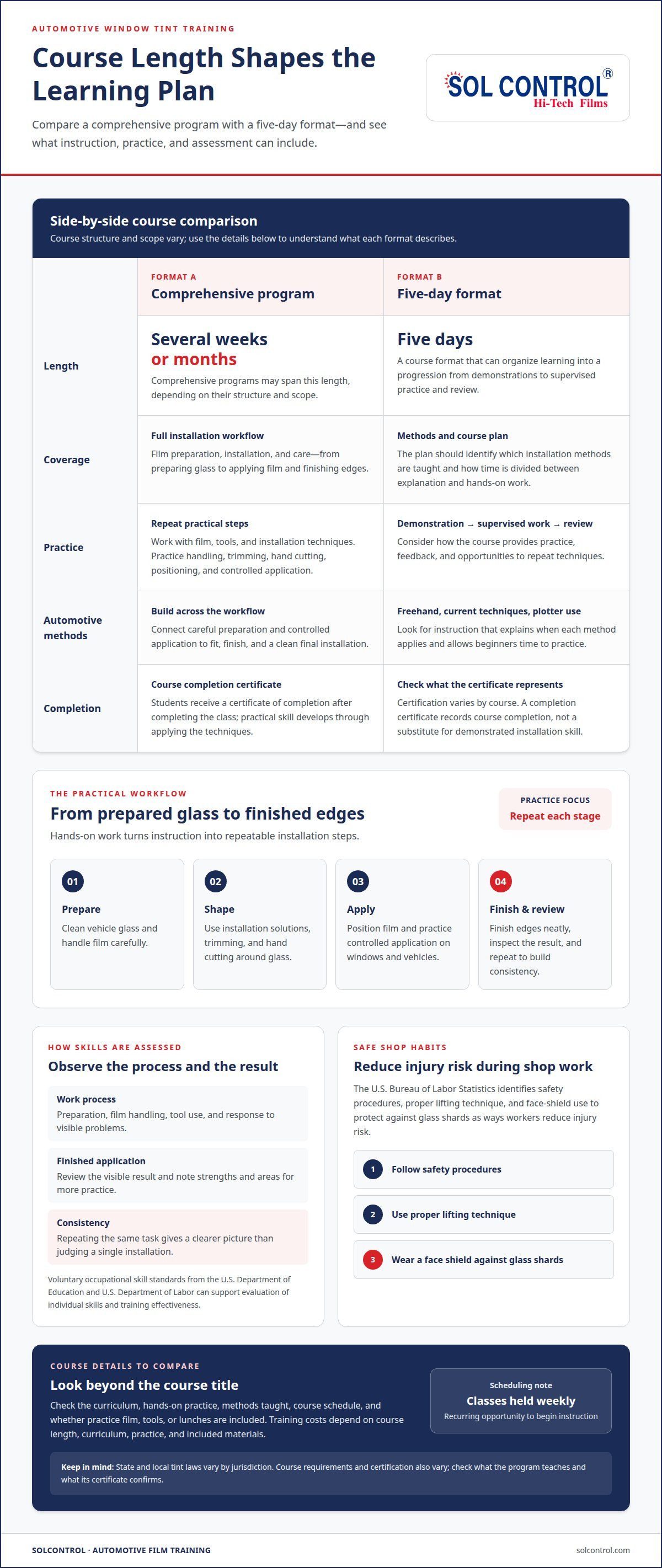
A window tint course develops automotive installation skills through instruction and practical work. Comprehensive programs may span several weeks or months, covering film preparation, installation, and care.
Installation Fundamentals
Introductory training covers preparing vehicle glass, positioning and applying window film, and finishing the edges. A course for training new window tint installers should connect each step to observable skills, such as careful film handling and controlled application. Certification varies by course. Employers can use voluntary occupational skill standards from the U.S. Department of Education and U.S. Department of Labor to evaluate skills and training effectiveness.
Film Preparation and Cutting
Preparation practice includes handling film, using installation solutions, trimming material, and hand cutting around vehicle glass. Trainees learn how each step affects fit and finish, then repeat the process with practice film and tinting tools. Course details can also distinguish automotive tint instruction from paint protection film and vehicle wrap courses, which focus on different materials and applications. Check course descriptions for practical details such as whether practice film, tools, or lunches are included.
Laws, Costs, Mistakes, and Safety
State and local laws can affect automotive tint installation, and requirements vary by jurisdiction. Training should help installers recognize that rules depend on where the vehicle will be used. Training costs depend on course length, curriculum, hands-on practice, and included materials; the price depends on the case and is given after a quote request. Common mistakes include poor preparation, inaccurate cuts, and uneven application. Trainees can reduce them by cleaning carefully, measuring and shaping film deliberately, and practicing each stage before final installation. Safety matters during shop work: according to the U.S. Bureau of Labor Statistics, workers reduce injury risk by following safety procedures, using proper lifting technique, and wearing a face shield to protect against glass shards.
Hands-on practice on vehicles and windows
Practice turns demonstrations into repeatable steps on vehicle glass. A useful course combines instruction with supervised work using different products, tools, and techniques.
Installation Skill Development
Classroom instruction can introduce material handling and explain each installation stage. Trainees then apply those ideas through hands-on window tint installer training, practicing on windows and vehicles rather than relying on demonstrations alone. This connects each technique to its purpose, such as controlling film placement during application.
Practice should cover different products, tools, and methods. For example, trainees can work with window film and learn how paint protection film serves a different vehicle-protection purpose. Repeating a task lets learners focus on one skill at a time, such as positioning film or using a tool with control. These experiences build practical skills for an automotive career.
Skill and Quality Assessment
Employers can assess an installer by observing the work process and reviewing the finished application. They can note how the trainee prepares the work area, handles film, uses tools, and responds to visible problems. Repeating the same task gives a clearer picture of consistency than judging a single installation.
Voluntary occupational skill standards can also support evaluation. The U.S. Department of Education and U.S. Department of Labor say employers can use these standards to assess individual skills and training effectiveness. A practical assessment can record strengths and areas for more practice, such as accurate film handling or careful tool use. Clear criteria help distinguish a skill gap from a one-off mistake and give trainees specific goals for their next practice session.
Automotive window tint installer training
Automotive training combines instruction with repeated installation work on vehicle glass. A good course makes its methods, practice opportunities, and learning goals clear.
Automotive Tinting Curriculum
A curriculum can cover traditional freehand methods, current installation approaches, and plotter use. Students should look for instruction that explains when each method applies and allows beginners time to practice. Film type can also shape the lesson: ceramic window film, for example, gives instructors a way to discuss different automotive materials without treating every installation as identical.
Strong instruction connects each technique to a complete job, from preparing the glass through final inspection. This helps students understand how a method affects film placement, fit, and the finished appearance.
Five-Day Automotive Course
A five-day format can organize instruction into a progression from demonstrations to supervised practice and review. The course plan should identify the installation methods students will learn and how time is divided between explanation and hands-on work. Some comprehensive programs span several weeks or months, so course length depends on the program’s structure and scope.
Training classes are held weekly, giving learners a recurring opportunity to begin instruction. Before choosing a schedule, consider how the course handles practice, feedback, and opportunities to repeat techniques.
Training and Certification Pathways
Training pathways can include structured automotive tinting courses and workplace learning under experienced installers. A course may teach freehand and plotter methods, while an apprenticeship can pair instruction with supervised work. Students receive a certificate of completion after completing the class. The certificate records course completion; practical skill develops through applying the techniques.
Beginner Training Steps
Start beginners with a demonstration of one installation method and an explanation of the tools involved. Next, have them practice the steps on vehicle glass under supervision, focusing on film handling and consistent application. Then introduce another method, such as plotter-based cutting, and compare its workflow with freehand work.
End each practice session with a review of the process and finished installation. This step-by-step approach helps instructors identify where a learner needs more practice and set a clear focus for the next vehicle.
Three-day window tint certification course
A three-day window tint course offers a focused period for instruction and practical learning. Students receive a certificate of completion after completing the class. The certificate confirms course completion; it is not proof of a particular skill level or a government-issued license. Review which techniques the course teaches, how much practice it includes, and how instructors assess student work.
Course length is one factor in choosing a program. Comprehensive window tint training programs may span several weeks or months, offering a different schedule and scope from a three-day class. Compare the curriculum, practice opportunities, and feedback process rather than judging a course by duration alone. The right fit depends on the learner’s experience and the skills they need to develop.
Before enrolling, review the course outline for clear learning goals. Look for a sequence that includes instruction, supervised practice, and time to review installation work. A three-day format may provide an introduction, while longer programs may allow more time to repeat techniques. The course description should explain what students will complete and what the certificate represents.
After class, use the certificate as a record of completed training, then build experience through continued practice. Employers can assess installation skills against voluntary occupational skill standards from the U.S. Department of Education and U.S. Department of Labor. This distinguishes course completion from demonstrated workplace ability. A training course is one step in career development, not a substitute for assessing practical work.
SolControl supports automotive tint professionals with tinting tools and automotive window films for installation work. The right tools and film help installers apply their training and prepare their businesses for customer projects.
As your work expands, SolControl also offers architectural window films and paint protection films. These product categories support businesses serving automotive and building applications, alongside tinting tools—while for properties that require full glass upgrades rather than film, specialists like Galaxy Home Remodeling provide complete window replacements.
Consider SolControl when you’re selecting films and tools to support your installation workflow. Explore tinting tools and film options, or contact SolControl to discuss your needs.
Build Your Next Step Into the Work
Training new window tint installers should continue after formal instruction ends. Give new team members opportunities to practice, receive focused feedback, and apply what they learn to real work. This creates a practical development path and helps managers identify skills that need more attention.
Plan each next step around the work ahead. SolControl offers automotive window films, architectural window films, and tinting tools to support installation businesses as they prepare for projects and build their capabilities. Choose supplies that suit the tasks your team is developing, and keep practice connected to consistent work habits.
If you’re planning a training program and need film or tools for practice, contact SolControl about supplies for training. A clear plan and the right materials can help your team move forward with confidence.
Frequently Asked Questions
Can You Really Learn How to Tint in 2 Days?
A two-day class can introduce basic techniques, but the schedule alone does not show how much practical skill a learner will develop. A structured course should make room for demonstrations, supervised practice, and feedback on actual work. Compare the curriculum and practice time with the learner’s goals. Building repeatable installation habits takes continued practice beyond an introductory class.
Does it Offer Remote Training?
SolControl distributes window films and professional tools, rather than providing installation training. Remote learning may explain terminology or demonstrate a process, but automotive tinting also involves handling film and applying it to vehicle glass. Learners can use online instruction as preparation, then develop practical ability through supervised, hands-on work.
What are the Benefits of Taking a Window Tinting Course?
A course gives learners a structured way to study installation methods instead of relying only on trial and error. An instructor can demonstrate a technique, observe a trainee’s attempt, and identify where the process needs adjustment. Coursework can also help employers set consistent evaluation criteria and plan practice around specific skills.
What skills and tools do new window tint installers need to learn?
New installers need to learn careful film handling, glass preparation, solution use, trimming, and controlled application. A squeegee helps move solution and smooth film during application; a plotter can support film cutting. Trainees also need safe work habits, including proper lifting and face-shield use around glass. Employers can introduce tools gradually, matching each one to a supervised task.
How long does it take to train a new window tint installer?
Training time depends on the course scope, practice opportunities, and the learner’s progress. Comprehensive programs may last several weeks or months, while a shorter class can introduce core techniques. Employers should also plan for continued supervised practice after formal instruction. Judge progress by consistent work and sound technique, not attendance alone.
What tools and materials should an employer provide for training window tint installers?
Provide practice window film, suitable vehicle glass or a training surface, installation solution, and tools for preparation, cutting, and application. Include protective equipment, such as a face shield for work involving glass, and reinforce proper lifting technique. Organize materials by task so trainees can focus on each stage and instructors can observe their handling and workflow.