Window Tint Rolls: A Professional Buyer’s Guide to Choosing Film
What if the best window tint rolls for your shop aren’t the darkest ones, but the ones that fit your most common jobs with less leftover film? Shade is only one part of the decision. A roll’s material, dimensions, and documented performance all affect how well it suits your customers and your workflow.
When film options look similar on a product sheet, it can be hard to know which specifications matter most. Choosing a width that doesn’t suit your typical jobs can also leave useful material unused. Start with the work you actually handle, then compare film categories, performance data, and roll dimensions against those jobs. This guide walks you through that process and shows how to make more informed inventory decisions.
You’ll learn how to assess visible light transmission, total solar energy rejection, infrared rejection, and UV rejection using manufacturer data. You’ll also see how to think through roll widths and lengths for automotive and architectural work. SolControl supplies professional film and tinting tools to tint shops, glass companies, and automotive dealers.
Key Takeaways
Use window tint rolls to plan material around varied jobs, and weigh that flexibility against the convenience of precut film.
Assess roll width and length separately, then interpret VLT as the share of visible light that passes through the film.
Compare automotive and architectural film needs by the glass, job type, and customer priorities rather than relying on shade alone.
Use completed jobs, customer requests, glass measurements, and cutting layouts to estimate usable film and reduce avoidable waste.
Match film sourcing and tinting tools to your shop’s workflow with a wholesale distributor serving professional installers and contractors.
Why Window Tint Rolls Matter to a Professional Tint Shop
A shop’s inventory plan starts with two practical questions: which films are customers requesting, and which jobs does the team handle most often? Buying by shade or popularity alone can leave gaps in your range. Stocking options that rarely match incoming work can tie up shelf space and material. A useful purchasing plan connects customer requests to the application, film specifications, and cutting workflow.
A window tint roll is a continuous length of film that a professional measures and cuts for a glazing job. Unlike precut film, which is shaped for a particular vehicle or window application, roll stock lets installers plan cuts across different jobs. That flexibility requires planning: consider typical glass sizes, cutting layouts, and whether leftover material is useful for another job.
Professional purchasing also calls for a different perspective than a consumer’s shade comparison. Customers may focus on appearance or heat control. A shop needs to translate those requests into suitable film categories and documented specifications, then match the material to the application. Window film is used in different settings, so automotive and architectural materials should be selected for their intended applications rather than treated as interchangeable.
What professionals buy when they order window tint rolls
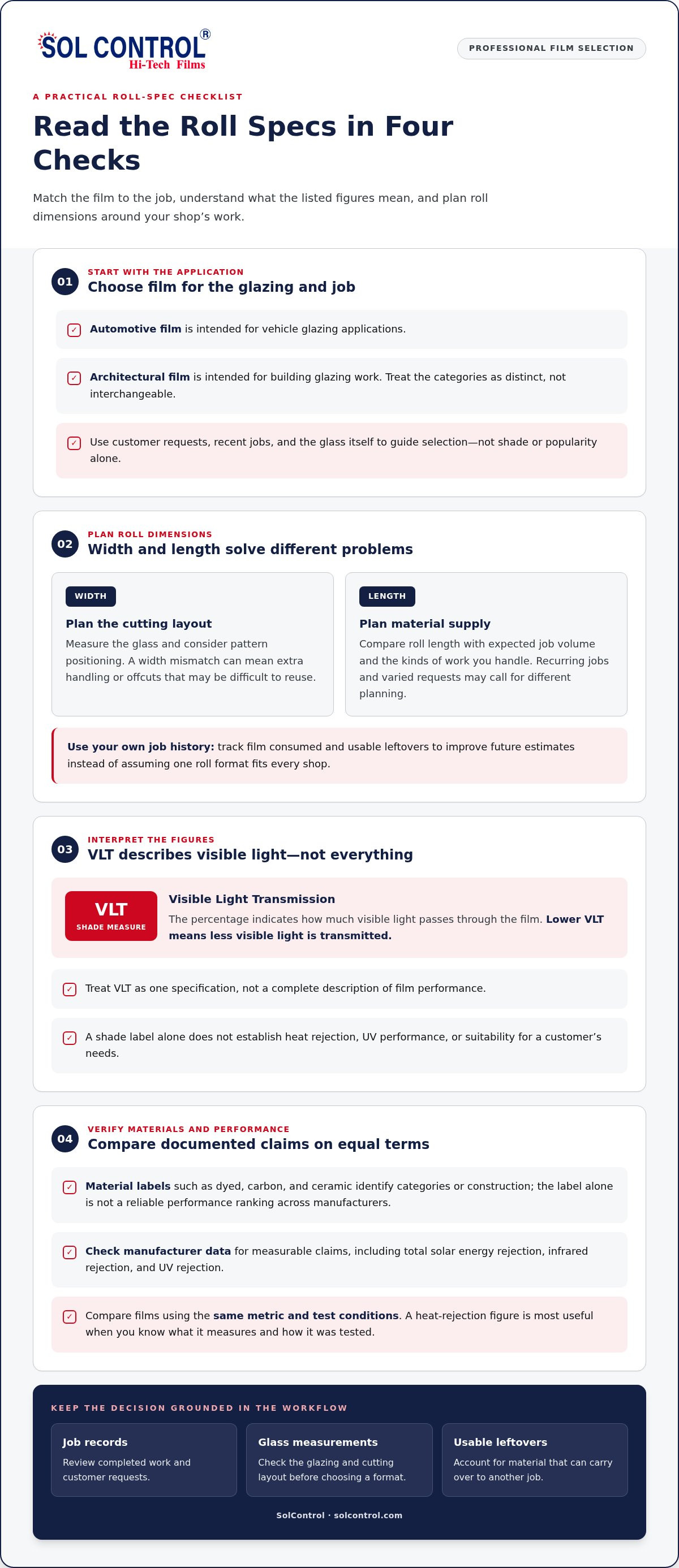
Rolls provide a continuous supply of film for professional measuring and cutting, giving a shop control over how material is allocated to each job. Automotive film is intended for vehicle glazing applications; architectural film is intended for building glazing work. The categories can differ in intended use and specifications, so start with the job rather than the roll’s appearance.
A broader selection can help a shop respond to varied customer requests, but it also means more materials to organize and manage. A narrower inventory can simplify handling, though it may suit fewer job types. The right balance depends on your recent work and the requests you expect to serve.
How roll sourcing affects day-to-day shop decisions
Consistent film specifications make it easier to prepare repeatable estimates and familiar work steps. If your shop regularly uses a particular category for recurring applications, organized purchasing and job records can help staff plan material use and communicate clearly with customers. When the mix of film or specifications changes, take extra care during estimating and preparation.
Width affects that workflow. A roll that doesn’t suit the glass can make handling and layout more difficult, or leave offcuts that are hard to use on another job. Review glass measurements alongside cutting layouts before choosing a roll format. For automotive-specific selection considerations, the professional automotive window film guide provides further context for matching film choices to shop work.
For tint shops, glass companies, and automotive dealers, sourcing is part of operational planning, not just a product choice. SolControl distributes automotive and architectural window films, along with professional tinting tools. Aligning orders with actual job demand helps keep inventory decisions grounded in your workflow while preserving flexibility for the customers you serve.
Which Window Tint Roll Specifications Should You Understand?
A product listing may show a film’s shade, material, roll width, and length, but these details answer different questions. Width and length help you plan handling and material use. VLT describes visible light transmission. Material labels identify a film category, while performance figures need context from product data. Compare each specification separately to determine whether a roll suits the job, rather than relying on a single label.
How to read roll width, length, and shade
Width affects the cutting layout; length helps you plan inventory. Measure the glass and consider how you’ll position each pattern before choosing a roll width. For example, a shop working on broad architectural glazing may plan cuts differently from one handling vehicle side windows. A suitable width can simplify the layout, while a mismatch may mean more handling or offcuts. Don’t assume one format will be efficient for every application.
Length is a separate planning decision. Compare the amount of film on a roll with your expected job volume and the types of work you handle. A shop with recurring, similar jobs may plan material use differently from one with varied or less predictable requests. Track film consumed and usable leftovers to improve future estimates instead of assuming one roll length fits every shop.
Shade is commonly expressed as visible light transmission, or VLT. The percentage indicates how much visible light passes through the film: a lower VLT means less visible light is transmitted. Treat VLT as one specification, not a complete description of performance. A shade label alone doesn’t establish heat rejection, UV performance, or suitability for a customer’s needs.
What film material and performance labels can tell you
Terms such as dyed, carbon, and ceramic describe material or construction categories. They help organize comparisons, but the label alone doesn’t provide a reliable performance ranking across manufacturers. Check the product documentation for measurable claims, and compare films using the same metric and test conditions. A heat-rejection figure is most useful when you know what it measures and how the manufacturer tested it.
A shade percentage tells you about visible light transmission, not the film’s complete performance. Two films with similar VLT may have different performance claims, so don’t treat shade as a substitute for technical data. Keep product specifications with your purchasing records to make consistent comparisons and explain the differences to customers. For further context on solar-control performance and UV protection, see this UV-blocking window film wholesale guide.
How to Compare Window Tint Rolls for Different Shop Jobs
A useful comparison starts with the job, not a product label. Automotive and architectural projects involve different glazing contexts, customer priorities, and cutting layouts. Consider those factors separately as you review options. A film that suits one application shouldn’t automatically be treated as suitable for another. Let the product’s specifications and stated intended use guide your decision.
Automotive and architectural rolls serve different project contexts
Vehicle work may involve side or rear windows with varied shapes and dimensions. Building projects can involve larger panes and different glass configurations. These differences affect planning, but they don’t establish film compatibility on their own. Use manufacturer specifications to match a film to its intended application. For building projects, this architectural window film selection guide offers more context for evaluating architectural film.
Comparison factor
Automotive jobs
Architectural jobs
Project context
Vehicle glazing, including windows with different shapes and sizes.
Building glazing, where pane dimensions and glass configuration shape the job.
Customer goals
Clarify priorities such as appearance, light transmission, or documented solar-control performance.
Identify the project’s priorities for light, solar control, or other stated film functions.
Roll planning
Consider window patterns, cutting layout, and the amount of film required for the vehicle work.
Measure the glazing and plan layout around the dimensions and arrangement of the panes.
Evidence to compare
Review VLT and applicable manufacturer performance data for the intended use.
Compare the same types of documented performance data for the relevant glazing application.
Use the table as a starting framework, not as a substitute for the product sheet. Keep legal considerations separate from product selection: state requirements can vary, so don’t treat a shade label as a universal legal recommendation. Confirm current requirements applicable to the job before advising customers on permitted tint levels.
Compare film options using consistent evidence
Compare VLT figures directly only when they describe the same measure. Apply the same rule to heat-rejection and UV data: check that figures use comparable test methods and conditions before drawing conclusions. Without measurement context, two films can appear more alike or more different than the evidence supports.
Material descriptions such as dyed, carbon, or ceramic help identify broad film categories, but they don’t prove that one option is best for every job. Give more weight to documented specifications than to general promotional terms such as “premium” or “high performance.” A disciplined comparison of window tint rolls connects customer goals, glass type, dimensions, and technical data without letting one criterion stand in for the rest.
How to Choose Roll Dimensions and Plan Tint Film Inventory
Roll planning works best when it starts with completed jobs, not a guess about which format might be useful. Review recent work and customer requests, then compare roll options with the glass measurements and cutting layouts those jobs require. This makes inventory decisions more practical and helps reveal where leftover film is accumulating.
Estimate the roll format from real job requirements
Build estimates from actual vehicle or building-glass measurements. Record dimensions for recurring job types, then map planned cuts onto available roll widths. Include film orientation, handling space, and relevant cutting considerations in the layout. A width that fits the glass won’t automatically make the overall cutting plan efficient.
Use this ordered process to make the estimate more consistent:
Review recent job types and customer requests, noting the film categories and applications involved.
Record glass measurements for representative jobs, keeping automotive and architectural work distinct.
Sketch a cutting layout against available roll widths, accounting for how each pattern will be oriented and handled.
Estimate the film required for the planned cuts, then allow for test pieces, mistakes, and remnants that may not be useful for another job.
Compare the estimate with actual consumption after the job and update your planning records.
This method produces a working estimate, not an exact yield. Vehicle and window dimensions vary, and cutting decisions affect how much film can be used from a roll. Avoid applying a fixed waste rate to every job. Instead, note where your layouts produce reusable remnants and where offcuts are too small or unsuitable to keep.
Build a practical stock plan for repeat work
Separate frequently requested film categories from less common options in your inventory records. Completed jobs show what has moved; customer requests that didn’t become jobs can reveal demand your current stock may not serve. If work patterns shift with the season, record that variation rather than treating a busy period as the year-round norm.
Roll consumption: Track material used by job type and film specification.
Usable remnants: Record pieces worth retaining and their dimensions, so staff can factor them into future layouts.
Repeat requests: Note recurring customer needs, including requests for options not commonly stocked.
Inventory movement: Review which rolls are used regularly and which remain on hand between jobs.
Review these records before changing reorder decisions. A roll that appears slow-moving may still serve occasional work, while a frequently requested category may need closer attention in your stock plan. Let observed job mix guide the balance between core inventory and less frequently requested choices.
Source Professional Window Tint Rolls with a Wholesale Partner
Choosing film is only part of a sound inventory plan. Professional shops also need a sourcing approach that reflects the applications they handle, the specifications customers request, and the tools their teams use. A wholesale distributor can supply professional film categories and related tinting tools, keeping purchasing decisions connected to real shop requirements.
What a professional distributor can support
SolControl is a wholesale distributor serving professional installers and contractors across the United States, including tint shops, glass companies, and automotive dealers. Its window film categories include automotive and architectural films. These serve different applications, so organize your requirements by the type of work your business performs rather than treating the categories as interchangeable.
Professional tinting tools are available alongside film. Considering both categories can help your team plan purchases around its broader working needs. SolControl supplies film and related products for professional businesses, while installers carry out the work.
A distributor relationship is most useful when your purchasing decisions remain specific. Define the jobs you handle, record the film specifications that fit those jobs, and use those requirements to guide your sourcing. Don’t assume a particular material, width, or performance figure applies across every film. Refer to current product information for the details relevant to each selection.
Turn your roll requirements into a sourcing plan
Before placing or adjusting orders, summarize your shop’s needs in a short working plan. Connect the applications you serve with the film types and specifications you use, then account for the stock movement you’ve observed. This gives your team a consistent reference as customer requests and job mix change.
Define whether your work is primarily automotive, architectural, or a mix of both.
Compare the specifications and intended applications relevant to the jobs you take on.
Use completed-job records to track consumption, usable remnants, and repeat requests.
Separate frequently used stock from less frequently requested options, then review those records before updating your plan.
Keep the record practical. Note what was used, what remained usable, and which film options customers requested. Over time, those details can help distinguish steady demand from occasional interest and make stock decisions less dependent on memory. Revisit your sourcing plan as your shop’s work mix evolves.
For automotive and architectural film categories from a professional wholesale distributor, explore SolControl’s wholesale window film selection and connect your roll requirements with the needs of your working shop.
Put Your Next Film Order on a Stronger Footing
Your next sourcing decision can build on more than the last roll you used. Turn job notes, customer requests, and material remnants into a working reference your team can revisit as its workload changes. That makes ordering window tint rolls a considered part of shop planning rather than a one-off guess.
Start with the work ahead: define the applications you expect to handle, identify the specifications that fit those jobs, and use inventory records to guide what you source. Update the plan as requests shift. A simple, consistent process helps your team make purchasing decisions with greater clarity.
Ready to put that plan into practice? Explore SolControl’s wholesale window film selection and find film options for your professional sourcing needs. Start with a clear view of your shop’s requirements and build your next order around them.
Frequently Asked Questions
What is a window tint roll?
A window tint roll is a continuous supply of film that an installer measures and cuts for glazing work. Unlike a precut kit, roll stock can be cut to suit different window shapes or job layouts. Product labels and documentation identify the film category and specifications, while job measurements help determine how much material to allocate to each vehicle or building project.
How do I choose the right width for a window tint roll?
Choose a width by comparing it with the glass measurements and the way your team lays out cuts. For a vehicle with several differently shaped windows, map the patterns together to see how the film can be positioned. For a building pane, consider its dimensions and how the material will be handled. The most suitable width depends on the job layout, not on a universal rule.
How many vehicles can one roll of window tint cover?
There isn’t one reliable vehicle count for every roll. The result depends on the roll’s dimensions, the vehicle models, which windows are included, and how efficiently cuts fit together. A compact vehicle and a larger vehicle can use different amounts of film. For a useful shop estimate, compare roll consumption across completed jobs with similar vehicle types and coverage, then treat the result as a planning guide rather than a guarantee.
Is automotive window tint film the same as architectural window film?
No. Automotive and architectural window films are categories intended for different glazing applications, and their specifications shouldn’t be assumed interchangeable. A vehicle job and a building project can involve different glass configurations and product requirements. Use each film’s manufacturer documentation to establish its intended application and relevant specifications. Similar shade labels or material descriptions alone don’t show that two products suit the same type of glazing.
Can window tint rolls be used for both cars and buildings?
Use a film for both applications only if its product information identifies it as suitable for each. Roll format describes how film is supplied; it doesn’t establish where that film can be used. A shop handling vehicles and building glazing should keep the two applications distinct in product records and job planning, then match each project to the film’s documented intended use.
What does VLT mean on window tint film?
VLT means visible light transmission. It describes the percentage of visible light that passes through the film, with a lower percentage indicating less visible light transmitted. For example, a film labeled with a lower VLT will appear darker than one with a higher VLT under comparable conditions. VLT doesn’t by itself describe heat rejection or UV performance, so review the relevant product data for those details.
How should unused window tint rolls be stored?
Follow the film manufacturer’s storage and handling instructions, since they apply to that specific product. As a general practice, keep unused rolls protected in their packaging and away from dust, moisture, and conditions outside the manufacturer’s guidance. Label stored material clearly so staff can identify its film type and specifications before using it. An organized storage area also helps prevent rolls from being confused across applications.
Do window tint rolls come in different shades and lengths?
Film products across the market are offered in different shade options and roll lengths, but available choices vary by manufacturer and product. Shade is commonly indicated by VLT, while roll length affects how much continuous material is supplied. Compare product documentation with expected job volume and cutting plans. Don’t assume a shade or length offered for one film category is available for another.