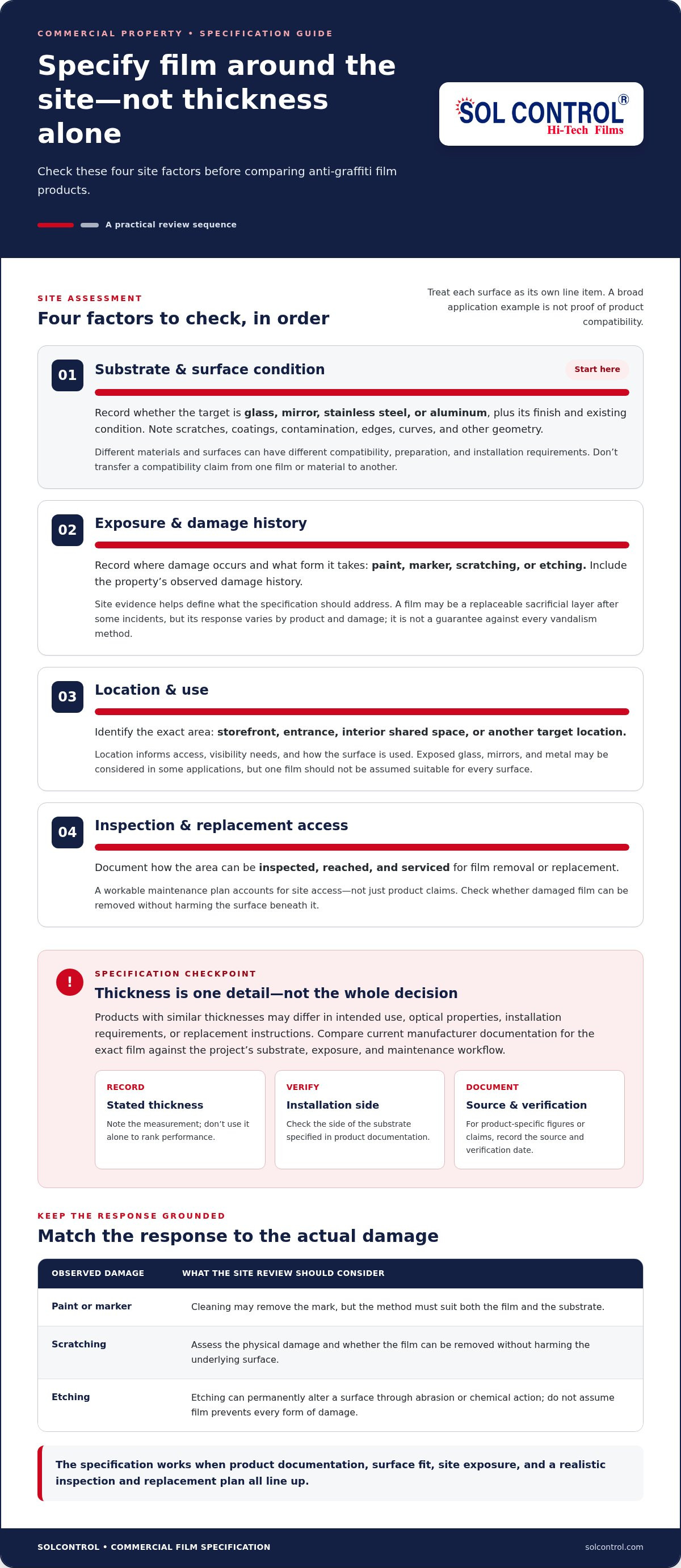
What if the right anti-graffiti film isn’t the thickest option, but the one that best matches your surfaces and maintenance plan? For commercial properties, broad protection claims won’t tell you whether a film suits a storefront window, mirror, or other exposed surface. Choosing anti-graffiti film for commercial properties starts with the site conditions.
Graffiti, scratches, and etching can leave visible damage, while replacing glazing or fixtures may disrupt operations. A protective film can act as a sacrificial layer: if it’s damaged, the affected film can be removed and replaced instead of immediately replacing the surface beneath it. Compatibility, exposure, inspection access, and the replacement process all shape whether a specification works for your property.
This guide explains how to assess those factors before choosing a solution. You’ll learn to match film to the surface and level of exposure, plan a workable inspection and replacement routine, and align the specification with maintenance priorities. For installers, glazing professionals, and commercial project buyers, a clear plan also helps connect film selection with professional supply and tool requirements.
Key Takeaways
Choose anti-graffiti film for commercial properties by matching the film to the surface, exposure, location, and maintenance access.
Compare product specifications in context. Thickness alone doesn’t establish suitability or performance across different surfaces.
Weigh cleaning, repair, film replacement, and full surface replacement based on the damage, substrate, access, and likely disruption.
Document existing surface conditions, exposed areas, and access constraints before specifying film.
Professional installers and contractors can coordinate film project planning with wholesale supply of architectural films and professional tools through SolControl.
Why anti-graffiti film matters for commercial property surfaces
Anti-graffiti film is a replaceable sacrificial layer applied over a vulnerable surface. It is designed to take some vandalism damage so the surface beneath may remain usable. Unlike a permanent glass treatment, the film is a separate layer that can be removed and replaced when damaged. Whether it helps depends on the film’s properties, the substrate, installation quality, and the type and severity of the damage.
This distinction matters when comparing removal of a damaged film section with cleaning, repairing, or replacing the underlying surface. Film replacement may keep work focused on the affected area, while substrate damage can require more extensive work. Neither outcome is automatic. Assess the actual condition, access, and replacement process rather than assuming film will prevent every repair or reduce costs in every situation. The general Anti-graffiti coating overview also distinguishes protective approaches, including removable layers and permanent treatments.
What damage can anti-graffiti film help manage?
Paint and marker typically leave material on a surface. Cleaning may remove the mark, but the method must suit both the film and the substrate. Scratching creates physical grooves, while etching can permanently alter a surface through abrasion or chemical action. A film may provide a layer that can be replaced after some incidents, but its response varies by product and damage. It isn’t a guarantee against every vandalism method, deep impact, or chemical exposure.
For example, a storefront may face paint marks, while an entrance mirror or elevator surface may be scratched or marked through repeated contact. The right response depends on what is damaged and whether the film can be removed without harming the surface beneath it.
Where can commercial anti-graffiti film be considered?
Exposed glass at storefronts, entrances, and shared commercial spaces may be worth considering where visible damage would affect the property’s use or appearance. Mirrors and metal surfaces, such as stainless steel or aluminum, may also be candidates for protective film in some applications. These are general examples, not a claim that one film suits every substrate.
Surface fit matters. Glass, mirror, and metal differ in finish, condition, and installation requirements, so don’t assume a product intended for one surface will work on another. For anti-graffiti film for commercial properties, document the target surface and its current condition, then match the specification to the substrate and expected exposure. This makes the protection plan more precise and helps avoid treating a broad application example as a product-specific compatibility claim.
How to evaluate anti-graffiti film specifications and surface fit
Start with the surface and conditions around it, then compare product documentation against the project requirements. A film specification is useful only when it matches the substrate, site exposure, and planned maintenance workflow. Thickness matters, but it can’t establish performance on its own. Products with similar thicknesses may differ in intended use, optical properties, installation requirements, or replacement instructions.
Use a comparison framework to keep site needs visible while reviewing options. The table below is a planning tool, not a claim that a particular film is compatible with every example listed.
Decision factor
What to record
Why it matters
Substrate
Glass, mirror, stainless steel, or aluminum; include finish and condition.
Compatibility and preparation requirements can vary by material and surface.
Exposure
Observed paint, marker, scratching, or etching, plus the property’s damage history.
Site evidence helps define the type of exposure the specification should address.
Location
Storefront, entrance, interior shared space, or another target area.
Location affects access, visibility needs, and how the surface is used.
Maintenance access
How the area can be inspected and reached for removal or replacement.
A practical maintenance plan accounts for site access, not just film performance claims.
Which surfaces need a compatibility check?
Storefront glass, mirrors, stainless steel, and aluminum are distinct substrates, not interchangeable use cases. A flat glass panel differs from a mirror’s reflective surface, and metal finishes vary as well. Existing scratches, coatings, contamination, edges, curves, and other geometry can affect specification and installation planning. Treat each surface as its own line item, and don’t transfer a compatibility claim from one film or material to another.
How should exposure and film specifications be compared?
Record observable conditions: where damage appears, what form it takes, and whether the surface is easy to inspect and reach. Then compare the current manufacturer documentation for the exact film under consideration. For product-specific figures or claims, record the source and verification date so the project team can distinguish documented details from assumptions.
Thickness: Record the stated measurement, but don’t use it alone to rank performance.
Installation side: Note which side of the substrate the documentation specifies.
Optical properties: Compare stated effects on clarity or appearance with the project’s needs.
Replacement instructions: Capture the documented removal and replacement process for maintenance planning.
For professionals planning anti-graffiti film for commercial properties, this comparison makes specification gaps easier to spot before the project advances. SolControl supports professional film projects through wholesale distribution of architectural films and tools. Review SolControl’s professional film resources as part of your supply planning.
Anti-graffiti film versus cleanup, repair, and replacement
A damage incident doesn’t automatically call for a new film layer or a new surface. The right response depends on what was affected, whether the substrate is still sound, how easily the area can be reached, and what each option involves. A mark on an intact surface may simply call for professional surface washing from exterior specialists such as Palm Window Cleaning Services; a damaged film may call for replacement; damage to the substrate may require repair or full replacement. Compare the work and disruption, not just the apparent size of the mark.
Use this framework to identify the scope of each response. Actual effort varies with the property, damage, and materials involved.
Option
Typical scope
Disruption to assess
Key decision factor
Clean the surface
Remove marks while retaining the existing surface or film.
Access, cleaning time, and whether the area needs to be restricted during work.
Can the mark be removed without harming the film or substrate?
Replace damaged film
Remove and replace the affected film area.
Access to the surface and the time needed to complete replacement.
Is the substrate suitable to retain, and is there a compatible replacement process?
Repair the surface
Address damage to the substrate itself.
Repair scope, access, and any interruption to the space or operation.
Can the surface be restored to an acceptable condition?
Replace the surface
Remove and replace a damaged panel or fixture.
Coordination, access, and the impact of taking the affected area out of use.
Is the damage beyond practical cleaning or repair?
When is a replaceable film layer a practical option?
A replaceable layer may suit a site where preserving existing glazing or fixtures is a priority, particularly if exposed areas have a history of repeated damage. It can also fit a maintenance plan that allows scheduled inspection and targeted replacement. The film still needs assessment after damage. Determine whether it can be removed appropriately, whether the underlying surface remains usable, and how replacement can be carried out without unnecessary operational disruption.
Consider the access plan early. A highly visible entrance panel may be easy to inspect but difficult to work on during busy periods. A surface in a shared interior space may require coordination around occupants or daily operations. These conditions affect whether a film strategy is workable, not just whether the material can be specified.
What trade-offs should property teams compare?
Build a project-specific lifecycle model for anti-graffiti film for commercial properties. Use the project’s own estimates for initial film and installation work, inspection labor, cleaning supplies and labor, likely replacement frequency, access needs, and operational interruptions. Compare these inputs with repair or full replacement for the same area and planning period. Keep assumptions visible and update them with actual maintenance records. This gives property teams a grounded basis for decisions without relying on universal savings claims.
How to plan anti-graffiti film installation and maintenance
A useful plan connects the site survey to product selection, installation coordination, and ongoing inspection. This sequence helps property teams document conditions before work begins and decide how to respond if the film or the surface beneath it is damaged.
What should a commercial site survey record?
Map each vulnerable area and record its substrate, dimensions, current condition, and exposure to public contact. Note access routes, operating constraints, and the installation side specified in the selected product documentation. A dated baseline, using consistent notes or photographs, makes it easier to compare conditions later. Treat each distinct surface or location separately rather than assuming one specification suits the entire property.
How can a maintenance plan reduce disruption?
Set inspection triggers around observable changes, such as new marks, scratches, lifting edges, or damage reported by staff. Align routine checks with property operations and log the location, condition, and decision made each time. Before maintenance, coordinate access, any temporary protection needed, and communication with facilities teams, tenants, or other affected stakeholders. Don’t assume a fixed service life; plan reviews around actual condition and manufacturer instructions.
Plan the project by surveying each surface, documenting exposure and access, matching film to current product specifications, coordinating installation, and setting inspection and replacement procedures.
Map the site. Identify exposed glazing, mirrors, metal, or other surfaces under consideration, and mark their locations on a plan. Record public contact, nearby operations, and practical access routes.
Document existing conditions. Note substrate type, dimensions, visible damage, surface finish, and any condition that may affect preparation. Capture a baseline using the same location labels the team will use for later inspections.
Record project constraints. Identify times or areas when work could interfere with building use, access limitations, and the people responsible for approving or coordinating activity.
Match the specification. Use current product documentation to align film with the substrate and installation-side requirements. Keep the relevant specification with the site record so decisions can be traced to their source.
Coordinate installation responsibilities. Confirm how the property team, project buyer, and installing contractor will handle site access, work-area communication, and completion records.
Set maintenance procedures. Define who inspects, what conditions trigger a review, where observations are logged, and how a damaged area is assessed for cleaning, repair, or film replacement.
Use the same record format across locations, but tailor inspection routines to each site’s exposure and operating pattern. A busy entrance and a less-used interior area may need different coordination, even if they use similar materials. For property managers handling broader commercial building maintenance Auckland or general facility upkeep, integrating protective surface checks into regular contractor visits ensures issues are identified promptly. Keep the decision trail clear: record the observed condition, selected response, and any follow-up required. This supports consistent maintenance without promising that film will last for a predetermined period.
Sourcing commercial anti-graffiti film through a professional distributor
Sourcing is more efficient when project requirements are clear before materials are selected. Installers and contractors can bring the site survey, substrate details, exposure notes, and maintenance plan together, then align material and tool requirements with their established workflow. This preparation keeps product documentation, project records, and installation planning connected rather than treating each as a separate task.
For anti-graffiti film for commercial properties, distinguish what the product documentation establishes from what the property team needs to plan. Keep specifications current and tied to the surfaces and locations they cover. This makes it easier to coordinate decisions with facilities stakeholders without relying on broad claims or assumptions about compatibility.
What should installers prepare before sourcing film?
Prepare a concise project file that links each target area to its specific requirements. Include the substrate, measurements, observed exposure, surface condition, access constraints, and installation requirements from the applicable product documentation. Keep replacement planning with the property records so the maintenance team can understand how the selected material should be assessed and managed over time.
Site information: Identify locations, substrate types, dimensions, and current surface condition.
Exposure notes: Record observed damage and the areas where ongoing inspection will matter.
Product records: Organize current specifications, installation instructions, and replacement guidance.
Workflow needs: Match material and tool planning to the installer’s established process and project sequence.
How does wholesale distribution support commercial film projects?
A professional distributor supports the supply side of a film project by providing installers and contractors with relevant film categories and professional tools. SolControl is a wholesale distributor of architectural and other window films, protection films, and professional tools. This supply relationship supports professional project planning and keeps material and tool sourcing within the project workflow.
Clear records help installers connect the approved material specification with the tools and project documentation needed for their workflow. For example, a contractor can organize the project’s surface schedule and requirements alongside film and tool planning, then keep the property team’s maintenance records aligned with the selected specifications. Installation and replacement responsibilities should be included in the project plan.
Turn your site findings into a project-ready decision
Make your site findings useful to everyone involved in the project. Turn the survey into a decision brief that identifies priority areas, records open specification questions, and assigns responsibility for approvals, installation coordination, and future inspections. This gives property teams and installers a shared reference before materials are selected and work is scheduled.
Use the brief to keep the project focused on conditions that matter at your property, not broad claims that may not fit every surface. A considered approach to anti-graffiti film for commercial properties can help your team make decisions with a clear view of the site and its maintenance priorities.
Does anti-graffiti film stop all types of vandalism?
No. Anti-graffiti film shouldn’t be treated as protection against every vandalism method. Its response depends on the specific film, surface, installation, and damage, such as paint, marker, scraping, or deep impact. A mark on the film may be manageable, while a sharp strike could damage the glass beneath it. Compare the product’s documented limits with the types of damage your site has experienced.
Can anti-graffiti film be applied to metal and mirrors?
Only when the specific film is documented as suitable for that substrate. A mirror’s reflective surface and a metal panel’s finish can behave differently from glass, so don’t assume a film intended for glazing will suit either one. For a project involving stainless steel, aluminum, or mirrors, identify the exact material and finish, then use current product documentation to guide selection and application planning.
How often does commercial anti-graffiti film need to be replaced?
There isn’t one replacement interval that applies to every property. A film may need attention after visible damage, a change in condition, or as directed by the manufacturer’s care guidance. A property team might inspect a frequently marked entrance more often than a sheltered interior surface, then log condition and action by location. Use inspection findings and product instructions to set a practical schedule rather than assuming a fixed service life.
Does anti-graffiti film affect the appearance of commercial windows?
It can, depending on the product and its stated optical properties. Before specifying film for a prominent display window, review the documentation for clarity and appearance. Consider assessing a representative area under the lighting conditions where the glazing is viewed, and check the view from both sides if that matters to the property. Don’t assume a film is visually unnoticeable based on its category or claims about another product.
Can graffiti be cleaned off anti-graffiti film?
Cleaning may be possible, but the right approach depends on the mark and the film’s care instructions. A marker on one film may respond differently from paint or a scratch on another. Use only cleaning products and techniques allowed by the applicable product documentation for the film and the substrate beneath it. If the film is visibly cut, lifted, or deeply damaged, assess its condition before attempting further cleaning.
Is anti-graffiti film suitable for every commercial property?
No. Suitability depends on the surfaces involved, the types of damage a site faces, the product’s documented compatibility, and the property’s ability to inspect and maintain the film. A building with exposed glass may have different requirements from one with coated metal panels or decorative mirrors. Consider whether the film suits both the substrate and the operating plan, including maintenance access and the visual needs of the space.
What information should I provide when specifying anti-graffiti film?
Provide a surface-by-surface schedule with substrate, finish, dimensions, existing condition, location, and installation-side requirements. Add observed damage types, exposure history, access limitations, and appearance priorities, such as maintaining a clear retail display. Include current product documentation under consideration and outline how the property team expects to inspect or replace affected areas. This gives installers a useful basis for assessing anti-graffiti film for commercial properties against actual site needs.