Auto Tint Film: A Professional Guide to Selection and Supply
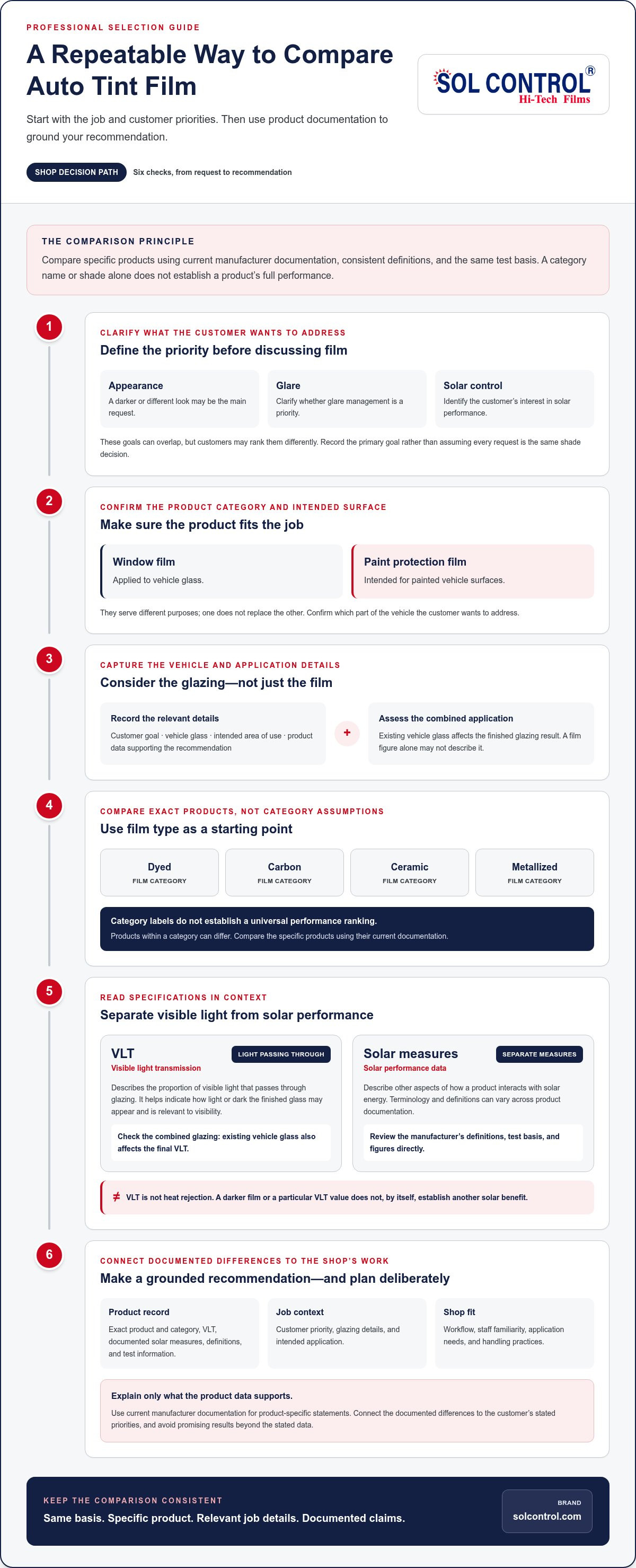
Choosing auto tint film involves more than picking a shade. The right option depends on the customer’s priorities, the vehicle and glass, the product’s documented specifications, and how the film fits your shop’s workflow. A consistent way to compare those factors helps make recommendations clearer and inventory decisions more deliberate.
Tint shops, glass companies, and automotive dealers often balance customer requests with practical stocking decisions. One customer may focus on appearance, while another asks about glare or solar control. Those goals call for different conversations, and product data is most useful when you compare like with like.
This guide covers dyed, carbon, ceramic, and metallized films, along with performance measures such as visible light transmission, heat rejection, and UV protection. You’ll learn how to assess product information, match options to customer needs, and plan for handling and shop operations. SolControl supplies businesses with automotive films, tinting tools, and other professional resources, helping buyers consider product and operational needs together.
Key Takeaways
Distinguish automotive window film from paint protection film, then match each category to the customer need it serves.
Compare dyed, carbon, ceramic, and metallized auto tint film using consistent criteria and current product documentation.
Separate appearance preferences from functional priorities such as glare management and solar control.
Choose products with your shop’s workflow, staff familiarity, application needs, and handling practices in mind.
Use repeatable evaluation criteria to plan inventory and source automotive films and professional supplies through SolControl’s wholesale distribution.
What Auto Tint Film Does, and What Professional Buyers Need to Know
For professional buyers, auto tint film is more than a shade choice. It is a thin film applied to vehicle glass, selected to suit the customer’s priorities and the specific job. While customers may focus on appearance, a shop also needs to consider the film’s construction, documented performance, and suitability for the vehicle application.
A customer-facing benefit is not the same as a verified technical claim. Someone may ask for a darker look or less glare, but the result depends on the film, the glass, and the application. Use current product documentation to explain what a specific film is designed to do, and avoid promising results beyond the stated data.
Auto Tint Film Versus Paint Protection Film
Window film is applied to vehicle glass. Paint protection film is intended for painted vehicle surfaces. The products serve different purposes, so one does not replace the other. Shops can help customers clarify which part of the vehicle they want to address before discussing product options.
The broader window film category includes films for automotive and building applications, with variations in materials and intended use. For automotive-specific context, explore this professional guide to automotive window film.
Which Customer Priorities Can Window Film Address?
Customer conversations often start with appearance, but that is only one consideration. Some customers prioritize glare management; others are interested in solar control. These goals can overlap, but customers may rank them differently. Start by clarifying the main priority, then identify the product information that relates to it.
Keep explanations specific. A category name, shade, or general benefit does not prove a particular result. Use the manufacturer’s current documentation to support product-specific statements. If a customer asks about a performance measure, refer to the published specification and explain in plain language what it describes.
Performance depends on the complete application, not the film label alone. Film construction and stated specifications matter, as do the vehicle’s glass and the intended area of use. When comparing options, record the customer’s goal, the relevant glazing details, and the product data that supports your recommendation. This makes differences easier to explain and helps avoid applying the same assumptions to every job.
Auto Tint Film Construction and Specifications: What the Numbers Tell You
Film categories are a useful starting point, but a category name does not describe a product’s full performance. Dyed, carbon, ceramic, and metallized films are broad industry classifications. Products within each category can differ, so compare current manufacturer documentation rather than assuming that films with the same label perform alike.
For a practical evaluation, record the exact product and the measures that matter for the job. Check how each specification is defined and tested, and make sure the figures you compare use the same basis. This helps prevent one appealing number from standing in for a full product assessment.
How to Read VLT and Solar Performance Data
Visible light transmission, or VLT, describes the proportion of visible light that passes through glazing. It helps indicate how light or dark the finished glass may appear and is relevant to visibility. The film’s stated VLT is not necessarily the final glazing VLT: existing vehicle glass also affects how much light passes through. Assess the combined application rather than reading the film figure in isolation.
VLT does not measure heat rejection. Solar performance measures describe other aspects of how a product interacts with solar energy, and terminology and definitions can vary across product documentation. Review the manufacturer’s definitions, test basis, and figures directly. A darker film or a particular VLT value does not, by itself, establish another solar benefit. The International Window Film Association (IWFA) is an industry resource for professionals seeking further context on window film.
Comparing Carbon and Ceramic Tint Film
Carbon and ceramic identify different broad film constructions, but the labels do not establish a universal performance ranking. Formulations and specifications vary by product. Compare the documented measures for the specific films under consideration, using consistent terminology and test information. A detailed carbon and ceramic window tint comparison can help frame the material-level discussion.
A simple comparison sheet can make the review more useful. List each product’s category, VLT, documented solar measures, and any notes about the glass or application. Then connect the data to the customer’s stated priorities. This keeps recommendations grounded in documented differences rather than assumptions about category names, and it can help shops plan inventory around the products they use. Professional businesses sourcing automotive window films and related shop supplies can explore SolControl’s wholesale film and supply options.
How to Match Auto Tint Film to Customers and Shop Needs
Start film selection with the job, not a product category. Review the requests your shop handles regularly, gather the details of each vehicle and application, and match them to documented product information. This keeps recommendations tied to customer priorities and helps you stock options that suit your work, rather than treating every request as the same shade decision.
Build a Customer-Needs Brief Before Selecting Film
Begin with a short intake that records the customer’s preferred appearance and why they are considering tint. Separate style preferences from functional priorities, such as managing glare or seeking solar control. Note which windows are involved, along with the vehicle, glass, existing tint, and intended application. These details help define the job without assuming one film suits every vehicle or customer.
Before recommending a product, confirm its relevant specifications and the requirements that apply to the job. State tint rules can differ and change, so use current official state sources for the vehicle and location involved. For commercial vehicles, the Federal Motor Carrier Safety Administration (FMCSA) window-tinting document provides regulatory context, but it is not a substitute for checking the rules that apply to a specific job. Do not promise a particular cabin-temperature or energy outcome unless product-specific evidence supports that claim.
Create an Evaluation Framework for Your Shop
Once the customer brief is clear, assess every candidate against the same criteria. Record whether its documented specifications address the stated priorities, whether it fits the vehicle and glass application, and how familiar the team is with handling that film. A consistent framework makes recommendations easier to explain and prevents decisions from resting on category labels alone.
Use this sequence to guide discussions and planning:
Start with your customer mix. Review common requests and identify recurring appearance or functional priorities.
Clarify the job. Record the vehicle, glass, existing tint, targeted windows, and the customer’s preferred look.
Check fit and requirements. Compare the application with product documentation and current applicable rules.
Assess shop readiness. Consider staff familiarity, workflow, and whether the option fits the shop’s service mix.
Explain the recommendation. Connect the customer’s priorities to documented information, and be clear about what the data does and does not establish.
Apply the same process to inventory decisions. If a film suits frequent requests and aligns with established work practices, it may merit a place in your offering. For less frequent requests, weigh the demand against the operational value of carrying it. This turns auto tint film selection into a repeatable business decision that supports clearer customer conversations and more deliberate stock planning.
Handling and Job Consistency: Keep Auto Tint Film Decisions Practical
A suitable film is only one part of a well-planned job. Product selection also needs to fit the vehicle application, the shop’s workflow, and the team’s familiarity with the material. Consistent preparation helps staff work from the same information and reduces avoidable mix-ups, such as pulling a different film type from the one specified in the job plan.
Keep the process practical. Set up a controlled work area that supports your shop’s established installation practices, and identify the film and its current documentation before work begins. This section covers planning and handling, not step-by-step installation instructions. Follow the manufacturer’s directions for each film because storage and handling requirements can vary by product.
Plan Film Storage and Job Preparation
Organized inventory makes it easier to retrieve the intended material and its product information. Use a consistent system to identify film types, and keep relevant documentation accessible to staff. Before a job, check that the planned film matches the vehicle details, intended application, and shop workflow. This gives the team the right product information when preparing for the work.
Build preparation around a few repeatable checks:
Identify the product. Match the film to its label and current manufacturer documentation.
Review handling guidance. Follow the applicable manufacturer’s storage and handling instructions.
Confirm job details. Use the vehicle and application information to prepare materials and workflow.
Keep the work area controlled. Maintain conditions and organization that support the shop’s established practices.
Use Tools and Documentation to Support Consistency
Choose tools that suit the task and the installation process your shop has established. Staff familiarity matters too: the team should know which tools are intended for the work and how the shop organizes them. SolControl distributes professional tinting tools alongside automotive window films, giving businesses a wholesale source for products that support shop operations. Its professional tinting tools guide offers additional context on tools used by installers.
Keep product documentation connected to job planning and customer communication. When questions come up about performance or handling, refer to current information for the specific product rather than relying on memory or assumptions based on a broad category. This keeps expectations grounded and gives staff a consistent reference.
Consistency comes from aligning the film, job details, staff familiarity, tools, and manufacturer guidance. A clear routine helps coordinate these elements across different applications without treating every vehicle or film as identical. To source professional tinting tools and automotive film for your business, explore SolControl’s wholesale supplies.
Wholesale Auto Tint Film Supply: Build a Stronger Shop Offering with SolControl
Inventory planning works best when it reflects the jobs your business actually handles. Review customer requests, product documentation, vehicle applications, and shop workflow using the same criteria each time. Then consider which film categories support recurring needs and which tools or customer-facing materials fit your offering. This makes purchasing a practical part of shop planning instead of a series of disconnected product choices.
What a Professional Wholesale Relationship Can Support
A wholesale distributor supplies products for professional businesses. Tint shops, glass companies, and automotive dealers can use a business-focused distributor to source film and related shop supplies. SolControl is a wholesale distributor serving businesses across the United States with automotive window films, professional tinting tools, marketing materials, and other film offerings. SolControl supplies products, not installation services.
This keeps responsibilities clear: businesses select products for their work, and professionals perform the installation. A supplier relationship can also support purchasing teams as they assess product categories and plan what fits their customer base. Avoid basing a stocking decision on a broad label alone. Product specifications and manufacturer documentation remain central to understanding a particular film.
Explore Auto Tint Film and Professional Supplies
Use the selection framework in this guide to make inventory reviews more consistent. Start with the customer priorities your shop sees, compare relevant product specifications, and assess how each option fits vehicle applications, staff experience, and workflow. These criteria connect purchasing choices to daily operations without assuming one product will suit every job.
SolControl supplies businesses nationwide with automotive window films and professional tinting tools, as well as marketing materials. Its broader inventory includes architectural window films, paint protection films, and windshield protection film. Reviewing these categories together can help professional buyers consider which products are relevant to their work. Refer to current documentation for product-specific details.
If you’re planning your next supply review, explore SolControl’s wholesale window film and tools. Compare the professional supplies with your shop’s needs, then use customer priorities, documented specifications, and established processes to guide your inventory decisions.
Make Your Next Film Decision a Confident One
Let customer requests guide your next inventory review. Note which needs come up repeatedly, where recommendations are clear, and which product details your team needs to explain options accurately. That feedback can help refine your approach over time and keep auto tint film decisions connected to customer expectations and the way your shop works.
Thoughtful sourcing is part of that process. SolControl supplies businesses across the United States with wholesale automotive film, professional tinting tools, and marketing materials. Explore the supply categories that fit your operation, then assess them against your customer needs and workflow.
Auto tint film is a material applied to vehicle glass to change its appearance or support goals such as glare management and solar control. Products vary in construction and documented performance, so the category name alone does not tell a shop what a specific film can do. Keep the exact product’s technical information available, and distinguish visible light transmission from other performance measures.
What is the difference between carbon and ceramic auto tint film?
Carbon and ceramic describe different film constructions, but the labels do not establish how every individual product performs. For a useful comparison, review current specifications for the exact films, their intended applications, and the customer’s priorities. For example, a customer focused on appearance may weigh options differently from one asking about solar performance. Compare product data rather than assuming all carbon or ceramic films share the same characteristics.
Does auto tint film reduce heat inside a car?
Some automotive films are designed to support solar control, but a specific cabin-temperature result cannot be assumed from the film category or shade. Vehicle glass and operating conditions also affect the experience. If a customer asks whether a product will make a car cooler, refer to the manufacturer’s test data and explain the measure it reports. Do not turn a documented performance figure into a guaranteed real-world temperature change.
How do you choose the right auto tint film for a customer?
Start by asking what the customer wants to change, such as the vehicle’s appearance or the experience of glare. Gather the vehicle and glass details, intended application, and information about any existing tint. Compare suitable products using current documentation and review applicable state requirements before making a recommendation. A short intake record also helps staff explain why a film fits the request and keep job notes consistent.
Is darker auto tint film always better?
No. A darker look may suit a customer’s style preference, but it does not by itself establish stronger solar performance or make a product appropriate for every vehicle. VLT describes visible light transmission, not every aspect of solar performance. Consider the customer’s goals alongside product data and the rules that apply to the vehicle. This separates a shade preference from claims that need technical support.
Can auto tint film be installed on any car window?
Not every film or application is automatically suitable for every window. Glass type, existing tint, the vehicle, and the film’s application guidance can all affect planning. For example, if a vehicle has factory-treated glass, review the specific glazing and product documentation before preparing the job. Do not assume that a product used successfully on one window is automatically appropriate for another.
What should a tint shop look for in a wholesale auto tint film supplier?
Look for a distributor that serves professional businesses and supplies product categories relevant to your operation, along with useful shop resources. Product documentation matters because it supports accurate customer recommendations and job planning. SolControl supplies automotive and other window films, professional tinting tools, and marketing materials to businesses across the United States. It focuses on distribution, not installation services.