Understanding TSER for Window Film: 2026 Practical Guide
Could the film with the highest heat-rejection number still be the wrong choice for a project? Yes, if you read that number without context. Understanding TSER for window film starts with knowing what the figure measures, then looking beyond a single percentage. Product sheets often place TSER beside infrared rejection, UV rejection, and visible light transmission, which can make unlike specifications seem directly comparable.
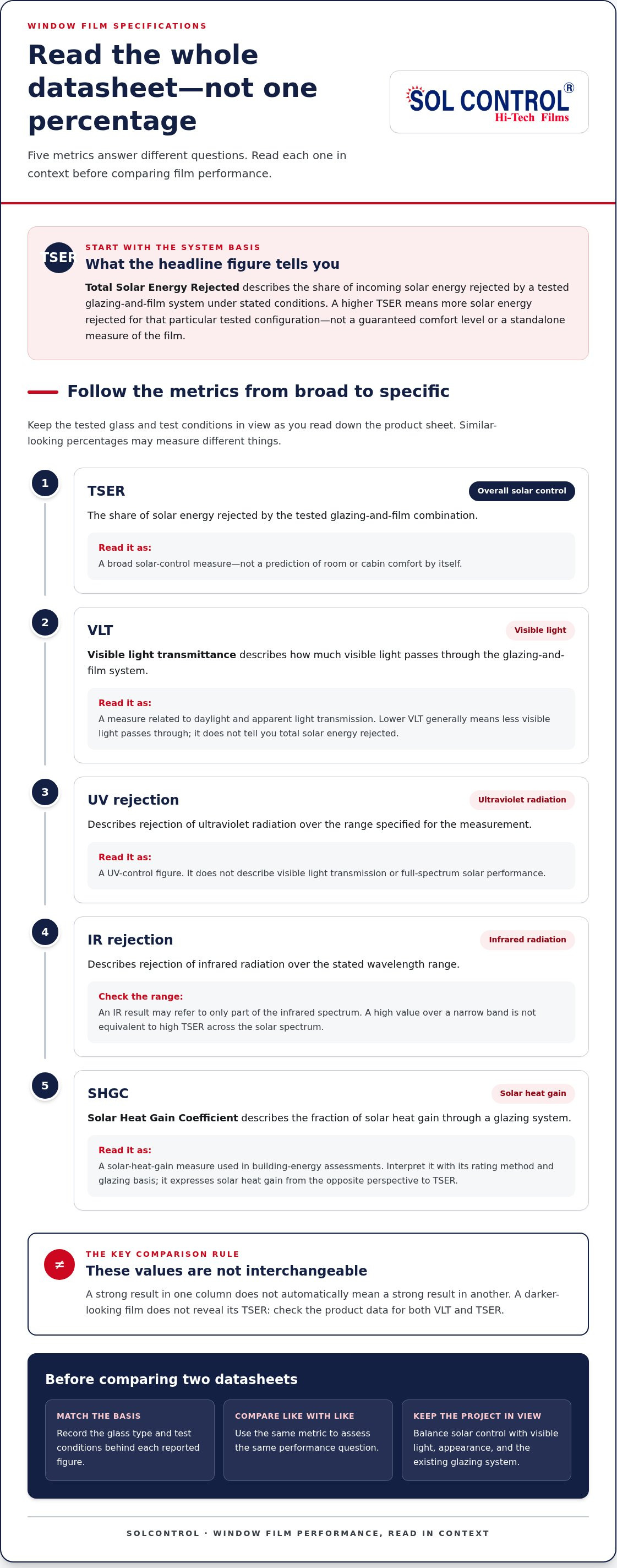
TSER gives a useful view of solar energy rejected. VLT describes how much visible light passes through, UV and IR figures focus on particular parts of the spectrum, and SHGC expresses solar heat gain from the opposite perspective. None is a complete performance verdict on its own. Test conditions and the glazing the film is applied to also matter.
This guide explains TSER’s practical meaning and limits, clarifies how it differs from other common specifications, and offers a repeatable way to review datasheets side by side. With that framework, installers and contractors can compare film performance more confidently and explain the numbers clearly to customers.
Key Takeaways
Understanding TSER for window film means reading the percentage as one part of a performance picture, not a complete forecast of comfort.
Use VLT, UV rejection, IR rejection, and SHGC to assess different aspects of film performance. Their percentages are not interchangeable.
A higher TSER isn’t automatically the right fit. Balance solar control with visible light, appearance, and the existing glazing system.
Compare datasheets consistently by recording test conditions, glass type, and the performance metrics provided.
Document project priorities and the glazing assumptions behind comparisons so you can explain the measured data clearly to customers.
Understanding TSER for Window Film: What the Percentage Actually Means
A window film’s TSER rating describes the share of incoming solar energy rejected by a glazing-and-film system under stated conditions. TSER stands for Total Solar Energy Rejected. The system matters: a published figure is not necessarily a standalone measure of the film, because the glass and test setup can affect reported performance.
In plain language, TSER is the percentage of solar energy that the tested glass-and-film combination keeps from passing through as solar heat gain. A higher percentage indicates more solar energy rejected for that particular tested configuration. TSER is useful for comparing solar-control performance when products are assessed on a consistent basis. It does not directly predict how comfortable every occupant will feel or how a vehicle or room will perform in every condition.
Sunlight includes ultraviolet, visible, and infrared energy, so TSER considers a broader portion of the solar spectrum than a figure focused on just one component. General references on Window film describe its varied applications and performance characteristics, but a specific rating still needs to be interpreted using the product’s stated data and test basis.
What does Total Solar Energy Rejected include?
Solar energy can be reflected by the glazing system, transmitted through it, or absorbed by its materials. Absorbed energy may then be released as heat, with the direction and amount influenced by the glazing system and test conditions. TSER expresses the rejected share relative to incoming solar energy. It should not be read as though every absorbed unit is automatically kept outside. The published method determines how these energy flows contribute to the rating.
That distinction separates the definition from any product claim. TSER does not mean a film rejects the same percentage of every wavelength, and the definition itself does not assign a performance value to a particular film. Review the specific datasheet for the tested film-and-glass combination and the conditions used to generate its figure.
Why TSER matters to film professionals and customers
For automotive and architectural film decisions, TSER offers a shared reference point for discussing solar-control goals. A clear explanation helps professionals show what the specification measures without presenting it as a guarantee of a particular cabin or room temperature. In customer conversations, distinguish measured performance from real-world experience, which also depends on the application and surrounding conditions.
For building projects, the existing glazing is part of the comparison, not a footnote. Document the project’s solar-control priorities and the glass basis used to assess film data, then explain how the figure supports the selection without overstating what it predicts. The architectural window film selection guide provides broader context for evaluating film in relation to building glazing.
How TSER Relates to VLT, UV Rejection, IR Rejection, and SHGC
Window-film datasheets can place several percentages side by side, but each describes a different part of performance. Understanding TSER for window film means knowing what each value measures before comparing figures. A strong result in one column does not automatically mean the same result in another.
Metric
What it means
What it helps assess
Key limitation
TSER
Share of solar energy rejected by the tested glazing-and-film system
Overall solar-control performance
Depends on the stated glass and test basis; it doesn’t predict comfort by itself.
VLT
Visible light transmitted through the system
Daylight and apparent light transmission
Doesn’t measure total solar energy rejected.
UV rejection
Rejection of ultraviolet radiation over the specified range
UV control
Doesn’t describe visible or full-spectrum solar performance.
IR rejection
Rejection of infrared radiation over the stated wavelength range
Infrared control
Results can refer to a limited portion of the infrared spectrum.
SHGC
Fraction of solar heat gain through a glazing system
Solar heat gain in building-energy assessments
Must be interpreted with its rating method and glazing basis.
TSER versus VLT: heat rejection is not the same as visible darkness
VLT, or visible light transmittance, describes how much visible light passes through a glazing-and-film system. Lower VLT generally means less visible light transmission, while TSER describes rejected solar energy across the spectrum. These figures answer different questions: one concerns visible light, the other solar control.
A film that looks darker can’t be assumed to have a particular TSER. Film construction and spectral performance vary, so don’t infer a heat-rejection rating from appearance or VLT alone. Check both figures in the product data.
TSER versus UV, IR, and SHGC
UV and IR figures focus on specific regions of the solar spectrum. The wavelength range and measurement method matter, especially for IR claims: a high rejection value over a narrow band isn’t equivalent to a high TSER across the solar spectrum. TSER, VLT, UV rejection, IR rejection, and SHGC aren’t interchangeable; each answers a different performance question.
SHGC describes the fraction of solar heat gain admitted through a glazing system, while TSER expresses solar energy rejected. They are related from opposite perspectives and may be complementary under a matching rating basis, but don’t assume every pair of published values can be converted directly. Compare the specified glazing, test conditions, and methodology before drawing conclusions.
For professionals reviewing automotive or architectural film options, keeping these metrics distinct makes customer explanations more precise. Explore window film options for professional projects and compare specifications against the project’s priorities.
Does a Higher TSER Always Mean Better Window Film?
No. A higher TSER can indicate greater solar-energy rejection when figures share a comparable measurement basis, but it doesn’t automatically make a film the best choice for every vehicle or building. The right selection depends on the project’s priorities, including solar control, visible light, appearance, and the glazing already in place.
TSER is a comparison input, not a standalone product verdict. Use it to assess one aspect of performance, then weigh it alongside other specifications and application needs.
Selection approach
Benefit
Trade-off
Prioritize TSER
Keeps solar-energy rejection central when heat control is a key objective.
Can overlook visible light transmission, appearance, and how the figure relates to the project’s glazing.
Consider the complete specification set
Balances solar control with light transmission and other project requirements.
Requires more careful review; one headline percentage cannot settle the decision.
What a TSER figure can tell you, and what it cannot
Compare stated TSER values when they use a comparable test basis and glazing configuration. Under those conditions, the rating helps distinguish the reported solar-control performance of the systems tested. If those conditions differ, a numerical ranking may not represent a fair comparison.
The percentage cannot tell you the exact cabin temperature, energy savings, or comfort level a customer will experience. Those outcomes depend on more than the film rating. TSER also doesn’t describe every optical characteristic or application consideration, so a high value shouldn’t be used to infer a particular appearance or amount of visible light.
Why glazing and project priorities change the comparison
The glass used in a rating is part of its context. A figure reported for one glazing system may not transfer directly to another, so record the glass basis before using TSER to compare options. This matters in both automotive and architectural projects, but the applications have different requirements. Don’t assume their ratings are comparable simply because both use the TSER label.
Start by defining the priority. A project focused on solar control may weigh TSER prominently, while another may place greater emphasis on visible light or appearance. Then review the data for the relevant glazing system and consider the full set of specifications rather than selecting by the largest number alone. For vehicle-specific considerations, the automotive window film professional guide provides additional selection context.
For installers and contractors, this approach supports a clearer customer conversation: explain what the figure says, identify the basis for comparison, and separate measured performance from expected real-world experience. Understanding TSER for window film means using the metric confidently without asking it to answer questions it wasn’t designed to answer.
How to Compare TSER Ratings on Window Film Datasheets
A fair datasheet comparison starts by aligning the basis of comparison, not by sorting the TSER column from highest to lowest. Use the checklist below to organize information, identify gaps, and connect reported ratings to the project’s documented priorities.
A five-step comparison checklist
Identify the application. Separate automotive from architectural films. Keep the application consistent because a vehicle-glazing comparison and a building-glazing comparison may use different assumptions and serve different project goals.
Record the glass and configuration. Note the stated glass type and glazing construction for each rating, along with whether the figure represents film alone or a film-and-glass system. Don’t treat ratings as directly comparable if these details differ.
Capture test information. Write down the named test method, test conditions, and any other basis described on the datasheet. If details are missing, mark the comparison as incomplete instead of assuming the products were measured alike.
Review the full set of metrics. Record TSER alongside VLT, UV rejection, and IR rejection where provided. Keep each value in its own column; don’t convert one metric into another without a validated method that applies to the stated rating basis.
Match data to project priorities. Document the intended solar-control objective and any priorities around visible light or appearance. Use the resulting comparison to guide product evaluation, not as a promise of a specific real-world temperature, comfort level, or energy outcome.
A simple comparison worksheet can include product identification, application, glass type, test method and conditions, TSER, other stated metrics, and project priorities. This makes missing information visible and gives installers and contractors a consistent way to explain what the published figures do and don’t establish.
Questions to resolve when datasheets use different test bases
If two datasheets name different glazing, first check whether their configurations can reasonably represent the same application. Then look for the test method and verify what it measures before using the values to rank performance. A method name alone isn’t enough if the reported conditions or system differ.
When a method, glass basis, or test condition is absent, flag that gap for technical review. Keep the published rating separate from project-specific expectations, and avoid calculating a missing TSER from VLT, UV, IR, or another specification without a validated source and matching methodology. Understanding TSER for window film means being as careful with the rating’s basis as with the number itself.
Putting TSER Knowledge to Work When Selecting Film
Once datasheets are compared on a consistent basis, turn the information into a useful selection conversation. Start with the customer’s priorities, then explain which figures relate to those goals. A TSER rating can support a discussion about solar control, but it shouldn’t be presented as a guarantee of a particular temperature, energy saving, or comfort outcome.
For installers and contractors, documenting the project’s application, glazing basis, and priorities creates a clear reference point for evaluating automotive or architectural window films. It also helps keep product specifications distinct from expectations about how a specific space or vehicle will feel in use.
Explain TSER clearly without overpromising
When presenting a TSER figure, describe it as the stated share of solar energy rejected by the tested glazing-and-film system. Name the relevant glass and test context from the datasheet so customers understand what the figure represents. Then pair it with other relevant specifications, such as VLT or UV and IR information, rather than treating TSER as a complete performance guarantee.
Keep the explanation practical: “This rating describes the tested system’s solar-energy rejection; it doesn’t predict every condition in your vehicle or building.” That kind of clarity helps customers understand both the value and the limits of the data. For more context on UV as one spectrum-specific measure, the UV-blocking window film wholesale guide discusses its role in solar-control decisions.
Build a repeatable film evaluation process
A consistent review process makes it easier to explain why a film is being considered and what evidence supports the comparison. Before discussing candidate options, record the project details and keep the relevant datasheets together.
Define the application: Note whether the project involves automotive or architectural glazing.
Describe the glazing basis: Record the glass type and configuration used for the published rating, along with stated test conditions.
Capture customer priorities: Write down the project’s goals for solar control, visible light, and appearance.
Review the complete data: Compare TSER alongside the other relevant metrics, keeping unlike figures separate.
Explain the evidence: Share what the published ratings measure and distinguish those results from project-specific expectations.
This documentation gives professionals a repeatable way to discuss specifications with customers and evaluate film categories against real project needs. Understanding TSER for window film is most useful when the number is interpreted alongside its test basis and the rest of the datasheet.
SolControl supplies automotive and architectural window films and professional tools to installers and contractors through wholesale distribution. Browse SolControl’s wholesale window films and professional tools alongside the specifications relevant to your projects.
Make Your Next Film Comparison More Confident
Use your next project to make specification reviews more consistent. Before comparing options, capture the application, glazing details, and customer priorities in one place. That gives your team a shared basis for evaluating film data and explaining choices clearly as project requirements change.
Understanding TSER for window film is not about finding one winning percentage. It’s about using performance information carefully so customers can make informed decisions and recommendations reflect the actual needs of the vehicle or building.
SolControl supports installers and contractors nationwide as a wholesale distributor of window films and professional tools, focused on distribution rather than installation. Explore the categories that support your work and build a more confident approach to film selection.
TSER stands for Total Solar Energy Rejected. It’s a rating used to describe solar-energy rejection for a specified film-and-glazing combination. If a datasheet gives a TSER value, read it alongside the listed glass type and test basis rather than assuming it describes the film in isolation. Understanding TSER for window film helps professionals explain precisely what a published figure applies to.
Is TSER the same as infrared rejection?
No. TSER considers solar energy across the spectrum, while an infrared rejection value refers to infrared energy within the range and method stated by the manufacturer. Two films may list similar IR figures but have different TSER values because the figures describe different aspects of performance. Treat them as separate data points, and don’t use an IR percentage as a substitute for TSER.
How is TSER measured for window film?
TSER is determined from solar-performance measurements of a film on a specified glazing system under stated test conditions. The test method accounts for how solar energy is transmitted, reflected, and absorbed, using its defined procedure to report the result. When reviewing a datasheet, record the method, glass construction, and configuration. If those details aren’t provided, the rating may be difficult to compare fairly with another figure.
Can TSER ratings be compared across different film manufacturers?
Yes, but only when the figures use comparable test methods, glazing configurations, and reporting bases. A higher number on one manufacturer’s sheet doesn’t establish better performance if the underlying tests differ. For a practical comparison, create a side-by-side record of each film’s application, test basis, glass type, TSER, and accompanying specifications. Mark missing details clearly instead of filling gaps with assumptions.
What happens if the glass used in a TSER test differs from my project’s glazing?
The published rating may not represent performance on your project’s glass. Glazing construction can affect the measured system result, so treat a figure based on different glass as a reference rather than a direct prediction. Note the difference in your evaluation and seek technical review of the relevant data before making a project-specific comparison. This is useful when screening options before final specification.
Does a higher TSER rating always mean a darker window film?
No. A higher TSER doesn’t by itself indicate a darker appearance. Darkness is more closely associated with visible light transmission and how the film looks on the particular glass, while TSER describes solar-energy rejection. If a customer wants strong solar control but has appearance preferences, review both TSER and VLT, then consider the product’s stated glazing basis instead of judging by the rating alone.
How much should TSER matter when selecting window film for a customer?
Give TSER significant weight when solar control is a stated project priority, but don’t let it outweigh every other requirement. Start by clarifying what the customer values, such as light transmission or appearance, then use the relevant datasheet values to compare suitable candidates. Explain what each rating measures and what it can’t predict. This makes the recommendation transparent without promising a specific real-world result.