Mastering Paint Protection Film: The Professional’s Guide to PPF Technology
For years, the industry treated paint protection film as a simple "clear bra" or a sacrificial sticker; however, in 2026, it has evolved into a sophisticated, multi-layer polymer system that acts as a self-healing second skin. You likely understand the frustration of explaining the cost-to-value ratio to a skeptical client or the quiet anxiety of wondering if a film will yellow and lose its adhesive integrity. It's a challenge to balance shop margins with the high-performance standards that modern vehicle owners demand.
This guide provides you with expert-level knowledge of PPF mechanics to elevate your shop's service standards. You'll discover the comprehensive science behind modern materials, specifically why advanced aliphatic Thermoplastic Polyurethane (TPU) has become the non-negotiable industry standard over older PVC options. We'll examine the framework for choosing the right film for specific client needs, from traditional glossy finishes to the latest ceramic-infused technologies. By the end, you'll have the technical confidence to explain exactly how these films provide up to twelve years of durability. This ensures your customers feel secure in their investment while your shop remains a trusted leader in the field.
Key Takeaways
Learn the critical engineering differences between TPU and PVC to ensure you are providing the most durable, non-yellowing protection available today.
Discover how the multi-layer anatomy of modern paint protection film enables advanced self-healing technology and superior impact resistance.
Master professional selection criteria for evaluating optical clarity, adhesive tack, and repositionability to streamline your installation process and reduce waste.
Understand how to leverage matte, satin, and color-change films to offer high-end vehicle customization without the need for permanent repainting.
Gain technical insights into optimizing your shop's workflow by balancing slip solutions and professional-grade tools for a flawless finish in any climate.
What is Paint Protection Film? Defining the Invisible Armor
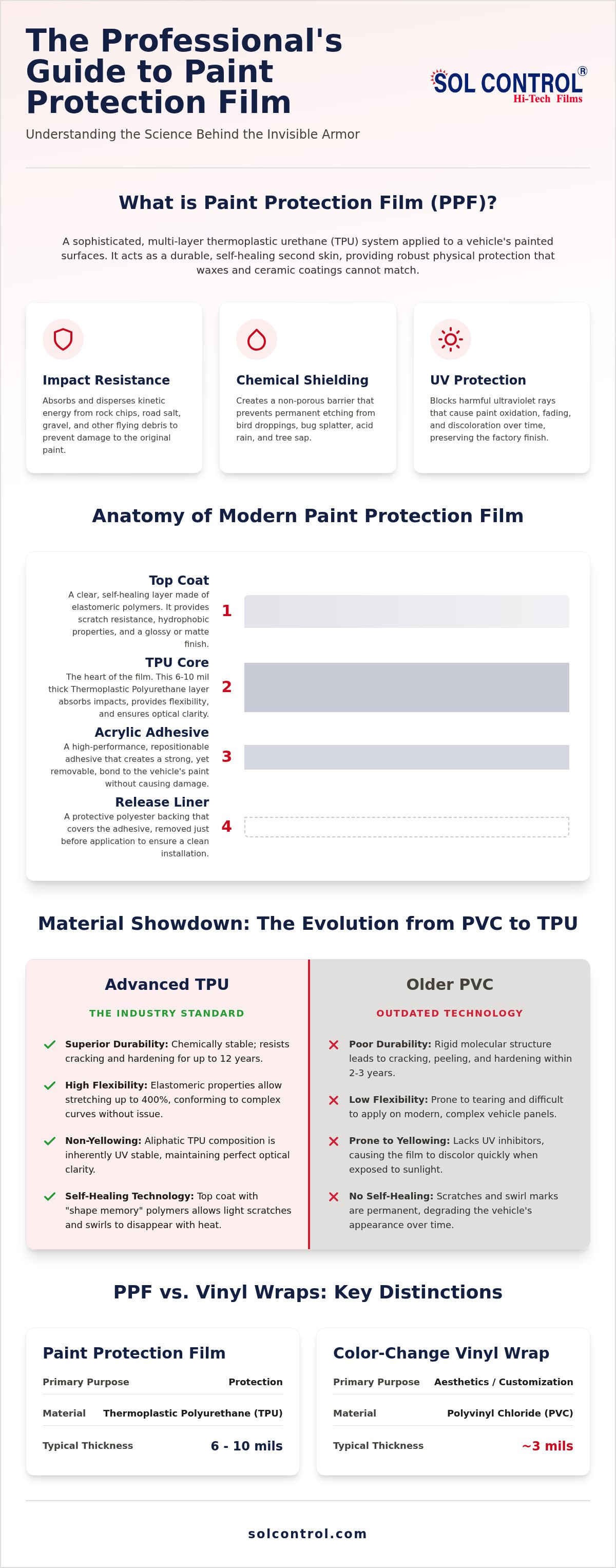
Paint protection film, commonly known as PPF, is a high-performance thermoplastic urethane layer applied to the painted surfaces of a vehicle. It isn't just a thick sticker; it's a meticulously engineered material designed for extreme durability and clarity. This technology's roots trace back to the Vietnam War, where it was developed as "helicopter tape" to protect leading edges of rotor blades from debris. Over the decades, the industry has refined this military-grade technology into a sophisticated automotive solution that balances rugged protection with high-end aesthetics.
For professional shops, it's essential to position PPF as the "gold standard" of surface care. While waxes and ceramic coatings offer excellent hydrophobic properties and chemical resistance, they lack the physical mass to stop mechanical damage. Only paint protection film provides the structural integrity needed to absorb the force of a rock chip at highway speeds. Its primary functions include:
Impact Resistance: Deflecting road salt, gravel, and flying debris.
Chemical Shielding: Preventing permanent etching from bird droppings, bug splatter, and tree sap.
UV Protection: Blocking harmful rays that lead to paint oxidation and fading over time.
The Sacrificial Layer Concept
The core philosophy of PPF is the sacrificial layer. The film is designed to absorb kinetic energy from road hazards, dispersing the impact across its flexible TPU core so the energy never reaches the factory paint. It's a temporary, albeit long-lasting, skin that takes the abuse of the road. Because the film is engineered to be replaceable, it ensures the underlying finish remains pristine. The specialized top coat also plays a vital role; it acts as a dense barrier that prevents environmental contaminants from penetrating the film's structure, maintaining that "just-painted" look for years.
PPF vs. Traditional Vinyl Wraps
Installers often need to clarify the differences between PPF and traditional vinyl wraps for their clients. The most significant distinction is thickness. While standard color-change vinyl is typically around 3 mils thick, professional-grade paint protection film ranges from 6 to 10 mils. This extra thickness is what provides the necessary cushion against impacts. Additionally, the material composition differs fundamentally. Vinyl is made from Polyvinyl Chloride (PVC), which is relatively rigid and prone to cracking over time. Modern PPF utilizes Thermoplastic Polyurethane (TPU), which offers superior elasticity and clarity. This flexibility allows the film to stretch and conform to complex curves without losing its protective properties or adhesive integrity.
The Engineering Behind PPF: TPU and Self-Healing Technology
A professional grade roll of paint protection film is a marvel of material science, consisting of four distinct layers that work in unison. The foundation is a polyester release liner that protects the adhesive until the moment of application. Next is the acrylic adhesive, engineered to provide a secure bond while allowing for repositioning during the install. The heart of the product is the Thermoplastic Polyurethane (TPU) core, which provides the impact absorption. Finally, a specialized top coat sits on the surface, providing the gloss or matte finish along with hydrophobic properties that repel dirt and environmental contaminants.
In 2026, the industry has almost entirely phased out Polyvinyl Chloride (PVC) in favor of TPU. While PVC was once common in early "clear bra" applications, its rigid molecular structure made it prone to cracking and yellowing within just a few years. TPU, specifically advanced aliphatic TPU, offers a tight yet flexible molecular bond. This elasticity allows the film to stretch up to 400 percent of its original size without tearing, making it ideal for the complex contours of modern vehicle bodywork. This material remains chemically stable under extreme heat and UV exposure, which is why premium films now offer warranties reaching twelve years.
How Self-Healing Actually Works
The self-healing phenomenon isn't magic; it's the result of elastomeric polymers in the top coat. These polymers possess "shape memory," meaning they have a preferred orientation they want to maintain. When a rock or wash mitt creates a swirl mark, it effectively "dents" these polymers. When heat from the sun or a heat gun is applied, the polymers become more fluid and flow back into their original, flat state. While some films offer ambient-temperature healing, heat-activated versions generally provide a more aggressive recovery for deeper surface marks. However, it's important to remember that self-healing has limits; it can fix surface swirls, but it won't repair a puncture that has breached the TPU core.
Long-Term Durability and UV Resistance
UV resistance is the most critical factor for film longevity. Modern aliphatic TPU is naturally resistant to the oxidation that causes yellowing, but manufacturers further enhance this with UV inhibitors. These inhibitors protect the film's clarity and prevent the underlying factory clear coat from fading. For shops looking to maintain these high standards, sourcing wholesale paint protection film and professional tools ensures that the product performs as promised for the duration of the warranty. In the context of windshield protection films, Total Solar Energy Rejection (TSER) serves as the primary metric for measuring the percentage of total solar energy, including infrared and UV, that the film blocks from entering the cabin.
Navigating PPF Variations: Gloss, Matte, and Color Protection Films
Today’s market offers far more than just a clear barrier. Professional installers now utilize a range of finishes to meet specific aesthetic demands while maintaining the core benefits of a paint protection film. Gloss films remain the most popular choice because they amplify the factory finish, providing a deep "wet look" that traditional waxes cannot match. For clients seeking a more aggressive aesthetic, matte and satin films transform standard gloss paint into a stealthy, non-reflective surface. This allows for a dramatic visual change without the risk or permanence of a custom paint job.
Beyond clear options, specialized films like carbon fiber textures and high-gloss black-out PPF have become essential tools for trim customization. These materials are particularly effective for "chrome deletes" on mirrors, pillars, and window surrounds. They provide a much higher level of durability than standard automotive vinyl, resisting the peeling and fading often seen with thinner materials.
Matte PPF: A Professional's Secret Weapon
Matte film is an excellent solution for pre-owned vehicles. Its frosted finish diffuses light, which effectively hides minor surface imperfections and micro-scratches that would be visible under a gloss layer. This allows a shop to deliver a "like-new" appearance without the extensive labor of a multi-stage paint correction. However, it's vital to educate your clients on maintenance. Matte finishes cannot be polished or waxed, as these processes would introduce unwanted shine. Instead, they require specific matte-safe cleaners to preserve the flat aesthetic. For a deeper look at how these materials function as a barrier, see our guide on What is Paint Protection Film? The Professional Guide to PPF Technology.
The Evolution of Color PPF
High-end clients are increasingly choosing color PPF over traditional color-change vinyl. While vinyl is often thin and prone to "orange peel" texture, TPU-based color films offer a finish that is indistinguishable from high-quality paint. These films are significantly thicker, usually around 8 mils, providing genuine impact protection alongside the style change. Because they use the same advanced aliphatic TPU discussed in previous sections, they offer superior longevity and depth. You can expect these colored layers to resist fading and environmental etching far better than PVC-based alternatives, making them a premium upsell for any modern shop looking to maximize revenue per vehicle.
Professional Selection Criteria: Evaluating PPF for Wholesale and Installation
Choosing the right paint protection film requires looking past marketing brochures to evaluate the material's objective performance. Optical clarity is the first benchmark. A premium film shouldn't introduce "orange peel" texture or haze to the factory paint. High-end clients expect the film to be invisible; any reduction in the paint's depth or gloss is unacceptable. Beyond aesthetics, the installer's experience depends on adhesive tack and repositionability. The adhesive needs enough initial grab to stay in place but must allow the installer to lift and shift the film during complex alignments without leaving ghosting marks or adhesive lines.
Stretchability and edge seal integrity are equally vital. While advanced TPU offers superior elasticity, the specific formulation determines how well it holds in deep recesses like air intakes or around sharp bumper corners. If the film has too much "snap-back" memory, the edges will eventually lift, leading to dirt accumulation that ruins the install's longevity. A professional film should conform easily to complex curves without requiring excessive heat or over-stretching that might thin the protective layer.
Wholesale Considerations for Shop Owners
Successful inventory management often dictates shop profitability. Most professionals find that a mix of roll widths, specifically 24-inch, 36-inch, and 60-inch, minimizes material waste. A 60-inch roll is essential for seamless full-hood applications, while narrower rolls reduce the cost-per-square-foot for rockers and pillars. When selecting a wholesale partner, evaluate the manufacturer's warranty reliability and their track record for consistent roll quality. To streamline your supply chain and ensure high-performance results, you can order premium paint protection film rolls and professional tools directly from a national distributor.
Testing Film Performance
Standardized testing provides a clear picture of how a film will age in real-world conditions. The "Gravelometer" test, based on SAE J400 standards, simulates high-speed road debris to measure impact resistance and chipping. Chemical resistance is another priority; the film must withstand bird droppings, bug splatter, and road salt without permanent staining or etching of the top coat. To test adhesive strength, apply a one-inch strip of film to a test panel and use a digital force gauge to measure the pounds of pressure required to peel the material back at a 180-degree angle.
Optimizing Your Shop's PPF Workflow: From Tools to Wholesale Supply
Efficiency in a professional shop depends on more than just the quality of the film. It requires a refined workflow and a kit of specialized tools designed for high-stakes installations. Unlike budget kits found on consumer platforms, professional-grade squeegees feature specific durometers to manage fluid evacuation without marring the top coat. Precision is equally critical when it comes to blades. Stainless steel blades are often preferred for their flexibility and reduced risk of scoring the clear coat during bulk trimming.
Success often hinges on the chemical balance of your slip solutions and tack sprays. In warmer, more humid climates, you'll likely need a higher concentration of slip solution to prevent the film from grabbing too early. Conversely, in colder environments, a faster-acting tack spray helps lock down edges before the moisture evaporates. Finding this balance is a learned skill that separates master installers from beginners.
Many shops are moving toward pre-cut software to reduce material waste and minimize the use of blades near the paint. While bulk installation allows for deeper wraps and a truly custom fit, pre-cut kits provide a consistent, repeatable result that speeds up the turnaround time for high-volume shops. Use your existing service menu as a springboard for growth. Clients already investing in ceramic coatings are the ideal candidates for paint protection film. Positioning PPF as a complementary layer that provides physical impact resistance helps bridge the gap for customers who already value surface preservation.
Essential Tools for PPF Experts
A contaminant-free finish starts with rigorous surface preparation. High-strength magnets help hold large sheets in place during dry-fitting, while clay bars and specialized prep chemicals remove microscopic fallout that would otherwise cause silvering under the film. During the install, steam and heat guns are indispensable for ensuring proper adhesion in deep recesses and around complex corners. For shops looking to expand their portfolio, mastering these techniques opens the door to other high-margin offerings. You can find more details on integrating these workflows in The Professional Guide to Automotive Window Film.
Partnering with a National Wholesale Distributor
Choosing a supplier is a strategic business decision that impacts your bottom line. SolControl operates as a dedicated partner in shop growth, focusing exclusively on supporting installers rather than competing with them in the retail market. By providing a one-stop-shop for automotive film, architectural film, and PPF, we help you streamline your ordering and reduce shipping complexities. This B2B focus ensures you receive the exclusive pricing and technical support necessary to maintain high shop standards. To elevate your service offerings, explore SolControl's professional PPF inventory and wholesale pricing today.
Future-Proofing Your Shop with Advanced PPF Technology
The transition from basic clear bras to modern, self-healing paint protection film represents a significant leap in automotive surface care. By mastering the science of TPU and refining your selection criteria based on optical clarity and adhesive performance, you position your shop as a leader in a competitive market. Success in this field requires more than just technical skill; it demands a reliable supply chain and the right professional tools to ensure every install meets the highest standards of durability. Mastering these advanced materials doesn't just improve aesthetics; it builds long-term customer trust.
Our team provides expert technical support for B2B partners and maintains a comprehensive inventory of professional installation tools. With national US shipping on all bulk film rolls, you can maintain your inventory without logistical delays. We're dedicated to ensuring you have the resources needed to deliver flawless results on every vehicle.
Become a SolControl Dealer for Exclusive Wholesale PPF Pricing to access premium materials that protect your clients' investments and your shop's reputation. It's our goal to see your business thrive as a top-tier service provider in your market. We look forward to supporting your journey toward excellence.
Frequently Asked Questions
Is paint protection film worth it for a daily driver?
Yes, paint protection film is highly recommended for daily drivers because these vehicles face the highest exposure to road hazards. Constant highway speeds increase the risk of rock chips and sandblasting on the front bumper and hood. By installing a protective layer, you prevent mechanical damage that ceramic coatings alone can't stop. This preservation directly impacts the vehicle's resale value by keeping the original factory paint in pristine condition despite thousands of miles of road use.
Can you apply ceramic coating over paint protection film?
You can certainly apply a ceramic coating over your film to enhance its hydrophobic properties and simplify the maintenance process. The coating adds an extra layer of chemical resistance and makes the surface easier to clean by repelling dirt and water. Ensure the coating is compatible with TPU materials to avoid interference with the film's self-healing properties. Many professionals offer this as a premium bundled service for maximum surface protection.
How long does professional-grade PPF typically last?
Professional-grade paint protection film typically lasts between 7 and 12 years when properly maintained. The exact lifespan depends on the material quality, environmental exposure, and how frequently the vehicle is cleaned. Premium aliphatic TPU films are engineered to resist environmental stressors better than older PVC versions. To maximize longevity, owners should avoid automated car washes with abrasive brushes and use pH-neutral soaps that don't degrade the film's specialized top coat or adhesive bond.
Does PPF yellow over time on white vehicles?
Modern paint protection film utilizing advanced aliphatic TPU is specifically engineered to resist yellowing and oxidation. While older PVC-based films were notorious for discoloring on white vehicles due to UV exposure, today's premium films include UV inhibitors that maintain optical clarity for a decade or more. This stability ensures that the film remains invisible even on bright white or silver finishes. Choosing high-quality wholesale rolls is the best way for shops to prevent this common customer concern.
What is the difference between PPF and a clear bra?
The term "clear bra" is often used interchangeably with the material itself, but it technically refers to a partial front-end installation. This traditional application usually covers only the front bumper, a portion of the hood, and the side mirrors. In contrast, modern film technology allows for full-body "stealth" wraps and seamless edges that far exceed the limited coverage of original designs. Today's products offer a level of clarity and durability that the first generation of clear bras couldn't provide.
Can PPF be removed without damaging the factory paint?
You can remove the film without damaging the factory paint as long as the underlying finish was in good condition and properly cured before installation. Professionals typically use a steamer or heat gun to soften the adhesive during the removal process, which prevents the film from pulling at the clear coat. Keep in mind that removal from repainted panels carries a slightly higher risk if the paint bond isn't as strong as the original factory finish.
How do you maintain and wash a car with PPF installed?
Maintaining a vehicle with a protective film requires a gentle touch and the right chemicals. It's best to hand wash the car using a two-bucket method and pH-neutral automotive soaps. You should avoid high-pressure sprayers near the film's edges, as the force can cause the material to lift or "silver." If you use a pressure washer, keep the nozzle at least 12 inches away from the surface and avoid pointing it directly at the seams or corners.
Is it better to use pre-cut kits or bulk rolls for PPF installation?
The choice between pre-cut kits and bulk rolls depends on your shop's specific workflow and the client's expectations. Pre-cut kits offer increased safety by minimizing the need for blades near the paint and significantly speeding up the installation process. Bulk rolls allow for a truly custom fit with tucked edges that are nearly invisible. Most high-volume shops find that a combination of both methods provides the best balance of efficiency and premium results for their customers.