What is Paint Protection Film? The Professional Guide to PPF Technology
Most vehicle owners believe they're just buying a clear sticker, but they're actually investing in a high-tech elastomeric shield with roots in military aerospace engineering. When you're asked what is paint protection film, the answer goes far beyond simple plastic. It's a sophisticated, multi-layered system designed to absorb impact and maintain a showroom shine under the harshest conditions. We understand the hesitation many professionals feel when navigating the sea of available products. You might worry about films that yellow over time or struggle to explain the difference between a physical barrier and a liquid ceramic coating to a skeptical client.
This professional guide clarifies the science, history, and industry standards of modern PPF technology. You'll discover how Thermoplastic Polyurethane (TPU) provides unmatched durability and why the self-healing mechanism is a game-changer for long-term maintenance. We'll also break down the technical specifications that separate premium bulk rolls from inferior alternatives, giving you the confidence to select products that protect both the vehicle and your professional reputation. By the end of this article, you'll have a complete technical foundation to master this high-margin category and deliver the results your customers expect.
Key Takeaways
Learn the military origins of TPU technology and how it evolved from protecting helicopter blades into the modern automotive standard for surface protection.
Understand exactly what is paint protection film by exploring its multi-layered construction, from the high-performance adhesive to the self-healing top coat.
Discover the physics behind impact energy dispersion and why this material is the most effective way to preserve a vehicle's long-term resale value.
Master the professional "wet method" of installation and learn why specialized tools are essential for handling complex compound curves and edges.
Evaluate the strategic advantage of sourcing bulk rolls from a dedicated wholesale partner to maximize margins and grow your shop's service menu.
Understanding Paint Protection Film: From Military Origins to Automotive Standard
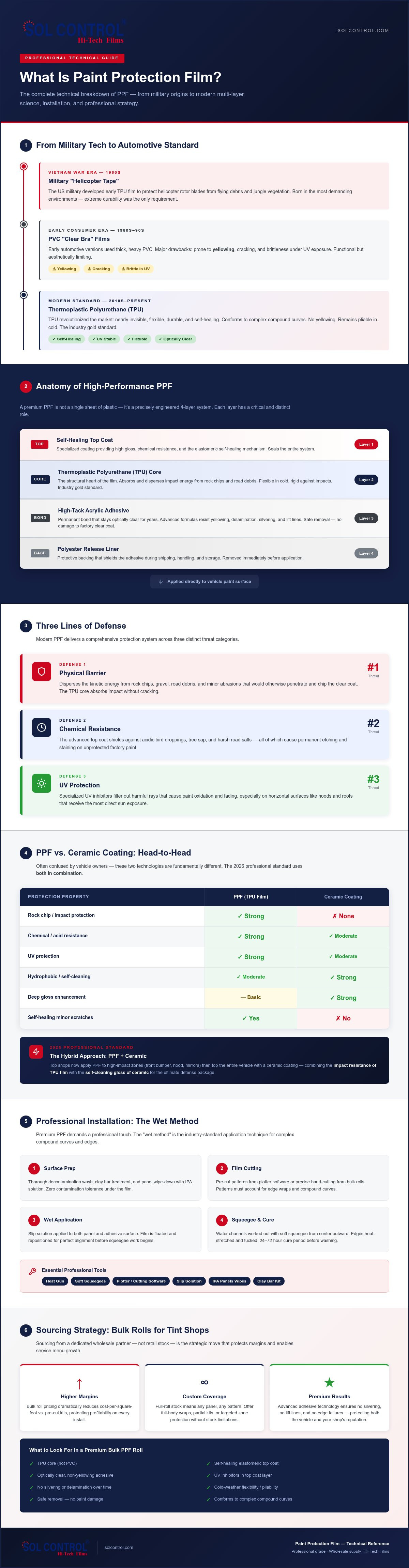
To define it technically, what is paint protection film? It's a high-performance thermoplastic polyurethane (TPU) film applied to the exterior surfaces of a vehicle. While many see it as a modern luxury, its roots are strictly functional. During the Vietnam War, the military needed a way to protect helicopter rotor blades from damage caused by flying debris and jungle vegetation. This "helicopter tape" was the early ancestor of today's automotive film, proving that the technology was born from a need for extreme durability in the most demanding environments.
The industry has evolved significantly since those early military applications. Original consumer versions, often called "clear bras," were frequently made of thick, heavy PVC. These early films were prone to yellowing, cracking, and becoming brittle under constant UV exposure. Modern TPU technology has revolutionized the market. It offers a nearly invisible, flexible, and durable finish that conforms to the complex curves of modern vehicle designs without the aesthetic drawbacks of the past. It's now the primary sacrificial layer for anyone looking to maintain a pristine factory finish.
The Core Purpose of Modern PPF
Modern PPF serves as a robust physical barrier. Its primary goal is to take the brunt of environmental damage so the factory paint remains untouched. Professional-grade films provide three main layers of defense:
Physical Barrier: It disperses the energy from rock chips, gravel, and road debris that would otherwise penetrate the clear coat.
Chemical Resistance: The advanced top coat provides a shield against acidic bird droppings, tree sap, and harsh road salts that cause permanent etching.
UV Protection: It contains specialized inhibitors that filter out harmful rays, preventing the paint oxidation and fading that typically occurs on horizontal surfaces like hoods and roofs.
PPF vs. Ceramic Coatings: Clearing the Confusion
There's often confusion regarding what is paint protection film compared to a ceramic coating. Ceramic coatings are liquid polymers that bond to the paint to provide hydrophobic properties and chemical resistance. They make a car easier to wash and provide a deep gloss, but they offer zero protection against physical impacts. If a rock hits a ceramic-coated hood, the paint will still chip.
PPF provides the structural defense that coatings simply cannot match. The professional standard for 2026 involves a hybrid approach. Many shops now apply PPF to high-impact areas, such as the front bumper and hood, and then top the entire vehicle with a ceramic coating. This combination provides the ultimate defense: the impact resistance of high-quality film paired with the self-cleaning, high-gloss properties of a ceramic layer.
The Anatomy of High-Performance PPF: Layers and Materials
To truly understand what is paint protection film, you must look beneath the surface at its multi-layer construction. High-performance film isn't a single sheet of plastic; it's a precisely engineered stack of four distinct components. It begins with a polyester release liner that protects the film during shipping and handling. Beneath that sits a high-tack acrylic adhesive designed for a permanent bond that won't damage factory clear coats upon eventual removal. The heart of the system is the Thermoplastic Polyurethane (TPU) core, which provides the structural integrity and impact dispersion needed to stop road debris. Finally, a specialized top coat seals the system, providing the gloss and chemical resistance that keeps the vehicle looking new.
TPU is the industry gold standard because it strikes a perfect balance between rigidity and flexibility. Unlike old PVC films, TPU remains pliable in cold weather and won't become brittle. The adhesive layer is equally critical. It must remain optically clear for years while resisting the urge to yellow or delaminate. Professional shops often look for premium bulk rolls that feature advanced adhesive technology to ensure edges stay tucked and secure without silvering or lift lines. This material science ensures the film doesn't just protect the car but enhances its appearance by preventing the orange peel texture common in lower-quality products.
The Physics of Self-Healing Technology
The most impressive feature of modern PPF is its self-healing capability. This process relies on elastomeric polymers within the top coat that possess a memory of their original state. Self-healing is the ability of the top coat to "flow" back into scratches at a molecular level. When heat from sunlight or warm water is applied, these polymers relax and fill in surface defects. While this technology easily erases light wash swirls and brush marks, it has limits. Deep punctures that tear through the TPU core cannot heal themselves, as the physical structure of the polymer chain has been permanently severed.
Optical Clarity and Non-Yellowing Formulas
Maintaining an invisible finish is the ultimate goal of any installation. This depends heavily on the chemical makeup of the polyurethane. Manufacturers use aliphatic polyurethanes rather than aromatic versions because they're inherently stable and resist the chemical breakdown caused by UV radiation. High-quality films also have UV inhibitors embedded directly into the core TPU layer. This prevents the yellowing effect that plagued earlier generations of film. It ensures that the protection remains completely transparent even on bright white or silver paint finishes, where discoloration would be most visible.
Core Benefits: Why Professional Installation is the Industry Standard
The primary reason customers ask what is paint protection film is to understand the tangible return on their investment. Beyond the material science, the core benefit lies in impact energy dispersion. When a stone strikes a vehicle at highway speeds, the TPU core doesn't just deflect the object. It absorbs and spreads the kinetic energy across a wider surface area. This prevents the concentrated force that typically causes a chip or crack in the rigid factory clear coat.
Preserving resale value is the strongest financial argument for professional installation. A vehicle with original, pristine paint always commands a higher price than one with a peppered front end or panels that have been resprayed. Because professional-grade films are rated for 5 to 10 years of service, they offer long-term peace of mind that justifies the initial cost. Maintenance also becomes significantly easier. The hydrophobic top coat reduces the time spent scrubbing, as road grime and dirt have a harder time bonding to the surface compared to bare paint.
Defense Against the Elements
Environmental hazards are often more damaging over time than physical debris. Acid rain, bird droppings, and tree sap contain organic acids that can etch into automotive finishes within hours. High-quality film acts as a sacrificial shield against these contaminants, preventing permanent staining. It also remains stable through extreme temperature fluctuations. Whether facing the intense heat of a summer afternoon or the freezing expansion cycles of winter, the film maintains its bond without lifting or peeling, provided it was applied with the correct professional tools.
Enhanced Aesthetics: Gloss vs. Matte Finishes
Modern films don't just protect; they enhance the vehicle's visual appeal. High-gloss options can deepen the factory color, providing a level of clarity that often exceeds the original finish. For those seeking a custom look, satin and matte PPF can transform a glossy vehicle into a "stealth" finish while providing the same level of impact protection. This is a significant upgrade over traditional vinyl wraps, which are much thinner and offer very little physical defense. Color-infused PPF is also emerging as a durable alternative, allowing for a total color change with the structural benefits of a traditional clear film. Achieving these high-end results consistently requires sourcing premium materials and using specialized application techniques that only a professional environment can provide.
The Professional Edge: Essential Tools and Application Techniques
The technical reality of what is paint protection film becomes most apparent during the installation phase. Unlike window tint, which is applied to flat or slightly curved glass, PPF must conform to complex automotive geometries like deep-set bumpers and side mirrors. This complexity is why the service remains a professional craft rather than a weekend DIY project. Achieving a seamless finish requires a deep understanding of material tension and the "Wet Method" of application. Installers use a precise balance of slip solutions to position the film and tack solutions to lock the edges into place once the alignment is perfect.
Shop owners must choose between bulk installation and plotter-cut kits. Bulk installation involves hand-trimming the film from a roll, allowing for tucked edges and a truly invisible look. Plotter-cut kits offer pre-measured templates that reduce the risk of cutting the paint, though they often leave small gaps at the panel edges. Regardless of the method, the final result depends on using high-quality tinting tools to ensure every drop of solution is extracted. Without the right equipment, even the best film will suffer from silvering or trapped moisture.
Must-Have Tools for the PPF Installer
Professional results require more than just a steady hand. High-durometer squeegees are essential for exerting enough pressure to remove air bubbles and excess moisture without marring the film's surface. Precision is equally vital; installers rely on snap-off blades or knifeless tape to trim excess material without ever touching the vehicle's clear coat. Finally, heat guns and steamers allow the installer to soften the film for stretching or to activate the adhesive's bond on tight corners and wrapped edges.
Surface Preparation: The Foundation of Longevity
A perfect installation starts long before the film touches the car. Surface decontamination is non-negotiable. This involves a thorough wash followed by a clay bar treatment to remove embedded iron particles or industrial fallout. Any remaining oils or waxes are stripped using isopropyl alcohol (IPA) wipes. If the paint has swirls or scratches, these must be addressed through paint correction first. Sealing defects under the film only makes them more visible and can compromise the adhesive bond. To maintain these standards, you should source your supplies from a distributor that understands the needs of a high-volume shop. You can browse our full inventory of professional PPF supplies to equip your workspace for success.
Sourcing and Strategy: The Wholesale Perspective for Tint Shops
Understanding the technical side is only half the battle. For a shop owner, the question of what is paint protection film is also a question of profitability and supply chain reliability. Success in this category depends on sourcing high-quality bulk rolls that provide consistent thickness and adhesive performance across every linear foot. Evaluating a wholesale partner requires looking beyond the price per roll. You need a distributor that maintains a comprehensive inventory and understands the nuances of professional application.
Inventory management is a critical factor in maximizing your margins. Most high-volume shops balance their stock across three primary widths: 24-inch rolls for bumpers and rockers, 36-inch rolls for hoods and fenders, and 60-inch rolls for full vehicle wraps. Having the right width on hand reduces material waste and speeds up the cutting process. When you integrate these products into your existing automotive window film service menu, you create a powerful cross-selling opportunity that significantly increases the average ticket price per vehicle.
Wholesale vs. Retail Sourcing
Working with a dedicated distributor like SolControl offers distinct advantages over retail or third-party sourcing. Our wholesale-only model ensures that we never compete with our B2B clients for installation work. This partnership allows you to access professional marketing materials that help you sell protection rather than just film. Consistent film quality is vital; you need to know that the roll you open today will behave exactly like the one you used last month. This predictability is what allows your installers to maintain high standards and efficient turnaround times.
Integrating PPF into Your Business Model
The most successful shops position PPF as part of a "Total Vehicle Protection" package. By bundling window tint with front-end paint protection, you address all of the client's concerns in a single visit. This strategy maximizes your ROI by utilizing your existing customer base and workspace more effectively. We provide the training resources and technical support necessary to help your team master the material. As you reduce waste through better bulk film usage and improved technique, the high margins of PPF services will become a cornerstone of your shop's growth. Selling a long-term shield for a client's investment is a much stronger value proposition than simply offering a cosmetic upgrade.
Advancing Your Shop with Next-Generation Protection
Mastering the technical details of what is paint protection film allows you to move beyond basic sales and become a trusted advisor to your clients. You've seen how the evolution from military-grade tape to multi-layered TPU has created a product that offers both physical defense and aesthetic enhancement. By combining high-performance materials with professional-grade tools and meticulous surface preparation, your shop can deliver the invisible finish that high-end vehicle owners demand. Success in this category isn't just about the installation; it's about a strategic partnership that supports your operational efficiency.
SolControl is dedicated to your growth through a wholesale-only model that never competes for your customers. We provide national distribution across the United States and maintain a comprehensive inventory of 2026-spec protection films designed for the modern market. When you're ready to elevate your service menu and maximize your ROI, we have the wholesale pricing and professional tools you need to succeed. Browse our wholesale collection of high-performance Paint Protection Films and professional tools at SolControl. We're here to help you turn every installation into a statement of quality and expertise.
Frequently Asked Questions
Is paint protection film the same as a vinyl wrap?
No, they are fundamentally different materials. Vinyl wraps are primarily aesthetic, measuring around 3 to 4 mils in thickness, and offer minimal impact resistance. In contrast, what is paint protection film is an 8-mil thick TPU shield designed specifically for impact absorption. While vinyl can change a car's color, PPF is engineered to preserve the paint underneath from physical damage and environmental etching.
Can you put paint protection film over a ceramic coating?
It's generally not recommended to apply film over an existing ceramic coating. The hydrophobic properties of the coating prevent the PPF adhesive from forming a secure bond, which often leads to edge lifting or bubbling. For the best results, installers should strip the coating before application. Once the film is secure, applying a ceramic coating on top of the PPF is a great way to add extra gloss and self-cleaning properties.
Does PPF yellow over time?
Modern, high-quality films do not yellow like the older generations did. This improvement is due to the shift from aromatic to aliphatic polyurethane, which is more stable under UV exposure. When you choose premium bulk rolls with built-in UV inhibitors, the film remains optically clear for years. Yellowing is now almost exclusively a problem found in low-grade, consumer-level products rather than professional-grade materials.
Can PPF be removed without damaging the paint?
One common question regarding what is paint protection film is whether it can be removed safely. The answer is yes, provided the vehicle has its original factory paint and the installer uses a controlled heat source. The adhesive is designed to stay with the film rather than the car. However, if the vehicle was resprayed with low-quality paint or the film was left past its rated lifespan, extra caution is required.
How long does a professional PPF installation last?
A professional installation typically lasts between 5 and 10 years. This lifespan depends on the quality of the film, the environment where the car is kept, and the maintenance routine. Films on vehicles that are garage-kept and regularly cleaned will stay at the longer end of that range. Using professional-grade materials ensures the adhesive and top coat remain functional throughout the entire service life of the product.
Is it worth getting PPF on a daily driver?
It's highly beneficial for daily drivers because they face the most consistent exposure to road hazards. Daily use increases the risk of rock chips, salt spray, and highway debris that can quickly degrade a vehicle's appearance. Protecting these high-impact areas helps maintain the car's resale value and reduces the need for expensive paint correction or touch-ups later. It's an investment in long-term preservation for any vehicle on the road.
Can you wash your car normally with PPF installed?
You can wash your car normally, but you should wait at least one week after the initial installation to allow the adhesive to fully cure. When washing, it's best to use the two-bucket method and avoid pointing high-pressure water directly at the film's edges. This prevents accidental lifting. While the film is durable, staying away from automated brush car washes will help keep the top coat in pristine condition for a longer period.
What happens if the film gets scratched?
If the film receives light scratches or swirl marks, the self-healing top coat will often repair itself when exposed to heat. This can occur naturally through sunlight or by using warm water. This molecular flow fills in the surface defects automatically. However, if the scratch is deep enough to puncture the TPU core, the film won't heal. In those cases, the specific panel of film may need to be replaced by a professional.