Plastic Razor Blades: Professional Film Installer Guide
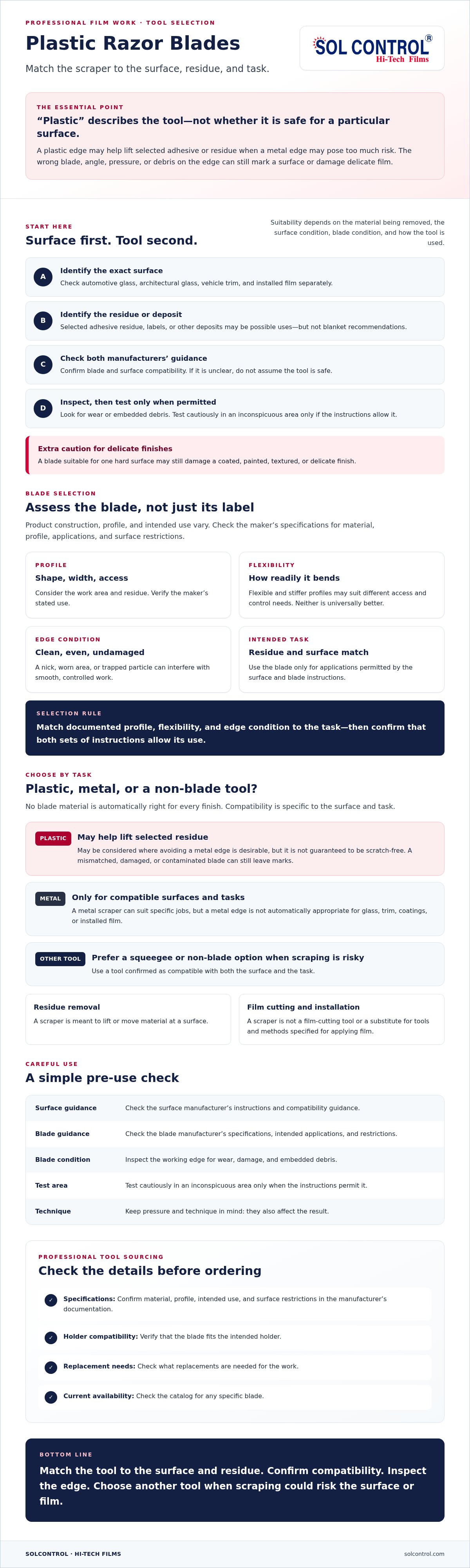
A plastic blade doesn’t make every scraping task safe. Plastic razor blades can help lift adhesive and residue when a metal edge may pose too much risk, but the wrong blade, angle, or pressure can still mark a surface or damage delicate film.
If you’re weighing plastic against metal, or wondering whether a blade’s shape and stiffness will suit your holder and task, start with the surface and the material you need to remove. The fact that a blade is plastic doesn’t establish that it’s safe for a particular job.
This guide explains where plastic razor blades may fit in professional film work, how to compare blade characteristics, and how to use a suitable blade carefully. It also covers when another tool is a better fit and what to check when sourcing professional tinting tools. The goal is practical: match the tool to the surface, reduce avoidable damage, and limit rework.
Key Takeaways
Match the scraper to the exact surface and residue. Automotive glass, architectural glass, trim, and installed film each need a separate compatibility check.
Compare blade profile, flexibility, and edge condition with the task, and confirm material details in the manufacturer’s specifications.
Check surface guidance, inspect the blade, and test carefully in an inconspicuous area only when the instructions permit it.
Choose a squeegee or non-blade tool when scraping could risk surface or film damage. Use metal scrapers only for compatible surfaces and tasks.
Before ordering professional tinting tools, verify specifications, holder compatibility, and replacement needs. Check current catalog availability for any specific blade.
Plastic Razor Blades for Film Work: What They Do and Where They Fit
A plastic razor blade is a scraper with a working edge made from a nonmetallic material. Construction, profile, and intended use vary, so check the manufacturer’s specifications instead of assuming every product sold under this name is alike. The Society of Plastics Engineers (SPE) offers background on the plastics industry. For a particular tool’s material and surface compatibility, consult the blade maker’s documentation.
Quotable definition: A plastic razor blade is a nonmetallic scraper. Its material describes the tool, not whether it’s suitable for a particular surface.
What tasks might a plastic razor blade handle?
Depending on the blade and surface instructions, a plastic razor blade may help lift selected adhesive residue, labels, or other deposits during preparation. These are possible uses, not blanket recommendations. A blade suitable for one hard surface may still damage a coated, painted, textured, or delicate finish.
Keep residue removal separate from film cutting and installation. A scraper is meant to lift or move material at a surface. It isn’t a film-cutting tool or a substitute for the tools and methods specified for applying film. Before scraping, check guidance from both the surface manufacturer and the blade manufacturer. If compatibility is unclear, don’t assume the tool is safe.
How does a plastic blade differ from a metal scraper?
The main difference is the blade material, which can affect how the tool interacts with a surface. A plastic edge may be suitable for certain scraping tasks where avoiding a metal edge is desirable, but it isn’t guaranteed to be scratch-free. A damaged or contaminated blade, or one poorly matched to the task, can still leave marks. Pressure and technique also affect the result.
Metal scrapers can suit specific tasks and surfaces, but a metal edge isn’t automatically appropriate for glass, trim, coatings, or installed film. Plastic isn’t automatically the safer choice for every finish either. Suitability depends on the residue, surface condition, blade condition, and how the tool is used. Check compatibility separately for automotive glass, architectural glass, vehicle trim, and film.
Identify the exact surface and the material you need to remove.
Check the blade and surface manufacturers’ instructions for compatibility.
Inspect the edge for wear or embedded debris before use.
Test cautiously in an inconspicuous area, but only if the instructions permit it.
This surface-first approach helps installers choose based on the job rather than the blade’s label. For film-related work, use a tool confirmed as compatible with both the surface and the task.
How Blade Material, Edge, and Flex Affect Plastic Razor Blade Selection
Choose a blade by matching its documented characteristics to the residue and surface. Don’t rely on color, a material label, or a “general purpose” description alone. Product designs vary, so check the manufacturer’s specifications for material, profile, intended applications, and surface restrictions before use.
Selection rule: Match the blade’s documented profile, flexibility, and edge condition to the task. Then confirm that both the blade and surface instructions allow its use.
Feature
What to assess
Selection consideration
Profile
Shape, width, and access to the working edge
Consider the work area and residue, then verify the maker’s stated use.
Flexibility
How readily the blade bends during use
A flexible or stiffer profile may suit different access and control needs. Neither is universally better.
Edge condition
A clean, even edge without visible damage or debris
A nick, worn area, or trapped particle can interfere with smooth, controlled work.
Intended task
Residue type and surface compatibility
Use only for applications permitted by the surface and blade instructions.
Which blade shape or stiffness suits the task?
Profile and stiffness affect how a blade reaches a spot and responds as you work. A flexible blade may conform more readily in some situations, while a stiffer profile may feel more stable in others. These are general tendencies, not performance guarantees. Access, residue condition, and the control needed for the task can all influence the choice. Check the manufacturer’s stated applications before use.
What should installers check before using a new blade?
Inspect the edge before each job, even if the blade is new. Look for nicks, uneven areas, debris, or visible defects. If you’re using a holder, confirm that the blade is the specified fit and sits securely. A loose or damaged blade can make controlled scraping harder and affect the finish.
If surface guidance permits, test carefully in a discreet area before proceeding. Stop if the blade catches, leaves a mark, or behaves unexpectedly. A test checks for an unexpected reaction; it doesn’t prove that every part of the surface is compatible. For film work, also distinguish tool selection from installation-quality requirements. A California Energy Commission document references professional installation standards, but it doesn’t specify which blade profile or material to use. Follow the applicable surface and tool instructions when choosing a blade.
Professionals sourcing compatible film and tinting tools can review the current tinting-tool catalog. Verify availability and specifications for any particular blade before ordering.
Plastic Razor Blades vs. Other Tools: Match the Tool to the Surface
No scraper is automatically right for every film-related task. Identify the surface and the material you need to remove, then check the tool manufacturer’s stated applications. General guidance can help narrow the options, but product and surface instructions take priority.
Plastic blade: Consider it for selected residue-removal tasks only when the blade and surface instructions allow it. A less rigid edge doesn’t guarantee damage-free use, and it may not lift every deposit effectively.
Metal scraper: It may suit specific scraping tasks on surfaces explicitly approved for its use. A metal edge can damage coatings, trim, or film, so don’t assume it’s appropriate for glass just because the surface looks hard.
Squeegee: Use it for film-application tasks that call for a squeegee, such as moving solution or working film against a surface. It isn’t a substitute for a scraper when you need to lift adhered residue.
Non-blade tool: A compatible cloth or purpose-designed installation tool may be a better choice for wiping, handling film, or work that doesn’t require scraping. Follow the tool and surface directions.
When might a plastic blade be preferable to another scraper?
A plastic blade may be worth considering when the instructions permit scraping but don’t specify a metal edge for the job. Its usefulness depends on the residue, blade condition, access, and control the task requires. It may not remove stubborn material as intended, and added pressure can increase risk. For film application, use the specified squeegee or installation tool rather than improvising with a scraper.
Which surfaces need extra caution?
Distinguish bare glass from glass with applied film or coatings, paint protection film, and finished trim. These surfaces can respond differently to scraping. Guidance for one doesn’t establish compatibility with another. Don’t test a tool on a visible customer surface unless the relevant instructions confirm it’s appropriate. If compatibility is uncertain, pause and check with the surface or tool manufacturer.
Use surface-specific guidance to decide what “compatible” means for the job:
Automotive glass: Check for film, coatings, or other finishes, and confirm that the tool is permitted.
Architectural glass: Verify the glass type and any applied treatments before scraping.
Installed window film or paint protection film: Don’t assume a scraper is suitable. Use only methods approved for that film.
Trim: Identify the material and finish, then follow its care guidance.
The right choice balances residue removal with control and surface risk. Plastic razor blades, metal scrapers, squeegees, and non-blade tools serve different purposes. Select a tool only after checking the instructions for that tool and the specific surface.
How to Use Plastic Razor Blades Carefully in Film-Related Work
Before scraping, use a consistent sequence: identify the surface, confirm compatibility, inspect the tool, test only if permitted, and proceed with controlled movements. Plastic razor blades aren’t automatically suitable for glass, coatings, trim, or film. Safety reminder: Blade material alone cannot establish surface compatibility.
What preparation should happen before scraping?
First, identify the surface and its condition. Distinguish bare glass from glass with applied film or a coating, and note whether the job involves paint protection film, windshield protection film, or finished trim. If you can’t establish the surface or its condition, pause and seek guidance before using a scraper.
Next, remove loose contamination using a method appropriate for that surface. Particles trapped beneath a scraping edge can interfere with controlled work, so don’t drag a blade across grit or debris. Check the blade manufacturer’s stated applications alongside the surface or film manufacturer’s care instructions. If scraping isn’t explicitly permitted, choose an approved alternative rather than assuming a test will make it safe.
Inspect the blade for nicks, wear, residue, or embedded particles. If the tool uses a holder, confirm that the blade is held securely. Where instructions permit, test in a discreet area and watch for any change to the finish. Keep the test limited: it can reveal an unexpected reaction, but it can’t establish compatibility across the whole surface.
When should an installer stop or switch tools?
Use light, controlled movements and let the tool’s edge do the work. Don’t force a blade through resistance or increase pressure to compensate for a poor result. No universal angle or pressure suits every blade and surface, so follow the tool maker’s directions and stay within its guidance.
Stop if the blade catches or snags. Resistance may indicate an unsuitable surface, residue, or tool condition.
Stop if you see a mark or change in finish. Don’t continue to see whether the damage becomes more visible.
Stop if film or coating appears to lift. Switch to a method approved by the relevant manufacturer.
Remove damaged or contaminated blades from use. Don’t bring a nicked or debris-covered edge back onto customer work.
When scraping isn’t allowed or the result is uncertain, select a manufacturer-approved method, such as a compatible non-blade tool or the appropriate film-installation tool. For information about professional tinting tools, review SolControl’s tinting-tool offerings. Check current catalog details for specific items before ordering.
Source Professional Tinting Tools Through a Wholesale Partner
Once you’ve identified the tools a job requires, check their specifications before ordering. For plastic razor blades, don’t assume that material or appearance tells you whether a blade fits a holder or suits a particular task. Confirm the details for the exact item and surface involved.
What should a professional buyer verify with a supplier?
Use this purchasing checklist to reduce mismatches between the tool, holder, and work at hand:
Specifications: Confirm the blade material, dimensions, profile, and manufacturer-stated applications.
Compatibility: Check that it fits the intended holder securely, if a holder is required, and that its use is allowed for the target surface.
Documentation: Ask whether instructions or technical information are available for the specific tool, including any stated limitations.
Replacement needs: Find out how replacement parts are identified and whether the tool design calls for a particular blade format.
Ordering details: Verify current catalog availability and applicable order terms directly before making a purchasing decision.
These checks apply to any professional tool purchase. A listing or category description may not answer questions about exact dimensions, intended use, or holder fit, so confirm the details instead of relying on assumptions.
How do blades fit into a complete film-installation toolkit?
A scraper is only one possible part of a film-work setup. Preparation, application, and finishing can call for different tools. A blade won’t replace a squeegee or another purpose-designed tool when the task requires one. Plan around the work sequence, then confirm that each tool suits the material and surface involved.
SolControl is a wholesale distributor of window films and professional tinting tools for installers and contractors. Its offerings include automotive and architectural window films, paint protection films, windshield protection film, and tinting tools. For a broader view of tools used in PPF work, see the professional PPF installation tools guide. The automotive window film professional guide offers additional context on sourcing film for professional work.
Plastic blade availability isn’t confirmed here, so check the current catalog before relying on a specific item being offered. For film and professional tool options, you can explore SolControl’s professional tinting tools.
Make Every Tool Choice Surface-Specific
Good film work starts with matching the tool to the task and surface. Plastic razor blades may be useful for selected residue-removal jobs, but plastic doesn’t guarantee a mark-free result. Check the blade and surface instructions, inspect the edge, and stop if it catches or changes the finish.
Before ordering, confirm a tool’s specifications, holder compatibility, intended applications, and replacement requirements. Keep preparation, film application, and finishing tools distinct so each part of the job is supported by equipment suited to it.
SolControl is a wholesale distributor serving installers and contractors across the United States, with offerings that include professional tinting tools and multiple types of window film. Check current catalog details for specific items, then explore SolControl’s professional tinting tools as you plan your next job.
Frequently Asked Questions
Are plastic razor blades safe to use on glass?
Plastic razor blades aren’t automatically safe for every glass surface. Check the blade manufacturer’s instructions and the glass manufacturer’s guidance, especially if the glass has a coating, tint, or applied film. Automotive and architectural glass may have different conditions and care requirements. If scraping is permitted, inspect the edge and test cautiously in a discreet area. Stop if the blade catches or leaves a mark.
Can plastic razor blades remove adhesive from window film?
They may help lift selected adhesive residue from a surface if the blade and surface instructions allow scraping. That doesn’t mean they’re suitable for scraping adhesive off installed window film. The blade could mark, catch, or lift the film. Identify whether the residue is on glass or on the film itself, then follow the film and tool manufacturers’ directions. If compatibility is unclear, don’t scrape.
Will a plastic razor blade scratch automotive glass?
A plastic edge doesn’t guarantee that automotive glass will remain unmarked. Debris trapped at the edge, a damaged blade, surface coatings, or unsuitable technique may affect the result. First check whether the glass has film or a coating and consult manufacturer guidance on scraping. If the instructions permit it, inspect the blade and test discreetly. Stop if it catches, leaves a mark, or produces an uncertain result.
What is the difference between plastic and metal razor blades?
The primary difference is the edge material, and the tools may be intended for different tasks or surfaces. Neither type is automatically appropriate for every film-related job. A metal edge can damage a surface, while a plastic edge can still mark or catch, particularly if worn or contaminated. Choose according to the residue, surface condition, tool instructions, and manufacturer guidance rather than assuming one material is universally safer.
How do you use a plastic razor blade without damaging a surface?
No technique can guarantee a damage-free result on every surface. Identify the surface and any film or coating, confirm scraping is allowed, remove loose contamination appropriately, and inspect the blade for wear or debris. Test discreetly only when instructions permit it. Work with light, controlled movements without forcing the edge. Stop if it snags, marks the finish, or appears to lift film, and use an approved alternative.
When should I replace a plastic razor blade?
Replace a blade when its edge is nicked, worn, uneven, or contaminated with debris that can’t be safely removed. Stop using it if it catches, scrapes inconsistently, or no longer performs as intended. Inspect blades before customer work, even if they appear relatively new, and follow the manufacturer’s replacement guidance. Don’t continue with a damaged edge or transfer contamination from one surface to another.
For professional tinting tools and window film, check SolControl’s current catalog and confirm item specifications and availability before ordering.