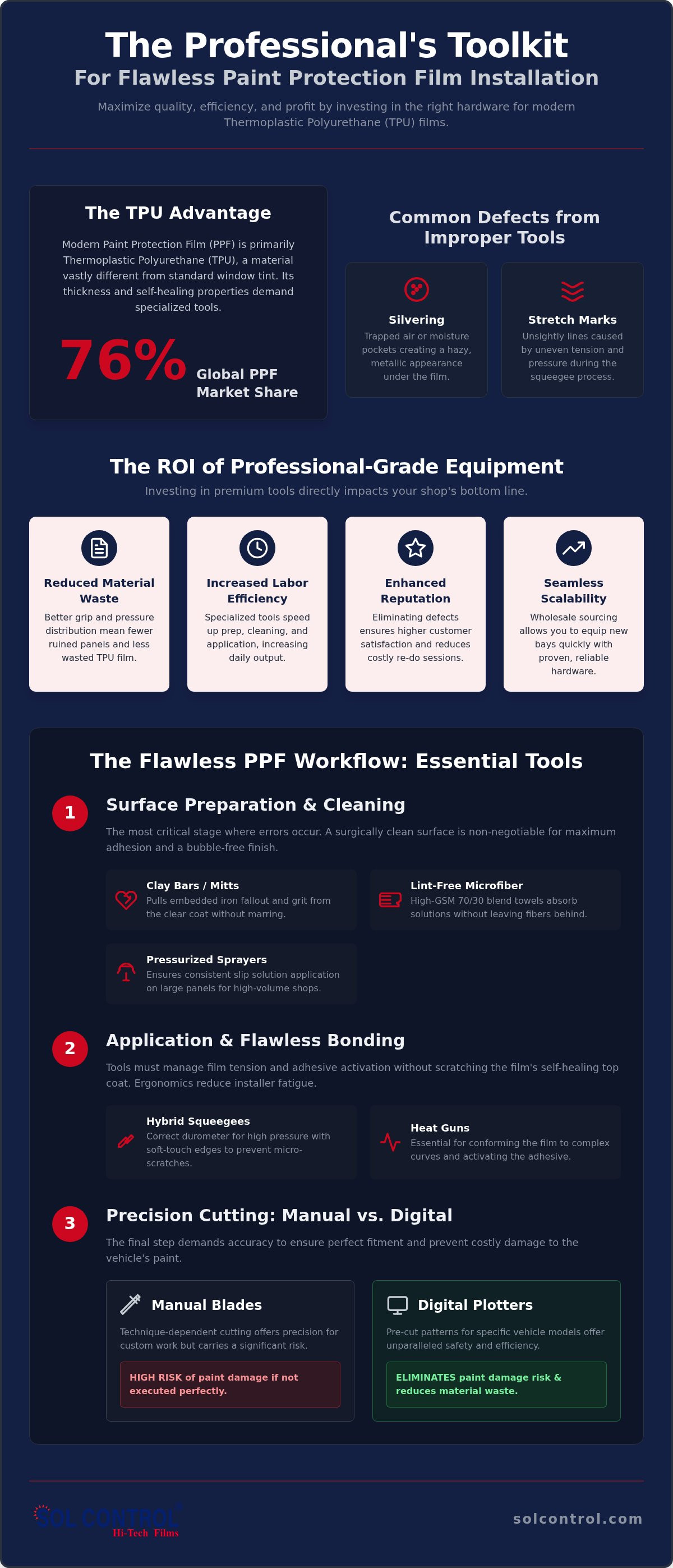
Did you know that thermoplastic polyurethane (TPU) now commands an estimated 76% share of the global paint protection film market? As the industry continues its rapid growth through 2026, the margin for error when using tools for paint protection film installation has never been thinner. You already know that even the highest-quality film can't compensate for a squeegee that drags or a blade that fails mid-contour. These technical setbacks don't just cost you time; they lead to expensive material waste and frustrated clients who expect a factory-perfect finish.
We're dedicated to helping you professionalize your toolkit and protect your bottom line. In this guide, you'll discover the professional-grade equipment required to achieve flawless results and maximize your shop's daily output. We'll break down the latest innovations in hybrid squeegees, precision decontamination needles, and specialized tapes that are currently defining industry standards. This overview provides a clear roadmap for sourcing durable wholesale equipment that ensures every vehicle leaving your bay meets a global standard of excellence while increasing your installation speed.
Key Takeaways
Learn how professional-grade equipment prevents common installation defects like silvering and stretch marks that compromise high-end finishes.
Identify the most effective surface preparation tools, including specialized clay bars and sprayers, to ensure a contaminant-free bonding environment.
Discover how to optimize your workflow by selecting the correct tools for paint protection film installation based on squeegee durometer and vehicle geometry.
Compare the benefits of manual cutting techniques versus digital plotters to reduce material waste and eliminate the risk of paint damage.
Understand the strategic advantage of consolidating your supply chain with a dedicated national wholesale partner for both film and hardware.
The Professional’s Kit: Why Quality Tools Define PPF Success
The technical requirements for applying Paint Protection Film (PPF) are vastly different from those of standard window tinting. While window films are typically thin polyester, modern PPF is composed of thick thermoplastic polyurethane (TPU), which now accounts for approximately 76% of the global market. This material difference is critical. Because TPU is designed to absorb impacts and "self-heal," it requires significantly higher pressure and specific moisture management that standard tinting tools cannot provide. Using the wrong tools for paint protection film installation often results in silvering, where tiny air bubbles or moisture pockets become trapped, or unsightly stretch marks caused by uneven tension during the squeegeeing process.
High-volume shops must also consider the physical toll on their technicians. Professional-grade tools are designed with advanced ergonomics to reduce installer fatigue during long shifts. Sourcing these through a dedicated wholesale partner like SolControl ensures that every technician in your shop uses the same high-standard equipment. This consistency is the backbone of quality control; it allows for a standardized workflow that minimizes errors. When you use tools for paint protection film installation that are specifically engineered for the trade, you're investing in the longevity of your business and the quality of your output.
Defining Professional-Grade PPF Equipment
PPF installation tools are precision instruments designed to manage film tension and adhesive activation. Unlike generic plastic scrapers, professional tools prioritize material compatibility. Soft-touch edges are non-negotiable because they protect the self-healing clearcoat of the film from micro-scratches during the application. These tools must also demonstrate extreme durability, maintaining their edge and flexibility even after prolonged exposure to chemical slip solutions and heat guns. Investing in equipment that withstands these harsh conditions prevents tool failure in the middle of a complex installation.
The ROI of Premium Installation Gear
The financial benefits of using premium gear are measurable and immediate. By providing your team with the right hardware, you directly impact the shop's bottom line through several key areas:
Reduced Material Waste: Better grip and pressure distribution mean fewer ruined panels and less wasted TPU.
Labor Efficiency: Specialized pump-up sprayers and prep tools significantly speed up the cleaning and decontamination phases.
Reputation Management: Eliminating preventable defects like silvering ensures higher customer satisfaction and reduces costly re-do sessions.
Scalability: Wholesale sourcing allows you to equip new bays quickly with proven, reliable hardware.
Building a shop reputation for flawless finishes starts with the hardware in your installers' hands. Professional-grade tools allow for better film manipulation, which is essential for navigating the complex body lines of modern luxury and electric vehicles.
Essential Surface Prep and Cleaning Tools
A flawless finish begins long before the film touches the vehicle. Preparation is the most critical stage of the process. If the surface isn't surgically clean, the adhesive will trap microscopic contaminants, leading to visible bubbles and premature lifting. According to expert insight on PPF, the preparation stage is often where the most significant errors occur, making high-quality tools for paint protection film installation a necessity rather than a luxury. Professional shops rely on specialized clay bars and synthetic clay mitts to pull embedded iron fallout and environmental grit from the clear coat without marring the finish.
Choosing the right towels is equally important for maintaining a debris-free environment. Standard shop rags often shed fibers that ruin an install. Instead, technicians use high-gsm, lint-free microfiber towels with a 70/30 polyester-to-polyamide blend. These towels provide the absorbency needed for slip solutions while ensuring no stray threads remain on the panel. For stubborn residue, specialized surface scrapers with plastic blades allow for the removal of sap or tar without the risk of gouging the paint. Every tool in this stage serves a single purpose: creating a perfectly level, chemically pure surface for maximum adhesion.
Professional Sprayer Systems
Consistency is the hallmark of a professional bay. While trigger sprayers are useful for detailed edge work, high-volume shops prefer pressurized pump-up sprayers for large panels like hoods and fenders. These systems provide a continuous, fine mist that ensures even coverage of slip solutions. Maintaining a precise slip-to-tack ratio depends on a reliable spray pattern; uneven application can lead to premature adhesive activation or "tack bites" that are difficult to remove. For a deeper dive into film chemistry and application techniques, see our guide on Mastering Paint Protection Film: The Professional’s Guide to PPF Technology.
Decontamination and Surface Leveling
The final wipe-down requires a strategic approach to chemical cleaning. Technicians use isopropyl alcohol (IPA) wipes to strip away any remaining lubricants or oils, particularly around the edges where the film must wrap and tuck. This ensures 100% adhesive contact. Specialized prep-pads are often used in conjunction with these cleaners to mechanically level the surface at a microscopic level. Using professional-grade equipment from a dedicated wholesale distributor ensures your shop has access to the durable, chemical-resistant hardware needed for these rigorous prep cycles.
Fine Grade Clay: Best for new vehicles with minimal environmental damage.
Medium Grade Clay: Necessary for older paintwork with heavy contamination.
IPA Solutions: Essential for ensuring edges don't lift after the vehicle leaves the shop.
Pressure Sprayers: Reduce hand fatigue and provide the volume needed for full-body wraps.
Squeegees and Application Tools for Flawless Bonding
Once the surface is surgically clean, the focus shifts to the technical heart of the process: bonding. The tools for paint protection film installation used during this stage must manage the unique tension requirements of thick TPU layers. Unlike thinner window films, PPF requires significant pressure to evacuate slip solution and activate the high-tack adhesive. Understanding the technical specifications of paint protection films is vital, as the multilayer construction dictates how the film responds to squeegee pressure and heat. Professional installers often choose turbo squeegees over traditional blocks because their specialized blades offer superior water evacuation, reducing the risk of trapped moisture pockets.
Modern vehicle designs in 2026 feature increasingly complex body lines and deep recesses. Standard flat squeegees often fail to reach these areas, making multi-angle squeegees an essential part of a professional toolkit. These tools allow you to maintain consistent pressure around bumpers and mirrors without overstretching the material. If you use a one-size-fits-all approach, you'll likely encounter "tack bites" or silvering in the recesses. Precision in this stage ensures the film contours perfectly to the vehicle's geometry while maintaining its structural integrity.
The PPF Squeegee Selection Guide
Selecting the correct durometer, or hardness, is a science. Soft durometer squeegees are your primary tools for initial tacking and bulk air removal. Their flexibility allows them to glide over the film's self-healing top coat without causing surface marring. Harder edges are reserved for the final stages, specifically for tucking film into tight gaps and body seams where maximum leverage is required. To maintain these tools, you should regularly sand the edges with high-grit paper. A single nick in a squeegee blade can leave a permanent scratch on the film, ruining an otherwise perfect installation.
Heat Management Tools
Heat is a powerful ally when managing film elasticity during difficult wraps. Digital heat guns are the industry standard because they provide precise temperature control, which is necessary to avoid damaging the film's self-healing properties. You'll use heat to soften the film for complex curves and to quickly activate the 'tack' on edges that refuse to stay down. However, safety protocols are paramount. Excessive heat can burn the film or, worse, damage the vehicle's underlying paint. Always maintain a safe distance and keep the heat source moving to ensure even distribution and a secure bond.
Turbo Squeegees: Best for high-volume water evacuation on large panels.
Digital Heat Guns: Essential for precise temperature management on TPU.
Multi-Angle Tools: Critical for navigating 2026's complex automotive body lines.
Edge Maintenance: Regular smoothing of tools prevents clearcoat damage.
Precision Cutting: Manual Blades vs. Digital Plotters
Precision cutting represents the final hurdle in achieving a factory-quality finish. Whether your shop relies on the artisan skill of hand-trimming or the technological precision of a digital plotter, your choice of tools for paint protection film installation directly impacts both safety and aesthetics. Hand-trimming remains a vital skill for custom projects where pre-cut templates don't exist. However, the margin for error is razor-thin. A single slip can lead to permanent paint damage, making the quality of your blades and your trimming technique the most important factors in your daily workflow.
Manual Trimming Mastery
Successful hand-cutting relies on using 30-degree snap-off blades. These allow for the extreme precision needed to navigate around parking sensors, door handles, and intricate grille work. Most expert installers prefer stainless steel blades over carbon steel; stainless is slightly more forgiving and less likely to score the paint if the blade makes accidental contact. You should use the "score and snap" technique, where you only penetrate the top layers of the film before snapping the waste away. This ensures the metal never actually touches the vehicle's surface. If you're looking to deepen your technical knowledge, explore our resource on What is Paint Protection Film? The Professional Guide to PPF Technology.
The Case for Digital Plotters
By 2026, digital plotters have become essential for shops looking to scale. These systems use advanced template software, often integrated with 3D scanning data, to provide perfect fits for almost every vehicle on the road. Plotters significantly reduce your shop's liability because they eliminate the need to use blades near the paint for the majority of the installation. They also maximize material yield, which is critical when working with expensive TPU films. For wholesale buyers, the cost-benefit analysis is clear: the time saved on labor and the reduction in wasted film quickly offset the equipment costs. Once the film is cut, you'll need specialized tucking tools and edge-wrappers to hide the seams and provide that seamless, invisible look your customers expect.
Equipping your bay with the right hardware is an investment in your shop's reputation and long-term profitability. You can source professional-grade blades, plotters, and finishing accessories through our wholesale tool inventory to ensure your team always has the best equipment available.
Building Your Wholesale Toolkit with SolControl
Achieving success in the PPF industry requires more than just technical skill. It demands a lean, efficient supply chain that ensures your technicians always have high-performance tools for paint protection film installation ready at their fingertips. When you consolidate your sourcing, you eliminate the logistical headaches of managing multiple vendors and varying lead times. We focus exclusively on supporting B2B shops, acting as a dedicated partner that provides both the film and the hardware necessary for a world-class finish. This integrated approach allows you to maintain consistent quality standards across every bay in your facility.
The financial impact of wholesale sourcing is a primary driver for growing automotive businesses. By moving away from retail-level pricing, you significantly improve your margins on every project. We understand that professional shops need more than just film; they need a comprehensive ecosystem of support, including marketing materials to help sell the service and professional-grade gear that stands up to daily use. As a national US distributor, we provide the reliability and scale needed to support your business, whether you're a boutique studio or a high-volume regional center.
Wholesale Advantages for Professionals
The benefits of a wholesale account extend far beyond the initial purchase price. Professionals gain the ability to bulk-purchase essential consumables such as blades, lint-free towels, and slip solutions, ensuring these items are always in stock. You also gain access to specialized tools for paint protection film installation that aren't available through standard retail outlets. For owners managing multi-location operations, our streamlined ordering process provides a centralized way to track inventory and maintain tool uniformity across your entire organization.
Next Steps for Shop Owners
If you're looking to improve your shop's efficiency, start by conducting a thorough tool audit. Identify gaps in your current workflow where outdated or low-quality equipment might be slowing down your team or causing material waste. Once you've identified your needs, setting up a wholesale account gives you immediate access to national distribution and a comprehensive inventory of automotive and architectural protection products. We're here to help you transition from a reactive shop to a high-performance installation center. To get started, you can browse the full inventory of professional tinting tools at SolControl and equip your team with the precision gear they deserve.
Elevate Your Installation Standards for 2026
Mastering the art of surface protection requires a commitment to both technical skill and high-performance hardware. As the market for TPU-based films grows, the difference between a profitable shop and one struggling with material waste often comes down to the quality of your equipment. By prioritizing specialized squeegees, precision cutting systems, and rigorous decontamination protocols, you ensure that every vehicle leaving your bay meets a global standard of excellence. These professional-grade tools for paint protection film installation are not just accessories; they are the foundation of a scalable and reputable automotive business.
We are dedicated to supporting your growth through our national distribution network and comprehensive B2B inventory. You can Equip your shop with professional-grade PPF tools from SolControl to take advantage of wholesale pricing and dedicated industry support. Sourcing your equipment from a national US distributor ensures you have the reliable hardware needed to maintain a competitive edge while reducing operational costs. We look forward to seeing your shop reach new levels of efficiency and customer satisfaction as you continue to push the boundaries of surface protection excellence.
Frequently Asked Questions
What are the most essential tools for a beginner PPF installer?
Beginners need a core set of tools for paint protection film installation to ensure consistent panel coverage. This includes a professional rubber squeegee kit, a pressurized sprayer for slip solution, and a pack of 30-degree stainless steel blades. You'll also need dedicated surface cleaners and lint-free microfibers. While advanced shops use plotters, a beginner can start with manual trimming tools to master material tension before scaling their operations.
Can I use standard window tint squeegees for paint protection film?
Standard window tint squeegees are generally too thin and lack the necessary durometer for thick TPU films. PPF is significantly denser than polyester window film, requiring tools that exert higher pressure to evacuate moisture without dragging. Using a tint squeegee often leads to silvering or trapped air pockets because the tool flexes too much. Professional PPF squeegees are specifically engineered with different hardness levels to handle the varying contours of modern vehicle geometry.
How often should I change the blade during a PPF installation?
You should snap off a fresh blade point for every major panel you trim when using tools for paint protection film installation. A dull blade is the primary cause of drag marks and jagged edges, which ruins the invisible look of a professional install. Technicians often change points twice on large, complex hoods to ensure the score-and-snap technique remains effortless. Maintaining a sharp edge prevents you from applying excessive pressure that could score the clear coat.
Is a plotter necessary for a professional PPF shop?
A plotter is essential for any professional shop looking to scale operations and reduce liability. These machines use precision software to cut film to exact vehicle dimensions, which virtually eliminates the need to cut directly on the paint. This technology maximizes material yield and significantly speeds up the installation process for common models. It's a high-ROI investment that allows your team to focus on the application rather than intricate manual trimming.
What is the best slip solution for PPF application?
The ideal slip solution is a precise mixture of distilled water and a dedicated installation gel or pH-neutral shampoo. The goal is to create enough lubricity to position the film without compromising the adhesive's long-term bond. Many professionals prefer specialized gels because they stay on vertical surfaces longer than standard soapy water. It's critical to maintain a consistent ratio, as too much lubricant can lead to tack bites and edge lifting once the film dries.
How do I prevent scratches on the film while using a squeegee?
To prevent surface scratches, always keep the film's top surface lubricated with slip solution during the squeegeeing process. You should also use a squeegee with a smooth, well-maintained edge. If you notice any nicks or grit on your tool, sand it down with high-grit sandpaper immediately. Using a soft durometer tool for initial passes and ensuring the film's self-healing layer remains wet will protect the clearcoat from micro-marring or permanent scuffing during the bond.
What tools are needed for removing old paint protection film safely?
Safe removal requires a professional-grade steamer or a digital heat gun to soften the adhesive layer effectively. Once the film is pliable, you can use plastic scrapers to lift the edges without the risk of gouging the paint. For any stubborn adhesive residue left behind, a specialized citrus-based adhesive remover and lint-free towels are necessary. Avoid using metal blades or harsh solvents that could degrade the factory clear coat or plastic trim during the removal process.