Commercial Window Film for Energy Savings: A 2026 Professional Resource
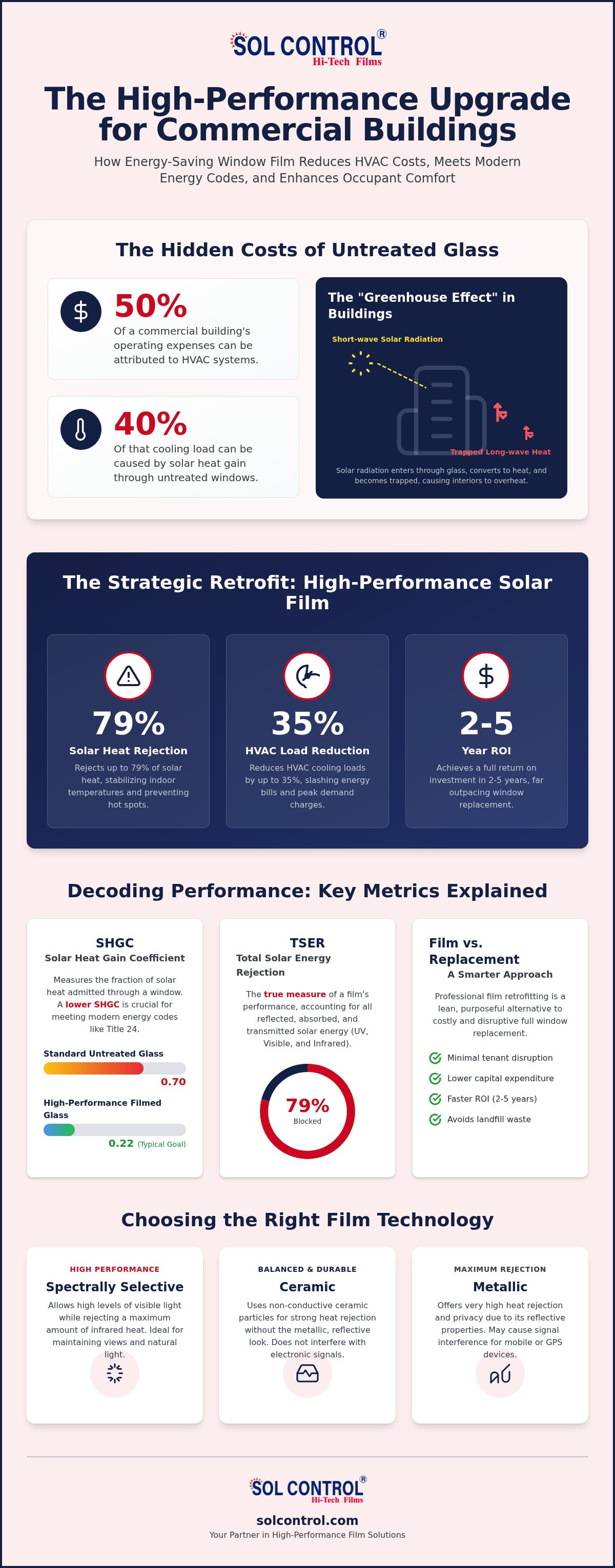
Did you know that HVAC systems often account for up to 50% of a commercial building's total operating expenses? It's a staggering figure, particularly when you realize that untreated glass can be responsible for nearly 40% of that cooling load. You likely already feel the pressure of rising energy costs and the strict requirements of 2026 building codes like California Title 24. Replacing every window in a high-rise is rarely a viable financial option, yet tenant comfort and sustainability ratings can't be ignored. This is where high-performance commercial window film for energy savings becomes a strategic asset rather than a simple upgrade.
This professional resource explores how specialized solar films reduce HVAC strain, improve ROI within two to five years, and help properties qualify for enhanced 179D tax deductions. We'll examine the latest in spectrally selective technology, analyze the impact on building sustainability ratings, and provide the technical insights needed to select the right materials for your specific climate zone. By the end, you'll understand how to transform a building's thermal defense and enhance occupant comfort without the disruption or massive capital expenditure of a full window replacement.
Key Takeaways
Understand how commercial window film for energy savings reduces HVAC cooling loads by up to 35% and mitigates the greenhouse effect in modern architecture.
Master technical performance metrics like TSER and SHGC to ensure your building meets 2026 energy codes and sustainability standards.
Identify the differences between ceramic, metallic, and spectrally selective technologies to match the right film to your specific thermal profile.
Learn how to conduct a comprehensive solar audit to maximize ROI and ensure compatibility with modern dual-pane glazing systems.
Discover the advantages of wholesale procurement for large-scale projects to protect contractor margins and maintain consistent inventory.
Understanding the Impact of Solar Window Film on Commercial Energy Costs
Commercial solar window film acts as a sophisticated retrofit thermal barrier. It's a high-performance layer applied directly to existing glazing to enhance its insulation properties. Unlike basic decorative tints, modern Window film technology uses multi-layered materials to reject solar energy before it ever penetrates the building envelope. This is a critical distinction for facility managers looking to optimize aging infrastructure without the cost of a total overhaul. By blocking infrared light and ultraviolet rays, these films prevent the interior from becoming a heat trap.
Most glass-heavy commercial architecture is susceptible to the greenhouse effect. Short-wave solar radiation passes through clear glass with ease. Once this radiation strikes interior surfaces like desks or flooring, it converts into long-wave infrared heat. This heat stays trapped inside the building because standard glass isn't designed to reflect it back out. Integrating commercial window film for energy savings breaks this cycle. It reflects the solar energy away from the glass surface, keeping the interior cool and reducing the overall energy required for climate control.
Beyond simple temperature regulation, window film plays a vital role in managing peak demand charges. Utility companies often bill commercial properties based on their highest point of energy consumption during peak hours. Because untreated windows allow massive heat spikes during the afternoon, HVAC systems must work at maximum capacity to compensate. Window film flattens this consumption curve. By lowering the initial cooling load, building managers can significantly reduce these expensive utility surcharges.
The Problem of Solar Heat Gain in Large Buildings
Solar heat gain is more than a comfort issue; it's a mechanical liability. When short-wave radiation converts to long-wave heat, it creates localized hot spots near the building perimeter. These temperature imbalances often lead to tenant dissatisfaction and lower retention rates. To fight these hot spots, HVAC systems cycle more frequently. This constant cycling places immense strain on compressors and chillers, leading to premature mechanical failure and higher maintenance costs. High-performance films can reject up to 79% of this solar heat, stabilizing the environment and extending the lifespan of the building's mechanical assets.
How Professional Retrofitting Outperforms Glass Replacement
Building owners often assume that full window replacement is the only way to achieve modern efficiency standards. However, glass replacement is a massive capital expenditure that involves structural permits, cranes, and significant tenant disruption. Professional film retrofitting is a lean, purposeful alternative. It's installed on the existing glass with minimal interference to daily operations. While new windows might take decades to reach a break-even point, window film often achieves a full return on investment in two to five years. It also provides an immediate sustainability win by preventing old glass from ending up in landfills.
Key Performance Metrics: Decoding TSER, VLT, and SHGC
Building owners often get lost in marketing jargon. To effectively implement commercial window film for energy savings, you must look past simple percentages and analyze the specific data points that drive HVAC efficiency. These metrics determine how a film interacts with the solar spectrum and how it'll perform under varying thermal loads. Understanding these numbers is the difference between a successful retrofit and an expensive mistake.
Solar Heat Gain Coefficient (SHGC) is the most vital number for regulatory compliance. It measures the fraction of solar radiation admitted through a window. A lower SHGC indicates better heat rejection. In 2026, meeting standards like ASHRAE 90.1 or California Title 24 often requires lowering a window's SHGC from a standard 0.70 down to approximately 0.22. While SHGC is a code requirement, Total Solar Energy Rejection (TSER) remains the primary gauge for overall performance.
Total Solar Energy Rejection (TSER) vs. IR Rejection
Many manufacturers highlight Infrared (IR) rejection because it sounds impressive, but it's only one part of the solar spectrum. TSER is the sum of reflected, absorbed, and transmitted solar energy. Professional contractors should prioritize TSER in their sales pitches because it represents the actual percentage of total solar energy blocked from entering the building. High IR rejection doesn't always guarantee high energy savings if the film allows too much visible light or ultraviolet heat to pass through. For professionals looking to stock these high-spec materials, reviewing a wholesale architectural film catalog is the best way to compare these metrics across different product lines.
The Role of Visible Light Transmission (VLT) in Lighting Costs
Visible Light Transmission (VLT) measures the percentage of natural light that passes through the film. There's a delicate balance here. If the VLT is too low, the interior becomes dark, forcing tenants to use more artificial lighting. This counteracts the energy savings gained from heat rejection. High-performance spectrally selective films allow for "daylighting," where you maximize natural light while still blocking the heat. This improves occupant comfort and keeps internal lighting costs low. The right VLT also defines the building's exterior aesthetic, ranging from a sleek mirrored finish to a virtually invisible clear appearance.
Finally, the U-Value measures thermal heat loss in winter. While solar heat gain is the primary concern in many regions, a low U-Value ensures the building retains heat during colder months. This year-round thermal defense is what ultimately transforms a property's efficiency profile.
Comparing Film Technologies for Maximum Efficiency
Selecting the right material science is just as important as understanding the performance metrics. Commercial buildings have diverse needs based on their location, orientation, and glass type. While one property might require maximum privacy, another may prioritize crystal-clear views for a retail showroom. For a deeper dive into these options, consult our architectural window film selection guide. Using the correct technology ensures you achieve the best commercial window film for energy savings results for your specific building envelope.
Ceramic Films for High-Clarity Heat Rejection
Nano-ceramic films represent the pinnacle of modern spectrally selective technology. These films use non-conductive, non-metallic particles to block infrared heat while maintaining high visible light transmission. Because they don't contain metal layers, they won't interfere with cellular signals or Wi-Fi; this is a critical requirement for modern office environments. Ceramic films are exceptionally durable. They don't corrode or fade, making them the ideal choice for coastal properties or harsh environments where salt air is a factor. Retailers and showrooms often prefer ceramic options because they protect inventory from UV damage without altering the natural look of the display glass.
Reflective and Dual-Reflective Films for Solar Control
Reflective films are the traditional workhorses of the industry. They use a metallic layer to bounce solar energy away from the building. This creates a "one-way mirror" effect that provides excellent daytime privacy for occupants. You can find technical specifications for these products in our guide to reflective window film performance. However, standard reflective films can create an "interior mirror" effect at night, making it difficult for tenants to see out when the lights are on. Dual-reflective technology solves this. It features a highly reflective outer layer for heat rejection and a low-reflection inner layer to preserve views after sunset.
Low-E Films for All-Season Thermal Regulation
Most commercial window film for energy savings discussions focus on summer cooling. However, Low-Emissivity (Low-E) films provide a year-round solution. These films feature specialized coatings that reflect interior radiant heat back into the room during the winter. With 2026 winter forecasts predicting more extreme temperature swings in many regions, the ability to retain heat is becoming a major financial driver. Low-E retrofits are ideal for buildings in mixed climates where heating costs are just as significant as cooling loads. They transform single-pane glass into a much more efficient thermal barrier, providing comfort regardless of the season.
Strategic Implementation for Professional Installers
Success with commercial window film for energy savings isn't just about the product; it's about the precision of the installation strategy. Professionals must evaluate the building as a complete thermal system. This process begins with thorough data collection and ends with high-precision execution using industry-grade equipment. When you approach a project with a methodical framework, you ensure the glass remains safe while maximizing the property's financial performance.
Assessing Building Orientation and Glazing Types
Building orientation is the primary driver of solar heat gain. West and South-facing windows typically require films with a higher Total Solar Energy Rejection (TSER) to combat intense afternoon sun. However, installers must exercise caution when matching high-performance films to specific glazing types. Applying certain dark or highly reflective films to dual-pane or laminated glass can increase the risk of thermal stress breakage. A professional audit ensures the film's absorption rates remain within safe limits for the specific glass thickness and age. Beyond heat, addressing visual comfort is equally important. Implementing glare reducing window film can significantly improve tenant retention by eliminating screen washouts and eye strain in corner offices.
Projecting Return on Investment (ROI) for Clients
To secure large-scale contracts, you must speak the language of the C-suite: ROI. Use energy modeling software to input local utility rates and projected HVAC load reductions. In 2026, many commercial properties see a full payback period within two to five years. This timeline is often accelerated by utility rebates, which can range from $0.50 to $3.00 per square foot depending on the program. Additionally, window film contributes to LEED certification points and helps buildings qualify for the enhanced 179D tax deduction. These financial incentives make the procurement of high-end materials a logical business decision for property owners.
Large-scale commercial installs demand efficiency and speed. Using professional-grade tools ensures that every square foot is applied without contamination or edge failures. This level of precision maintains the long-term performance and warranty of the film. For contractors ready to scale their operations, you can procure high-performance film and professional tools directly from our national distribution centers to ensure your project stays on schedule and within budget.
Procuring Commercial Window Film at Wholesale
Bidding on large-scale commercial projects requires more than technical expertise. It demands a robust supply chain capable of providing consistent, high-performance materials on demand. For contractors, the ability to source commercial window film for energy savings in bulk is the foundation of a profitable business model. When managing thousands of square feet of glazing, even minor fluctuations in material costs or shipping delays can erode project margins. This is why professional procurement strategies center on wholesale partnerships that prioritize inventory depth and logistical reliability.
Success in the 2026 market involves navigating tighter energy regulations and more aggressive project timelines. Utilizing commercial window film wholesale channels allows installers to secure the necessary volume of high-spec materials while maintaining competitive pricing. Whether you're targeting a LEED-certified high-rise or a government retrofit, having immediate access to wholesale solar control film ensures you can meet performance specifications without the overhead of retail markups. SolControl serves as a dedicated national partner, providing the bulk rolls and specialized tools required for these complex installs without ever competing with you for the installation contract.
The Advantages of a Dedicated Distribution Partner
Complex bids often require more than a price list. They require technical support to verify that a specific film is compatible with the building's glazing system. A dedicated distribution partner provides this expert guidance, helping you select materials that meet both energy codes and safety standards. Procurement efficiency also improves when you can source professional-grade tools and architectural films from a single vendor. With national distribution across the United States, project timelines remain secure. You don't have to worry about local stock shortages or fragmented shipping schedules that could stall a large-scale commercial installation.
Ensuring Quality with Professional-Grade Tools
The final quality of a commercial install is often determined by the tools used during the application process. Large-scale projects involve expansive glass surfaces where imperfections are magnified. Specialized squeegees, precision cutters, and high-performance mounting solutions are essential for achieving a bubble-free, factory-quality finish. Investing in professional-grade tools doesn't just improve aesthetics; it significantly increases installation speed. Faster installs allow your crew to move through a building more efficiently, directly impacting your bottom line. View your window film supplier as a long-term service partner who is invested in your success through every phase of the project.
Future-Proofing Commercial Buildings with Advanced Glazing Solutions
The landscape of commercial real estate is shifting toward mandatory efficiency and decarbonization. By integrating high-performance commercial window film for energy savings, property owners can achieve immediate thermal control without the capital expense of glass replacement. We've explored how decoding metrics like TSER and SHGC allows for precise material selection, while professional-grade tools ensure a flawless, long-term finish. Whether you're managing a retail storefront or a national portfolio of high-rises, the right procurement strategy is your most valuable asset.
SolControl is here to support your success as a dedicated wholesale-only partner. We provide the comprehensive inventory and national US distribution you need to scale your business and protect your margins. Our commitment to B2B wholesale-only pricing and the availability of professional-grade installation tools means you have a reliable ally for every project. This focus on industry-leading standards ensures that every roll you procure contributes to a more sustainable building envelope.
How much can commercial window film save on energy bills?
Solar control window film can lower commercial cooling costs by 25% to 35% on average. Since HVAC systems often account for nearly half of a building's operating expenses, these savings translate to a significant reduction in monthly utility bills. The actual amount depends on factors like glass type and building orientation. By reducing the solar heat gain coefficient, property managers see a faster return on investment through lower peak demand charges.
Does commercial window film help with LEED certification?
Yes, high-performance films contribute directly to LEED certification points under the Energy and Atmosphere and Indoor Environmental Quality categories. By improving the building envelope's thermal performance, these films help properties meet strict energy efficiency benchmarks. This is particularly relevant for the 2026 standards, where building energy performance standards are increasingly enforced. It also helps buildings qualify for enhanced 179D tax deductions by reducing overall energy consumption.
Can window film be installed on double-pane glass?
Window film can certainly be installed on double-pane glass, but it requires careful material selection to prevent thermal stress. Professional installers must use films specifically rated for dual-pane systems to ensure the glass doesn't absorb excessive heat between the panes. Using the wrong film can lead to seal failure or glass breakage. Selecting a film with the correct absorption and reflection properties is essential for maintaining the structural integrity of modern glazing.
How long does commercial window film typically last?
Most high-quality commercial window films are designed to last between 10 and 15 years, depending on the environment and film type. Ceramic and spectrally selective options are particularly durable because they don't contain dyes that fade or metals that corrode. While the physical film lasts over a decade, most property owners see a full return on their investment within the first two to five years, making it a highly sustainable long-term retrofit.
What is the difference between solar control and Low-E film?
Solar control film primarily focuses on rejecting external heat from entering the building during summer months. In contrast, Low-Emissivity (Low-E) film provides year-round thermal regulation by reflecting interior radiant heat back into the room during winter. While both improve efficiency, Low-E films are ideal for mixed climates where heating costs are as significant as cooling loads. Both technologies are essential components of commercial window film for energy savings strategies.
Will energy-saving window film make the office too dark?
Not necessarily. Modern spectrally selective films are designed to block heat while maintaining high visible light transmission (VLT). This allows plenty of natural light to enter the workspace, supporting daylighting strategies that reduce the need for artificial lighting. While darker or more reflective films are available for privacy, clear high-performance options provide substantial heat rejection without significantly altering the view or making the interior feel dim or uninviting for tenants.
Is it better to replace windows or install solar film?
Installing solar film is usually the superior choice for existing structures due to the lower cost and faster ROI. Replacing windows involves significant capital expenditure and tenant disruption, often taking decades to pay back. Professional retrofitting with commercial window film for energy savings provides a similar thermal benefit for a fraction of the cost. It also avoids the environmental impact of sending old glass to landfills, supporting broader sustainability goals.
What is the best window film for heat reduction in 2026?
In 2026, ceramic and nano-ceramic films are considered the gold standard for heat reduction. These materials offer the highest Total Solar Energy Rejection (TSER) without the signal interference or mirror look associated with older metallic films. Spectrally selective films also remain a top choice for buildings that require maximum heat rejection while preserving clear views. These technologies provide the precision needed to meet modern energy codes like California Title 24.