How to Build a Window Tint Business Plan in 2026: The Complete Blueprint
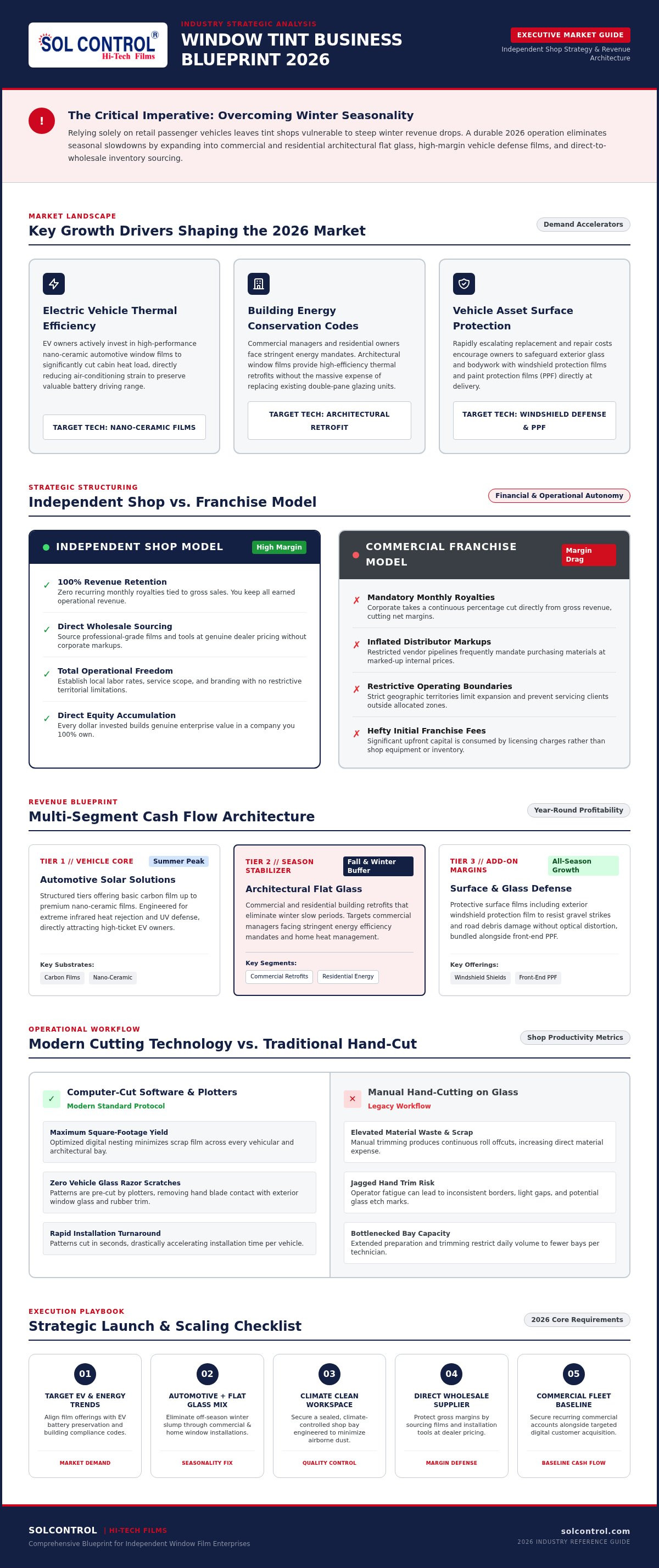
Relying strictly on automotive glass is the quickest way to starve an independent shop during the winter chill. The most resilient operations don't stop at passenger cars; they capture year-round profitability by expanding into architectural flat glass and protective surface films. If you want to build a durable enterprise, creating a comprehensive window tint business plan 2026 is the critical first step toward long-term security.
It's easy to feel stalled by the initial hurdles. Balancing equipment investments, deciphering state visible light transmission (VLT) standards, and avoiding inflated distributor markups can make opening a shop feel intimidating. You shouldn't have to guess your way through operational decisions. In this blueprint, you'll discover the exact roadmap to launch and scale an independent, high-margin business designed to generate predictable cash flow month after month.
Ahead, we'll break down the legal setup, essential equipment acquisitions, multi-segment service expansions, and direct wholesale sourcing strategies that position your company for sustained success.
Key Takeaways
Build your window tint business plan 2026 around accelerating market drivers, such as high-demand electric vehicle heat rejection and residential energy efficiency standards.
Eliminate off-season automotive slowdowns by diversifying your service offerings into commercial and residential architectural flat glass installations.
Establish a streamlined installation workflow by securing a climate-controlled workspace engineered to minimize airborne dust contamination.
Protect your operational margins by partnering with dedicated wholesale suppliers for film and tinting tools rather than paying recurring franchise fees.
Generate predictable baseline cash flow by landing recurring commercial fleet accounts alongside targeted digital customer acquisition campaigns.
Analyzing the 2026 Window Film Industry and Market Opportunity
Modern tint shops do far more than darken sedan glass. Today's market demands advanced solar control, structural privacy, safety reinforcement, and exterior surface protection across both vehicular and building surfaces. Understanding what window film is at a material level, specifically how multi-layered polyester coatings reject infrared heat and ultraviolet rays, helps explain why consumer demand continues to accelerate. Developing an actionable window tint business plan 2026 allows entrepreneurs to capitalize on these shifts, identify precise startup capital needs, and establish strong market positioning from day one.
Efficiency dictates modern profitability. Successful shops no longer rely on hand-cutting every pattern on exterior glass. Instead, they pair specialized computer-cut software with high-precision cutting plotters. This workflow maximizes square-footage yield, eliminates jagged hand trims, and reduces material scrap across every installation bay.
Key Growth Drivers Shaping the 2026 Market
Several distinct commercial tailwinds are expanding market revenue:
Electric vehicle thermal efficiency: EV owners actively invest in high-performance nano-ceramic automotive window films to minimize cabin heat load, reducing air-conditioning strain to preserve battery driving range.
Building energy conservation standards: Commercial property managers and homeowners face stringent energy codes. They increasingly turn to architectural window films as cost-effective retrofits that lower cooling costs without replacing existing double-pane glazing units.
Vehicle asset protection: Rising vehicle replacement costs prompt consumers to protect their investments early, driving demand for complementary add-ons like front-end paint protection films and windshield protection film.
Independent Shop vs. Franchise Model Comparison
When launching your venture, deciding between an independent operation and a commercial franchise model impacts long-term profitability. Franchise systems pitch prepackaged branding and centralized operating procedures. However, they extract significant initial franchise fees and demand ongoing monthly royalties tied to gross revenue. These corporate deductions cut deeply into your net operational margins.
In contrast, building an independent shop grants complete authority over your retail identity, labor rates, and local service scope. By sourcing inventory directly through dedicated wholesale distribution partners, you secure professional-grade automotive window films, architectural films, and tinting tools at true dealer pricing. You keep 100% of your earned revenue, sidestep restrictive territorial boundaries, and build authentic equity in an enterprise you entirely own. Integrating these operational advantages into your window tint business plan 2026 creates a lean, highly resilient foundation built for sustainable growth.
Structuring High-Margin Revenue Streams in Your 2026 Plan
Seasonality can break an unprepared installation business. Automotive retail demand peaks during intense summer heat but inevitably softens as temperatures drop. Shops that rely entirely on walk-in vehicle tinting often struggle through lean winter quarters. Aligning your operational strategy with a formal Step-by-Step Roadmap helps you balance bay capacity across complementary high-margin services, maintaining predictable revenue year-round.
A resilient window tint business plan 2026 intentionally diversifies beyond basic passenger vehicles. By blending automotive solar rejection, architectural flat glass, and surface defense solutions, you maximize shop productivity while boosting average ticket sizes.
Automotive Solar and Safety Films
Structure your automotive packages into clear performance tiers. Offering basic carbon films alongside advanced nano-ceramic options gives clients distinct choices based on heat rejection performance. Consult The Professional Guide to Automotive Window Film to evaluate substrate specifications and solar performance metrics. You can also offer windshield protection film, which protects vulnerable front glass against heavy road debris and gravel damage without interfering with optical clarity.
Architectural and Commercial Flat Glass Tinting
Architectural installations provide steady, lucrative work that fills scheduling gaps during automotive slowdowns. Commercial storefronts, corporate conference rooms, and private residences regularly require glare mitigation, temperature control, and enhanced privacy. Review the Architectural Window Film Wholesale Guidelines to match visible light transmission and total solar energy rejection to specific architectural glazing setups. Security films also create dependable commercial contracts by reinforcing retail entrances against forced entry.
Paint Protection Film (PPF) Integration
Adding paint protection film to your service menu dramatically increases revenue per vehicle. Installing PPF requires exceptional cleanliness and surface preparation, but vehicle owners willing to invest in premium ceramic tint are natural candidates for protective clear bras. Explore substrate durability and self-healing topcoats through What is Paint Protection Film to guide your technical standards. Bundling full front-clip coverage with all-around ceramic tinting transforms standard jobs into substantial tickets that keep your bays humming.
To support this multi-service model without tying up critical cash reserves, consider working with a dedicated wholesale distributor like SolControl to access pro-grade films, specialized plotters, and installation supplies without restrictive brand mandates. Incorporating these diversified offerings into your window tint business plan 2026 ensures strong gross margins and continuous workshop throughput across every season.
Step-by-Step Roadmap to Launching Your Independent Tint Operation
Transforming technical skill into an enduring enterprise requires structured execution. Setting up a dedicated workshop involves more than clearing out a bay and buying film. As you build out your window tint business plan 2026, systematic execution ensures regulatory safety, workflow speed, and top-tier installation quality.
Industry standards provide a dependable blueprint for this progression. When Analyzing the 2026 Window Film Industry through leading technical associations, established operators emphasize consistent procedural compliance over ad-hoc setups. Follow these foundational stages to establish an operation ready for immediate volume.
Legal Structure, Permitting, and VLT Compliance
Forming a Limited Liability Company (LLC) isolates personal finances from business risks. Tint shops handle expensive late-model vehicles, making robust commercial general liability and garage keepers insurance non-negotiable. Additionally, state visible light transmission (VLT) laws vary significantly across the country. Stricter jurisdictions limit front side windows to 70% VLT, while others permit 25% or 28%. Equip your shop with calibrated two-piece digital light meters, and provide signed VLT compliance disclosures with every retail invoice to eliminate liability disputes.
Facility Selection: Mobile Unit vs. Fixed Bay Shop
Choosing between a mobile van and a dedicated commercial building defines your operational ceiling:
Mobile units: Lower initial overhead allows quick market entry, but mobile installers fight ambient airborne contamination, crosswinds, and seasonal weather swings that complicate clean adhesive transfers.
Fixed bay shops: A controlled physical space delivers higher throughput. Target commercial units with high ceilings, sealed epoxy floors, dedicated trench drains for slip solution runoff, and closed-cell climate management systems to keep airborne dust minimal.
Staging design: Allocate enough square footage to park multiple vehicles simultaneously while maintaining dedicated clean-bench areas for unrolling and trimming flat glass patterns.
Acquiring Commercial Plotting and Installation Tools
Precision equipment directly impacts installation speed and material conservation. Pair a wide-format cutting plotter with pattern software to generate precision pre-cut vehicle templates, bypassing the risk of blade scoring on client glass. Stocking professional squeegees, hard cards, heat guns, and specialized cutters outlined in Professional PPF Installation Tools ensures clean, bubble-free finishes. Equip every bay with filtration-grade slip solutions, multi-stage prep cleaners, and lint-free microfibers. Finalizing these equipment and licensing requirements inside your window tint business plan 2026 positions your brand for rapid operational deployment.
Financial Planning: Startup Capital, Operating Costs, and Sourcing
Precision financial modeling separates thriving businesses from operations that fold under unexpected overhead. Many entrepreneurs underestimate how quickly utility bills, equipment payments, and idle inventory deplete liquidity. Structuring a comprehensive window tint business plan 2026 requires dividing your financial forecast into distinct buckets: initial capital expenditures, recurring fixed operating costs, and variable material expenses tied directly to job volume. If you need structured tools to model cash flow and track key metrics, check out Biz Infographs for professional spreadsheet and dashboard templates.
Estimating Initial Capital Expenditures and Ongoing Overhead
Opening a commercial facility demands clear line-item budgeting. Your primary startup costs involve lease security deposits, clean-bay buildouts, high-lumen balanced LED lighting, and commercial-grade plotters. Ongoing fixed costs include cutting software subscriptions, general liability policies, shop utilities, and local administrative licenses. Always budget three to six months of operating reserve capital. This financial cushion protects your enterprise while customer acquisition channels ramp up to steady monthly volume.
Film Inventory Management and Waste Optimization
Material scrap eats into net profitability faster than almost any other operational leak. Smart inventory control begins with smart stock selection:
Standardize master roll widths: Stock versatile roll dimensions that service diverse automotive windshields, side glass, and rear windows without leaving excessive off-cut waste.
Software nesting: Utilize cutting software algorithms to nest complex automotive curves together on a single cut path, drastically improving linear yield per foot.
Track material consumption: Log daily installer film pulls against final completed tickets. Tracking waste rates helps spot handling damage, premature liner separation, or improper plotter tension before bad habits drain your budget.
Building Relationships with Dedicated Wholesale Distributors
Your supply chain directly determines gross margins. Relying on retail middle-tier suppliers or paying costly franchise royalties immediately erodes earnings. The smarter approach involves partnering directly with a dedicated wholesale distributor that operates strictly B2B and never competes with customer installations. A dependable national distribution network ensures rapid replenishment, reliable warranty backing, and consistent access to automotive window films, architectural films, paint protection films, windshield protection film, and professional tinting tools.
Established distributors also equip you with professional marketing materials, literature, and physical counter displays that validate performance metrics for your retail clients. To secure dealer-tier pricing and build an agile, self-sustaining inventory pipeline, source your wholesale film and tools through SolControl. Grounding your window tint business plan 2026 in direct wholesale sourcing gives your independent shop maximum pricing flexibility and protects your gross profit margins from day one.
Marketing, Customer Acquisition, and Scaling Your Operation
Technical craftsmanship creates flawless installations, but structured customer acquisition keeps your bays full. A winning window tint business plan 2026 combines hyper-local digital visibility with recurring commercial contracts. Building both channels simultaneously creates a stable operational engine that feeds your technicians steady work regardless of seasonal retail shifts.
Dominating Local Digital Search and Visual Proof
Most retail drivers begin their search on a smartphone screen. Optimize your Google Business Profile by publishing high-resolution photos that showcase seamless micro-edge cuts and flawless dot-matrix matrix adhesion. Prompt every satisfied customer for a photo review that highlights optical clarity and cabin comfort.
Inside your showroom, install an interactive heat-lamp demonstration display. Letting drivers feel the drastic difference in infrared heat transfer between standard glass and high-grade ceramic film sells the performance for you, naturally lifting your average ticket value without aggressive sales pitches.
Securing B2B Accounts: Auto Dealerships and Contractors
Commercial relationships establish baseline revenue that stabilizes weekly cash flow:
New car dealerships: Pitch sales departments on offering pre-delivery tint packages to new vehicle buyers, turning accessory add-ons into steady bulk volume for your team.
Commercial fleet operators: Target municipal, delivery, and service vehicle fleets that need solar heat rejection and interior glare reduction to protect drivers and cabin equipment.
Architectural contractors and glaziers: Network with local general contractors, interior designers, and commercial property managers. Present clear energy-efficiency calculations showing how solar control films reduce HVAC cooling loads on commercial facades.
Scaling Operations and Quality Control Protocols
Transitioning from a solopreneur to a multi-installer workshop requires documented standard operating procedures (SOPs). Implement rigorous vehicle intake forms that catalog pre-existing glass scratches, windshield chip damage, and interior electronics before any slip solution enters the vehicle. Create detailed quality control checklists covering border gaps, optical distortion, and complete moisture extraction before releasing keys to the owner.
As service volume accelerates, inventory predictability becomes essential. Partnering with a dedicated national distributor like SolControl ensures your growing shop receives immediate wholesale delivery of automotive window films, architectural films, paint protection films, and specialized tools. Documenting these scalable quality benchmarks and supply chain strategies in your window tint business plan 2026 positions your brand to expand smoothly across multiple installation bays.
Executing Your Independent Tint Business Blueprint
Building a profitable tint business isn't about guessing market trends; it's about disciplined execution. By diversifying beyond passenger vehicles into architectural flat glass and protective films, you protect your revenue against seasonal dips. Pairing digital template software with strict contamination controls keeps shop scrap minimal and customer satisfaction high. Most importantly, operating as an independent shop ensures you keep every dollar of your earned profit rather than surrendering royalties to a franchise system.
Your shop's growth accelerates when you have a dependable supply chain supporting your bays. An effective window tint business plan 2026 requires reliable materials and tools that arrive on schedule. To power your expansion, partner with SolControl for wholesale films and tools. You'll gain direct access to a dedicated nationwide distributor that supplies professional automotive, architectural, and paint protection films without ever competing against your installations. Take control of your market, protect your margins, and start building your enterprise today.
Frequently Asked Questions
How much does it cost to start a window tinting business in 2026?
Total startup costs depend heavily on your chosen operating model. A lean mobile setup requires modest capital for basic application tools, a portable plotter, and opening inventory. Conversely, opening a dedicated commercial facility requires larger outlays for lease security deposits, clean-room ventilation, specialized bay lighting, and administrative licensing. Detail these operational tiers clearly when drafting your window tint business plan 2026.
Is an independent window tint business more profitable than a franchise?
Yes, independent operations typically retain significantly higher net profit margins. Franchise agreements demand heavy initiation fees alongside ongoing royalty fees deducted directly from your monthly gross revenue. Independent owners avoid these mandatory deductions entirely. By establishing direct relationships with wholesale film suppliers, you retain complete control over your labor rates, customer warranties, service offerings, and bottom-line earnings.
What equipment is required to open a professional window tint shop?
A professional setup requires a wide-format cutting plotter, computerized pattern software, and calibrated digital light meters for statutory compliance. Installers also require professional tinting tools: heat guns, hard cards, specialized squeegees, stainlessOlfa knives, pressurized slip tanks, prep cleaners, and lint-free microfiber towels. For related workshop consumables like specialty industrial tapes, spray adhesives, and surface prep abrasives, visit Fosseway Tapes & Fixings Limited. Equipping your bays with balanced, high-lumen LED task lighting and slip-drainage flooring is equally essential for dust-free installations.
Do I need a commercial bay, or can I start as a mobile tint business?
You can launch as a mobile operator, but fixed commercial facilities deliver superior long-term scalability. Mobile units reduce initial overhead, making them attractive for new installers. However, outdoor wind, temperature swings, and airborne debris frequently cause adhesive contamination and costly film waste. A sealed, climate-controlled commercial shop lets you control contamination, process higher daily car counts, and stage large architectural projects.
What are the most profitable window film services to offer?
High-rejection nano-ceramic automotive window films and front-end paint protection films (PPF) generate the highest ticket values in the automotive sector. Outside the automotive bay, architectural flat glass installations on commercial storefronts and corporate offices yield outstanding margins. Architectural jobs eliminate vehicle disassembly risks, use straightforward square-footage pricing models, and leverage existing installer skills on large, profitable commercial contracts.
How do window tint shops stay busy during slow winter months?
Resilient tint shops offset seasonal automotive slowdowns by marketing commercial and residential architectural flat glass installations. Winter is the ideal season for interior building retrofits that lower facility heating loss, block irritating low-angle sun glare, and improve tenant privacy. Experienced operators also establish steady fleet maintenance agreements with delivery companies and local car dealerships to maintain baseline bay volume year-round.
Why is working with a dedicated wholesale distributor critical for tint shop margins?
Working with a dedicated B2B distributor protects your margins because they supply film rolls and tools without competing against your business for retail installations. Direct wholesale relationships provide access to automotive, architectural, and paint protection films at true dealer tiers. Incorporating a dedicated supplier into your window tint business plan 2026 ensures fast nationwide shipping, reliable warranty backing, and stable inventory pipelines.