Professional Window Tinting Tool Kit: 2026 Buyer’s Guide
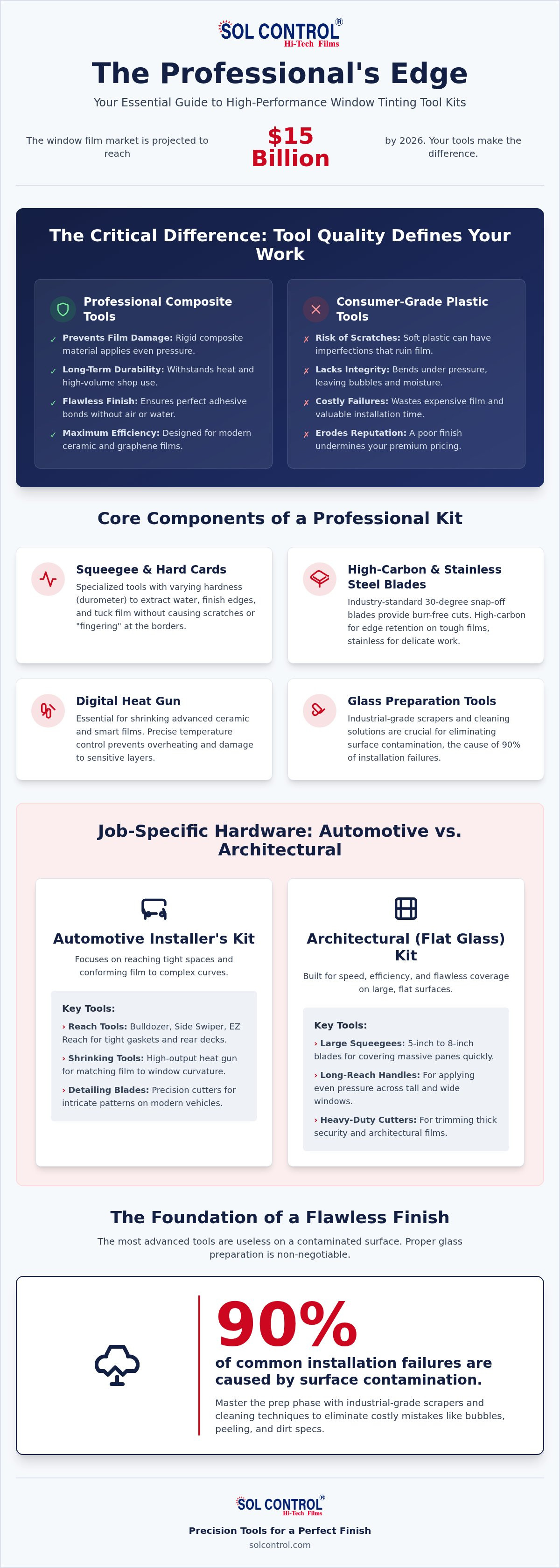
A single microscopic scratch on a high-performance ceramic film doesn't just cost you a few dollars in material; it erodes the premium reputation you've worked years to build. You've likely felt the frustration of a low-quality squeegee ruining a perfect shrink or struggled to reach tight corners on modern gaskets with improper hardware. As the window film market grows toward a projected $15 billion by 2026 according to SlaByte, the difference between a profitable shop and one that's struggling is often the quality of their professional window tinting tool kit.
We understand that your tools are an extension of your expertise. It's time to move past the "make-do" gear and invest in precision hardware designed for the latest graphene-infused and smart tint technologies. This guide provides a comprehensive roadmap to the essential gear required for zero-failure installations and maximum shop efficiency. We'll explore the specific squeegees, heat guns, and precision blades that allow you to deliver a flawless finish that justifies your premium pricing every single time.
Key Takeaways
Understand the critical difference between consumer-grade plastic and professional composite tools to prevent film damage and ensure long-term durability.
Identify the specialized hardware needed for complex automotive and architectural projects by selecting the right professional window tinting tool kit components.
Discover why digital temperature control is essential for shrinking advanced ceramic films and how to use precision meters to maintain VLT compliance.
Master the glass preparation phase with industrial-grade scrapers to eliminate 90% of common installation failures caused by surface contamination.
Learn how to scale your business by sourcing premium hardware through wholesale distribution to ensure a consistent supply of fresh blades and squeegees.
Core Components of a Professional Window Tinting Tool Kit
Every professional window tinting tool kit serves as the foundation for a successful installation. In 2026, high-performance materials like graphene-infused and nano-ceramic window film demand a level of precision that basic hardware simply cannot provide. While consumer-grade plastic tools might suffice for a DIY project, they lack the structural integrity and heat resistance required for high-volume shop environments. Professional-grade composite tools offer the rigidity needed to apply even pressure across the glass, ensuring that the adhesive bonds perfectly without air pockets or water tension.
A critical component of this system is the hard card. These specialized tools are designed for finishing edges and driving out trapped solution from tight gaskets. Without the right edge profile, you risk "fingering" or peeling at the borders. Similarly, professional installers rely on high-carbon steel blades. These provide a sharper, more consistent edge compared to standard hardware store alternatives, resulting in burr-free cuts that align perfectly with vehicle glass. Investing in a high-quality professional window tinting tool kit ensures you aren't fighting your equipment while trying to deliver a premium result.
Squeegee Durometer and Material Science
Durometer is the measure of tool hardness affecting water extraction efficiency. Understanding this metric is vital for protecting delicate ceramic layers. Soft blades, often color-coded as yellow or blue, are ideal for initial water removal and conform easily to curved glass. In contrast, harder blades like red or black variants are used for final passes to ensure every drop of mounting solution is evacuated. Using a durometer that's too high on a soft film can cause permanent scratching; one that's too low will leave moisture that turns into unsightly bubbles later.
Precision Cutting Tools and Safety
Precision is non-negotiable when working on modern vehicle patterns. The 30-degree snap-off blade is the industry standard because it allows for intricate detailing in tight corners. While stainless steel blades are softer and less likely to scratch glass, high-carbon steel offers superior edge retention for heavy-duty architectural films. To maintain a safe and efficient workspace, professional shops use dedicated blade disposal containers. This prevents loose sharps from damaging film rolls or causing technician injuries during a fast-paced installation day. You'll find that keeping a fresh edge is the simplest way to reduce material waste and avoid jagged film borders.
Automotive vs. Architectural Kits: Specialized Hardware
A common mistake among new shop owners is assuming a single professional window tinting tool kit can handle every job that comes through the door. While the basic principles of film application remain constant, the physical demands of automotive and architectural projects are worlds apart. Automotive technicians spend their day fighting tight tolerances and compound curves, while architectural installers manage massive rolls and vertical surfaces. If you try to use a standard automotive kit for a commercial skyscraper project, your efficiency will plummet and your material waste will climb.
Automotive work is primarily about film manipulation and shrinking to fit three-dimensional shapes. Architectural work, conversely, is about coverage and speed across large, flat planes. This fundamental difference in physics dictates exactly what should be in your gear bag.
The Automotive Installer’s Reach Tools
Precision in vehicle tinting often comes down to how well you can reach the glass behind a deep rear deck or tucked under a tight gasket. Specialized tools like the "Bulldozer" and "Side Swiper" allow you to apply pressure in areas where your hand simply won't fit. For the tightest gaskets, the "EZ Reach" and "Slammer" tools are indispensable for tucking film and ensuring a clean edge. Because automotive glass is rarely flat, your kit must include a high-output heat gun capable of shrinking film to match the curvature of the windshield and rear window. For more on selecting the right products for these tools, consult The Professional Guide to Automotive Window Film to ensure your film and hardware are perfectly matched.
Commercial and Residential Flat Glass Tools
Architectural projects require a shift in scale that your standard professional window tinting tool kit might not accommodate. When you're covering hundreds of square feet of flat glass, a small automotive squeegee isn't enough. You'll need 5-inch or even 8-inch squeegee blades paired with long-reach handles and sturdy channels to maintain consistent pressure. Managing large-format rolls also requires heavy-duty slitters and film cutters to make precise, on-site adjustments. The International Window Film Association emphasizes the importance of using industry-standard tools to meet the performance ratings of architectural films. For a deeper dive into scaling your hardware for large projects, read Architectural Window Film: The Professional Guide.
If you're looking to upgrade your shop's capabilities, you can explore our wholesale tool inventory to find specialized gear for both auto and flat glass.
Advanced Precision: Heat Guns and Measurement Tools
Precision is the hallmark of a high-end installation shop. As you move beyond basic squeegees, the advanced equipment in your professional window tinting tool kit dictates how well you handle the industry's most sensitive materials. Modern nano-ceramic and graphene-infused films are engineered with complex layers that react specifically to thermal energy. Using a basic heat source without feedback leads to inconsistent shrinking or, worse, permanent damage to the film's structural integrity. Integrating digital measurement and thermal control into your workflow ensures that your results are both repeatable and professional.
Beyond the film application itself, your kit must include tools that provide tangible proof of performance. For B2B and commercial architectural clients, infrared (IR) heat lamps serve as a powerful demonstration tool. They allow you to show the superior heat rejection of premium films in real-time, helping you justify premium pricing through data rather than just promises. This level of technical transparency builds trust and sets your shop apart from competitors who rely on guesswork.
Heat Shrinking Mastery
Successful "dry shrinking" on curved automotive glass requires more than just raw heat; it requires control. Variable speed and digital temperature settings allow you to find the exact "sweet spot" where the film relaxes without scorching. This is especially important for 2026 standards, where films are becoming increasingly sophisticated. Professional heat gun nozzles are also essential for directing airflow toward specific fingers of film on complex curves. To keep these tools operational in a busy shop, regular intake filter cleaning and proper cool-down cycles are mandatory to prevent heating element burnout during back-to-back installations.
Compliance and Testing Equipment
A tint meter isn't just a convenience; it's a mandatory tool for protecting your shop from legal liability. Given the strict VLT limits enforced by many regulatory bodies across the country, often around 70%, you must verify every job before the vehicle leaves your bay. Digital meters provide instant, verifiable VLT readings for professional documentation. For architectural projects, BTU meters provide proof of heat rejection, helping commercial clients calculate their potential energy savings. These measurement tools transform your shop's reputation from a simple service provider to a data-backed professional consultancy. Precision measurement starts with high-quality tape measures and marking tools to ensure that every cut on a large architectural roll is accurate to the millimeter, reducing material waste and protecting your profit margins.
Preparation and Cleaning: The Unsung Heroes
Preparation is the most overlooked phase of the installation process, yet it's where 90% of film failures originate. Contaminants like dust, adhesive residue, or microscopic glass burrs can ruin a high-performance film before the squeegee even touches the surface. A professional window tinting tool kit must include dedicated cleaning hardware that goes beyond what's found in a standard hardware store. While household razors are often used by amateurs, they frequently carry manufacturing defects that can permanently scratch tempered glass. Professional-grade scrapers are precision-ground to ensure a perfectly flat edge, providing the reliability required for a zero-failure shop.
Lint is the enemy. Every tool in your cleaning arsenal must prioritize surface purity. From the moment you spray the glass to the final wipe of the gaskets, your equipment dictates whether the film will bond flawlessly or trap unsightly debris.
Glass Preparation Protocols
Removing stubborn contaminants requires a multi-stage approach. Non-abrasive scrub pads are essential for breaking down road film and oils without compromising the glass surface. For automotive rear decks and difficult-to-reach areas, "The Bulldozer" serves as more than just a reach tool; it's a vital part of the cleaning protocol when equipped with a scrub pad attachment. SolControl’s professional-grade scrapers ensure a clean surface for automotive window film bonding by removing even the most persistent debris. A standard preparation sequence includes:
An initial chemical soak to loosen organic debris and surface oils.
Mechanical scraping with precision-ground stainless steel blades to remove bonded contaminants.
Aggressive scrubbing with non-abrasive pads to clear the microscopic "pores" of the glass.
A final squeegee pass to remove all contaminated solution from the work area.
Chemicals and Sprayers
The efficiency of your workflow is often dictated by your delivery system. In commercial architectural tinting, hand triggers are inefficient and lead to technician fatigue. High-volume shops utilize pressure sprayers to maintain a consistent mist across large-format glass panes. The chemistry of your slip solution is equally important. Achieving the perfect "slide and lock" during installation requires a balanced blend of professional slip solution and distilled water. Using tap water can introduce minerals that eventually cause adhesive contamination or cloudiness. This level of environmental control is similar to the preparation required for other high-end applications, such as paint protection film, where surface purity is the primary driver of longevity.
High-quality microfiber towels are the final piece of the cleaning puzzle. Investing in industrial-grade microfiber ensures that your final wipe-down is truly clean and free of fibers that shed from cheaper alternatives. You can shop our full selection of preparation tools to ensure your next project starts with a perfectly clean canvas.
Scaling Your Shop: The Wholesale Advantage
Sourcing a professional window tinting tool kit directly from your film distributor isn't just a matter of convenience; it's a strategic move. When you align your hardware with the specific films you install, you eliminate the variables that often lead to costly installation failures. Wholesale sourcing allows you to maintain a lean inventory while ensuring that every technician is equipped with the exact gear required for high-performance results. This approach reduces shipping overhead and simplifies procurement. You can focus on growing your business rather than managing a dozen different vendors.
Training and scaling require a standardized approach to equipment. Purchasing a professional window tinting tool kit in bulk for new technicians ensures that every team member follows the same quality protocols from day one. This consistency is what allows a growing shop to transition into a high-volume operation without sacrificing the finish that justifies your premium pricing. By providing uniform toolsets, you create a baseline for excellence that defines your shop's reputation in a competitive market.
Inventory Management for Pros
Proactive replacement is the secret to consistent quality. Squeegee blades and hard cards are high-wear items that lose their precision edge over time. Waiting for a tool to fail before replacing it is a mistake that leads to film damage. We recommend setting a strict replacement schedule based on your installation volume to ensure every squeegee pass is clean. Investing in high-end Fusion tint tools offers a better long-term return on investment due to their superior durability and ergonomic design. SolControl ensures your shop stays ahead of 2026 industry trends by providing hardware that matches the evolving chemistry of modern films.
The SolControl Partnership
A distributor should be more than just a vendor; they should be a growth partner. At SolControl, we provide access to marketing materials and technical support alongside your tool and film orders. This holistic approach helps you build a brand that customers trust. Whether you are expanding into architectural projects or exploring the evolution of PPF film, having a single source for hardware simplifies your logistics. We curate our selection to ensure that your shop always has the hardware required to handle the next generation of window films.
The transition to 2026 industry standards requires more than just high-performance film; it demands a commitment to precision hardware. We've explored how specialized squeegees, digital measurement tools, and rigorous cleaning protocols form the backbone of a successful shop. By differentiating between automotive and architectural requirements, you ensure maximum efficiency on every project. Investing in a high-quality professional window tinting tool kit isn't just an expense. It's a strategic move to reduce material waste and justify premium pricing through flawless results.
SolControl stands as your dedicated wholesale partner, providing national distribution of premium films and industry-leading hardware. From digital VLT meters to specialized Fusion tools, we offer the support B2B shops need to scale effectively. You don't have to navigate these technical shifts alone. Our comprehensive inventory ensures you have the right hardware to handle the most advanced ceramic and graphene films on the market. Upgrade your shop with professional-grade tinting tools from SolControl. We're here to help you deliver the professional finish your customers expect while building a more profitable, reliable business. Your expertise deserves tools that work as hard as you do.
Frequently Asked Questions
What tools do I need for a professional automotive window tinting kit?
Essential items include a 30-degree snap-off blade, a variety of squeegees like the Blue Max, hard cards, a high-output heat gun, and reach tools like the Bulldozer. These tools are designed specifically for the tight tolerances and curved glass found in modern vehicles. A complete professional window tinting tool kit for automotive use focuses on film manipulation and shrinking capabilities, ensuring you can reach deep rear decks and tuck film under tight gaskets efficiently.
Is there a difference between tools for ceramic film and carbon film?
While the basic tools are similar, ceramic films are often thicker and more sensitive to high heat. You need a heat gun with digital temperature control to avoid ghosting or scorching the ceramic layers. Softer squeegees with specific durometers are also preferred to prevent scratching the more delicate top coats found on premium ceramic products compared to standard carbon films. This specialized approach ensures the integrity of the heat-rejection technology remains intact.
Why should I buy professional squeegees instead of hardware store versions?
Professional squeegees use high-quality silicone or composite materials that provide consistent pressure and edge retention. Hardware store versions often use low-grade rubber that degrades quickly and can leave streaks or scratches on expensive film. Professional tools are engineered to extract 100% of the mounting solution, which is critical for ensuring a bubble-free finish that lasts for years. Investing in professional hardware prevents material waste and protects your shop's reputation for quality craftsmanship.
How often should I replace my window tinting blades?
You should snap off a fresh blade for every window to ensure the sharpest possible cut. Using a dull blade causes jagged edges and can snag the film, leading to material waste. In a high-volume shop, technicians often go through several full sticks of 30-degree carbon steel blades daily to maintain the precision required for high-end automotive and architectural installations. Consistent blade replacement is the simplest way to avoid glass damage and jagged film borders.
What is the best heat gun for shrinking window film in 2026?
The best heat gun for 2026 is one that features precise digital temperature adjustments and variable airflow settings. This allows you to match the heat output to the specific shrinking requirements of advanced nano-ceramic and graphene-infused films. Look for models with a dedicated cool-down mode and ergonomic handles to prevent technician fatigue during long shrinking sessions on complex rear windshields. Reliability and thermal control are the two most important factors for any professional heat source.
Do I need a different tool kit for architectural window tinting?
Yes, architectural kits require larger squeegee channels and handles to cover wide glass expanses efficiently. While automotive kits focus on reach and shrinking, architectural kits prioritize flat-glass extraction and heavy-duty trimming. You'll need 5-inch to 8-inch squeegee blades and specialized slitters to handle the large-format rolls typically used in commercial and residential projects. Scaling your hardware to the size of the glass is essential for maintaining a fast and profitable installation pace.
How do I maintain my tinting tools to ensure they last?
Clean your squeegee blades daily with mild soap and water to remove any adhesive or grit that could scratch the film. Store your blades in a dedicated case to prevent nicks and keep your heat gun filters clear of dust to prevent overheating. Regularly inspecting your hard cards for burrs and sanding them smooth with high-grit paper ensures your professional window tinting tool kit remains in peak condition, providing reliable performance for years to come.
Where can I buy professional window tinting tools at wholesale prices?
SolControl is a national wholesale distributor that provides professional-grade tools and high-performance films to installers across the United States. By sourcing directly from a specialist distributor, you access competitive B2B pricing and curated hardware designed for industry professionals. This allows you to stock your shop with the latest technology, including digital meters and Fusion tools, without the retail markup. Our wholesale focus ensures your business has a reliable supply of the hardware required for high-volume growth.